

A vaccine decades in the making is now positioned to take on a larger role in global chikungunya prevention — not because of a sudden scientific breakthrough, but because its only competitor was pulled from the market over safety concerns. The shift has drawn fresh attention to Vimkunya, an FDA-approved vaccine whose origins trace back to an investigational product first manufactured and tested in clinical trials more than ten years ago.
Vimkunya received FDA approval in 2025 and was developed through a collaboration between the National Institute of Allergy and Infectious Diseases and the Vaccine Clinical Materials Program at Frederick National Laboratory, a federally funded research and development center that supports the National Cancer Institute. Its path to broader relevance accelerated on August 22, 2025, when the FDA suspended the license of Ixchiq — the only other FDA-approved chikungunya vaccine and one that had been available for two years prior — after reports linking it to 21 hospitalizations and three deaths.
What Is Chikungunya?
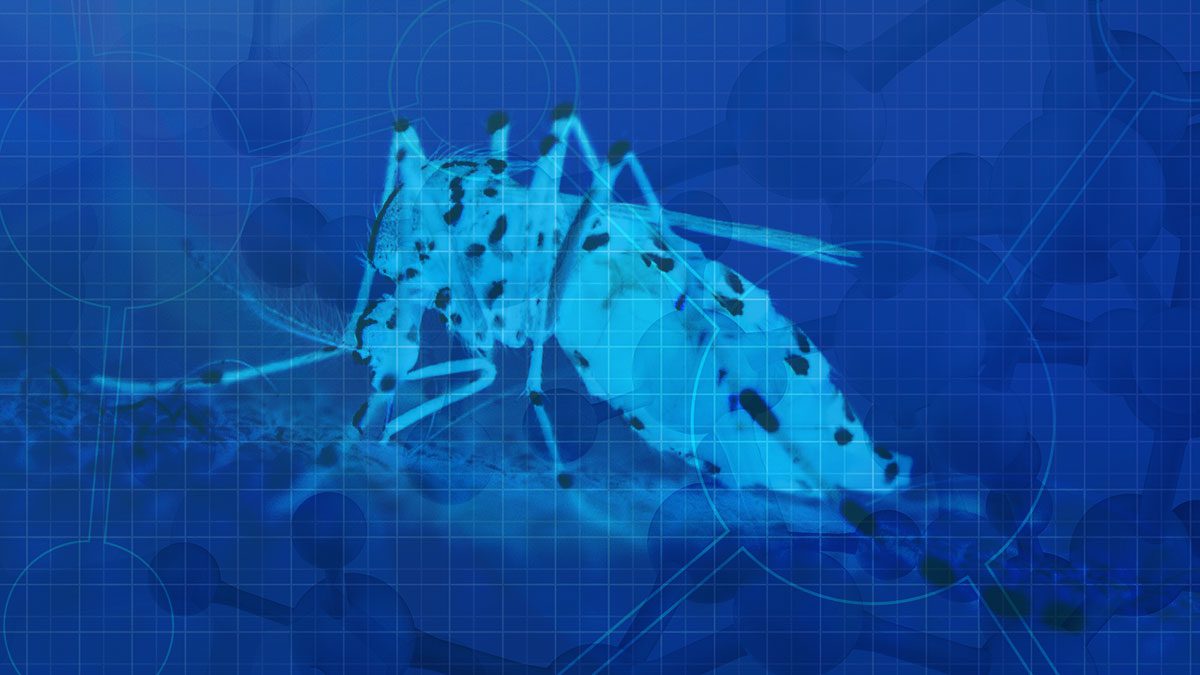
Chikungunya is a mosquito-borne viral illness transmitted primarily by Aedes aegypti, a daytime-feeding species also responsible for spreading dengue, Zika, and yellow fever. The disease’s name derives from the Makonde language of southeast Tanzania and northern Mozambique, meaning “that which bends” — a reference to the stooped posture caused by severe joint pain, one of its hallmark symptoms. Patients also experience high fever and fatigue, and symptoms can become chronic. Severe or fatal outcomes are most common in infants, the elderly, and individuals with pre-existing health conditions.
The World Health Organization reported more than 445,000 suspected and confirmed chikungunya cases and 155 deaths across 40 countries in 2024, noting a resurgence of the disease in several regions. Since 2014, local transmission has been documented in the United States, including in Florida, Texas, Puerto Rico, and the U.S. Virgin Islands.
From Early Trials to Global Readiness
Vimkunya’s development began in 2014, when an investigational vaccine designed by NIAID and manufactured by the Frederick National Laboratory’s Vaccine Clinical Materials Program completed a successful Phase I clinical trial at the NIH Clinical Center in Bethesda, Maryland, involving 25 participants. Those results supported a Phase II study involving 400 participants across multiple countries in the Americas and Caribbean, including Haiti, the Dominican Republic, Guadeloupe, Martinique, and Puerto Rico.
Frederick National Laboratory’s Clinical Monitoring Research Program played a central operational role in the international Phase II effort, managing program logistics, subcontractor coordination, and international supply shipments. Staff conducted site feasibility assessments and study initiation visits across the trial network.
“A vaccine first tested in small early-phase studies now steps in to the world ready to blunt chikungunya’s reach. This accomplishment was shaped by years of scientific inquiry, patient trust, and commitment to public health.”
– David Lindsay, director of the Vaccine Clinical Materials Program.
Why This Matters for Global Health Security
The suspension of Ixchiq leaves Vimkunya as the primary FDA-approved option for chikungunya prevention at a moment when the disease burden remains significant across tropical and subtropical regions and is encroaching on the continental United States.
For endemic regions and outbreak-prone areas — particularly in the Caribbean and Latin America — the transition to Vimkunya will require scaled manufacturing, distribution infrastructure, and updated clinical guidance. The Frederick National Laboratory’s experience managing international clinical trials positions it as a relevant stakeholder in that process.
The development also highlights the long-term value of federally supported vaccine research programs. Vimkunya’s path from an early investigational compound to a market-ready product spans more than a decade of sustained investment, clinical work, and international coordination — a timeline that underscores both the difficulty and the necessity of building robust vaccine pipelines for diseases that lack the commercial profile of higher-profile pathogens.
Sources and further reading:
Vaccine set for wider use against mosquito-borne chikungunya – Frederick National Laboratory