

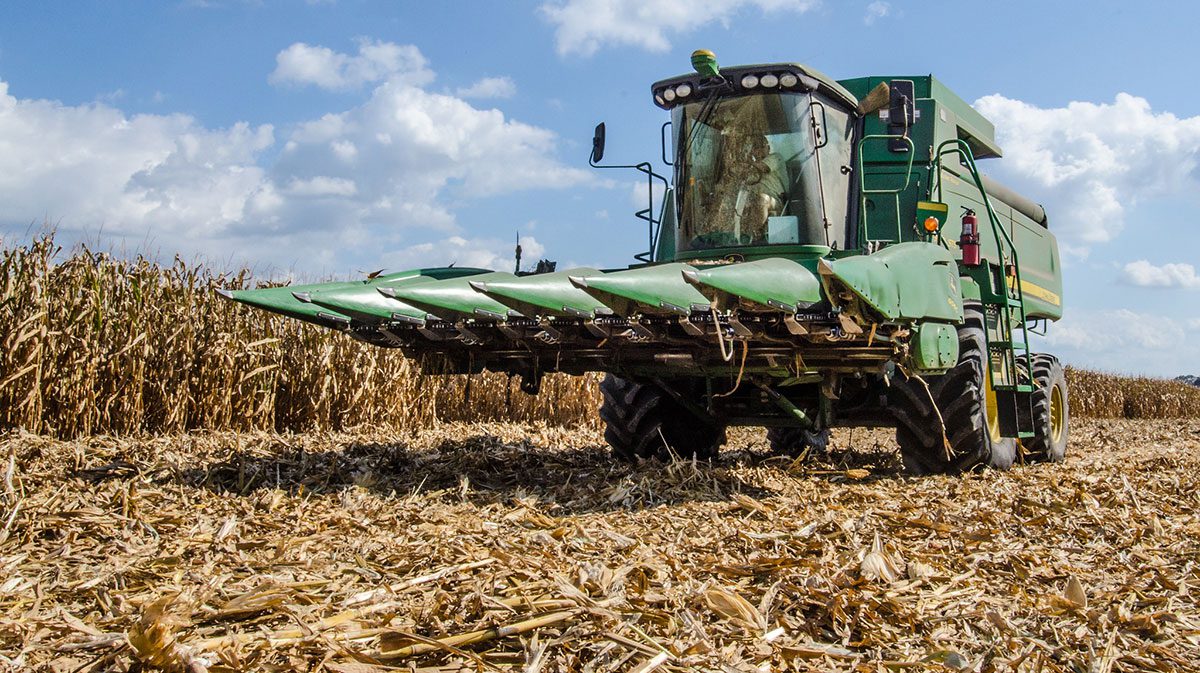
The United States’ food supply faces a convergence of biological, environmental, and deliberate threats that could cascade into mass casualty and public health emergencies, according to a report published in April 2026 by the RAND Corporation. The authors examine agricultural security risks to the U.S. Corn Belt — the Midwest region that produces the majority of America’s corn and soybeans — and warn that disruptions to this critical system carry profound downstream consequences for public health, food access, and national resilience.
The report arrives as policymakers have elevated agricultural security to a national priority, reflected in the July 2025 release of the National Farm Security Action Plan. For hospital administrators, public health officials, and frontline clinicians, the findings underscore a threat landscape that extends well beyond farms and silos: contaminated food supplies, weaponized pathogens, and disinformation campaigns targeting food safety can all generate patient surges, mass poisoning events, and erosion of public trust in the healthcare system’s guidance.
Biological and Chemical Threats With Direct Clinical Implications
The report catalogs a wide range of biological agents capable of devastating crop yields — some of which carry direct implications for human health. Fungal pathogens such as Aspergillus flavus and Fusarium verticillioides produce aflatoxins and fumonisins, respectively, which contaminate grain supplies and pose serious hepatotoxic and carcinogenic risks to consumers. The authors note that weaponized dissemination of these spores or concentrated toxin powders could simultaneously destroy crops and undermine consumer confidence in U.S. grain exports — a scenario that would challenge food safety regulators and clinical toxicologists alike.
Chemical contamination of the food supply represents another documented threat. The report cites two historical cases: the 1978 mercury injection of Israeli oranges exported to Europe and the 1989 cyanide poisoning of Chilean grapes shipped to the United States. In the Chilean case, the discovery of just three contaminated grapes triggered a five-day suspension of imports and an economic loss exceeding $330 million. A comparable attack on U.S. domestic food distribution — particularly one targeting products consumed in large quantities — would likely generate acute poisoning presentations across emergency departments with little advance warning.
Agroterrorism, Disinformation, and Mass Casualty Risk
The report devotes substantial attention to deliberate threats, framing agroterrorism as a low-barrier, high-impact vector for actors seeking to cause economic damage, social unrest, or loss of confidence in government. The authors note that introducing dangerous nonnative microbial pathogens — including federally regulated select agents such as Sclerophthora rayssia var. zeae, the causative agent of brown stripe downy mildew in corn — could cause between $4 and $16 billion in economic losses if introduced into the United States.
For public health officials, the disinformation dimension of this threat is equally concerning. In a mass casualty or food contamination event, competing disinformation could severely complicate public messaging, delay care-seeking, and overwhelm health advisory systems. The authors cite a joint guide from the World Organisation for Animal Health and INTERPOL on combating misinformation in animal health emergencies as one relevant model for cross-sector coordination.
Geopolitical Disruptions and Food Access
The report also highlights how geopolitical dynamics can rapidly translate into food access crises with public health consequences. In September 2025, China imported zero tons of U.S. soybeans — compared to 1.7 million metric tons the year prior — in response to a trade war, triggering a $12 billion federal aid package for U.S. farmers. Supply shocks of this scale, compounded by concurrent climate stressors or infrastructure disruptions, carry real potential to affect food availability for vulnerable populations, with implications for nutrition-related illness and health system demand.
Recommendations Relevant to Clinical and Public Health Preparedness
The RAND authors propose ten concrete recommendations, several of which are directly actionable by public health and healthcare systems. These include expanding human pathogen surveillance programs to incorporate agricultural pathogen detection — specifically, integrating plant and animal pathogen monitoring into existing infrastructure such as the CDC’s National Wastewater Surveillance System — and developing interregional agricultural emergency coordination protocols within the National Incident Management System framework.
The report also calls for a dedicated emergency communication system capable of reaching agricultural and private stakeholders during a crisis. For hospital incident command structures and public health emergency operations centers, this recommendation signals a gap that healthcare planners should anticipate: in an agroterrorism or food contamination event, communications infrastructure connecting farms, distributors, and clinical facilities may not exist in a coherent, pre-tested form.
The authors conclude that agricultural security is inseparable from national security — and, by extension, from public health security. Building the detection, response, and resilience capabilities to protect the Corn Belt will require sustained cross-sector investment that includes the clinical and public health communities.
Sources and Further Reading:
Hoard T, Williams AE, Luckey D. Agricultural Security Considerations for the U.S. Corn Belt: Reviewing Key Threats and Mitigation Strategies for Bioresiliency. RAND Corporation. April 27, 2026
Countering disinformation and misinformation in animal health emergencies. WOAH, INTERPOL, June 2024