

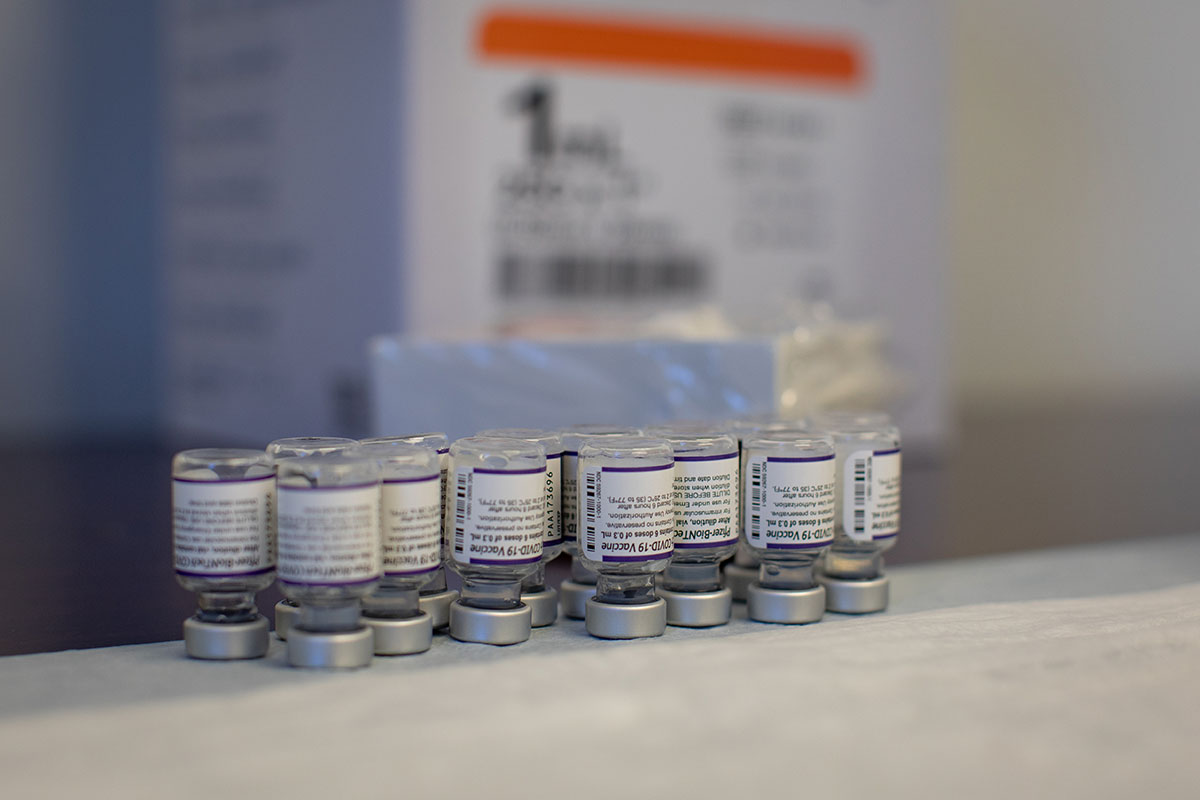
A company that helped define the mRNA vaccine era is now systematically dismantling the manufacturing network it built during the pandemic. The pullback illustrates a recurring pattern in pandemic preparedness: surge investment during crisis, followed by systematic disinvestment once the immediate threat recedes.
BioNTech announced on May 5, 2026, that it will exit manufacturing operations at four sites: Idar-Oberstein, Marburg, and Tübingen in Germany, and Singapore. The closures, expected to be completed by the end of 2027, will affect up to approximately 1,860 positions. The restructuring is driven by falling COVID-19 vaccine revenues and a strategic pivot toward oncology. The company is exploring divestment options, including partial or total sales of the affected sites.
The Funding Collapse Driving the Retreat
In the first quarter of 2026, BioNTech reported revenues of just 118.1 million euros, down from 182.8 million euros in the same period a year earlier, and a net loss of 531.9 million euros. The decline was driven primarily by lower sales of Comirnaty, its Pfizer-partnered COVID-19 vaccine. Full-year 2026 revenues are projected at 2.0 to 2.3 billion euros, compared to 2.9 billion euros in COVID-19 vaccine sales reported in 2025.
The manufacturing consolidation is expected to generate approximately 500 million euros in recurring annual savings by 2029, capital the company intends to redirect toward its oncology pipeline. BioNTech has framed the closures as a routine capacity alignment, noting that the affected sites are expected to become underutilized or idle within 24 months.
The restructuring coincides with a major leadership transition. Co-founders Uğur Şahin and Özlem Türeci, who guided the company from a small German biotech to a global vaccine powerhouse, are departing by the end of 2026 to launch a new mRNA-focused venture. BioNTech’s supervisory board has initiated an executive search for their replacements as the company works toward becoming a “multi-product oncology company by 2030.”
A Sector-Wide Contraction
BioNTech’s restructuring is part of a larger and more troubling pattern: the global infrastructure for mRNA vaccine manufacturing is contracting at precisely the moment it may be needed most.
In August 2025, the U.S. Department of Health and Human Services announced a coordinated wind-down of 22 mRNA vaccine research and development programs under the Biomedical Advanced Research and Development Authority (BARDA). The decision canceled or restructured approximately 500 million dollars in contracts with companies including Pfizer, Moderna, Sanofi, and AstraZeneca. Secretary Robert F. Kennedy Jr. cited what he described as inadequate protection against COVID-19 and influenza, a characterization that contradicted prior CDC assessments calling mRNA vaccines “highly effective.”
The terminations affected programs targeting pandemic influenza strains, respiratory syncytial virus, pan-coronavirus candidates, and early-stage bacterial and parasitic vaccine prototypes. The HHS announcement indicated the agency would shift funding toward alternative platforms, specifically naming “whole-virus vaccines,” though detailed information about these alternative programs has not been publicly disclosed.
Kennedy’s leadership of HHS has been notably critical of mRNA vaccine technology. In June 2026, the Secretary restructured the CDC’s Advisory Committee on Immunization Practices, replacing existing members with new appointees who were not remotely qualified for the position, at least one of whom has previously spoken publicly against the mRNA platform.
Writing in The Lancet Microbe in December 2025, an international group of researchers warned that the U.S. funding withdrawal “represents a strategic retreat from one of the most versatile and transformative vaccine platforms of our time.” The authors identified five urgent priorities for the global research community: diversifying funding sources, strengthening regional manufacturing hubs, investing in fundamental science, combating vaccine misinformation, and broadening parallel investment in complementary platforms.
The Cost of Lost Capacity
Manufacturing capacity, once dismantled, is not easily or quickly rebuilt. The sites BioNTech is exiting represent years of regulatory validation, specialized workforce development, and supply chain integration. The pandemic demonstrated the time and expense required to scale vaccine manufacturing from concept to billions of doses. During the COVID-19 response, establishing new mRNA vaccine manufacturing capacity took months and required substantial government investment, technical expertise, and coordination across multiple sites and jurisdictions.
In a future pandemic scenario requiring rapid mRNA vaccine development and deployment, the loss of standing capacity could translate directly into delayed response timelines and reduced surge capacity. The infrastructure being dismantled now represents vaccine doses that could have been produced in weeks or months rather than years. Loss of American scientific and financial leadership under the Trump-Vance administration slows progress on next-generation mRNA vaccines targeting pandemic threats.
Sources and further reading:
BioNTech to slash 1,860 jobs, exit sites in Germany and Singapore in major manufacturing pullback – Fierce Pharma
BioNTech Announces First Quarter 2026 Financial Results and Corporate Update – BioNTech
RFK Jr. Axes 22 mRNA Vaccine Projects Under BARDA – BioSpace
Protecting the future of vaccine development amidst US funding withdrawal for mRNA vaccine research – The Lancet Microbe