

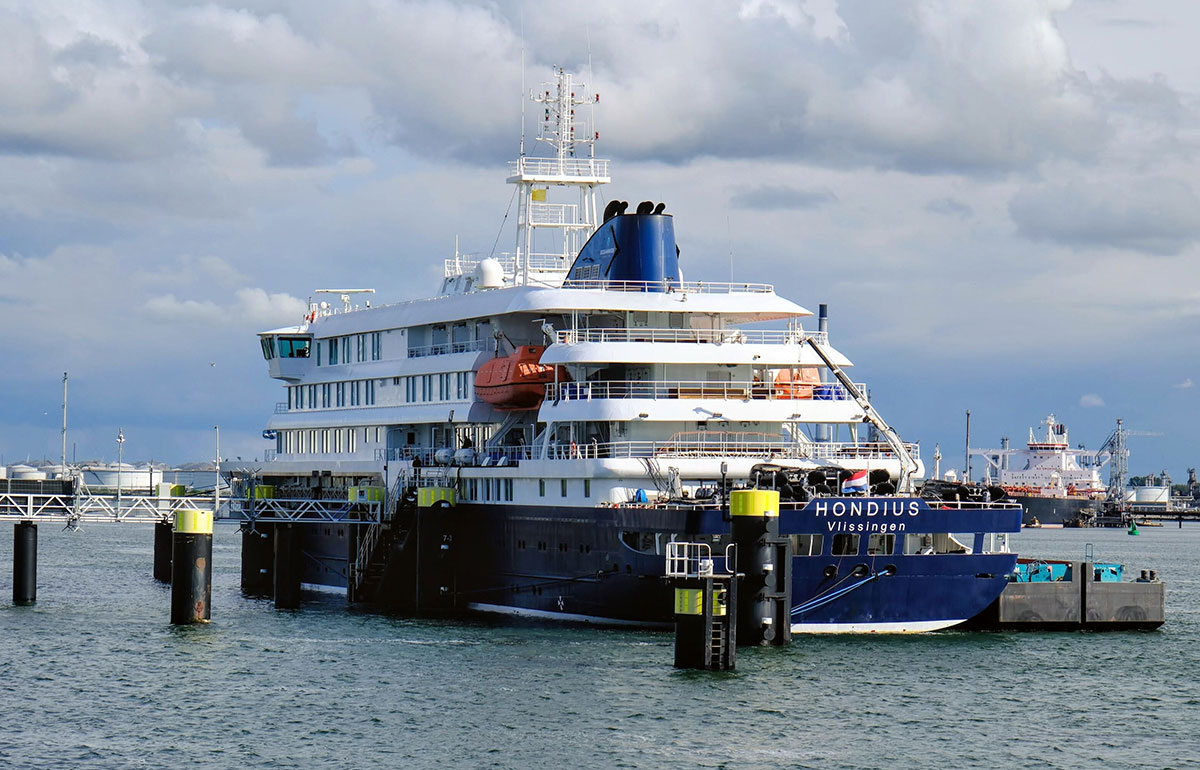
A cruise ship that departed Argentina in early April has become the center of a multinational public health response after a cluster of Andes hantavirus cases sickened and killed passengers and crew across several countries. As of mid-May 2026, at least nine cases have been linked to the MV Hondius — seven confirmed and two probable — including three deaths. The outbreak has now reached U.S. soil, with the Department of Health and Human Services confirming that one American passenger returning from the ship tested positive on a PCR test.
The MV Hondius set sail from Ushuaia, Argentina, on April 1 on a route that included Antarctica and several South Atlantic island archipelagos. The World Health Organization was notified of a cluster of severe acute respiratory illness on board on May 2. Cases have since been identified in the Netherlands, South Africa, the United Kingdom, Switzerland, France, and now the United States. European health authorities continue to monitor additional suspected cases, and one French national who was not aboard the ship was reportedly hospitalized after traveling on the same flight as an evacuated passenger who later died.
What Is Andes Virus and Why Did It Spread on a Cruise Ship?
Hantaviruses are typically transmitted when people inhale particles from infected rodent urine, droppings, or saliva. Most hantavirus strains do not spread between humans. Andes virus is the sole documented exception. While human-to-human transmission is uncommon, it has occurred in close-contact settings such as households, crowded poorly ventilated spaces, and situations involving prolonged exposure to a symptomatic person.
These are precisely the conditions a cruise ship provides. WHO’s Maria van Kerkhove, Director of the Department of Epidemic and Pandemic Preparedness and Prevention, noted at a Geneva briefing that “when you have an enclosed setting, you have people that are spending a lot of time together — these types of things can happen.” The working assumption among health authorities is that the initial infection originated before embarkation, given that Andes virus is endemic to Argentina and the incubation period — which can range from one to six weeks — is consistent with pre-departure exposure.
Early symptoms resemble many common illnesses: fever, headache, muscle aches, nausea, and fatigue. In severe cases, infection progresses to hantavirus pulmonary syndrome, a life-threatening condition caused not by direct viral destruction of lung tissue but by the immune system’s inflammatory response, which causes fluid to accumulate in the lungs. Case fatality rates for American hantavirus strains, including Andes virus, can reach up to 50%. There is no licensed antiviral treatment and no approved vaccine. Supportive care — including respiratory support and management of cardiac and renal complications — remains the primary clinical approach.
U.S. Confirmation and Leadership Questions
HHS announced the first U.S. case with language describing the patient as having tested “mildly positive” on PCR — a formulation that drew immediate scrutiny from public health professionals. PCR tests do not yield mild or strong positives; the likely interpretation is that the test turned positive at a high cycle threshold, indicating a lower viral load. This could reflect early infection, an infection the immune system is clearing, or the tail end of illness. Given the timeline and the patient’s exposure history aboard the Hondius, early infection is considered the most probable explanation — meaning the patient may become more ill and more contagious in the coming days. The patient has been transported to a special pathogens unit for isolation and care.
The U.S. CDC has issued guidance establishing a two-tier monitoring framework for contacts. High-risk contacts — including those who were within six feet of an infected person in an enclosed space for at least 15 minutes — face a 42-day monitoring period, restrictions on commercial air travel, and the option of either home-based or facility-based quarantine, including at the National Quarantine Unit in Nebraska. Low-risk contacts are advised to self-monitor for 42 days with no travel restrictions, though they are encouraged to notify relevant health departments if they plan to move between jurisdictions.
Meanwhile, the leadership structure at the agencies coordinating the U.S. response has drawn attention. CDC is currently being led by Dr. Jay Bhattacharya, who simultaneously serves as NIH Director and has limited clinical or public health emergency experience. The CDC also lacks a Principal Deputy Director and several other key positions. Public health professionals have raised concerns about institutional bandwidth at a moment requiring sustained, expert-level coordination.
Why This Matters — and Why It Is Not the Next COVID
Despite the alarm that any cross-border disease cluster understandably generates, experts including WHO officials have been clear: Andes virus does not have the characteristics needed to cause a pandemic. SARS-CoV-2 spread efficiently through the air, including from people who did not yet know they were sick, with each infected person passing the virus to roughly two or more others in a naive population. Andes virus, by contrast, requires close contact, typically spreads only from symptomatic individuals, and has a slow serial interval estimated at 9 to 40 days — meaning chains of transmission unfold slowly enough to allow intervention.
In 2025, eight countries across the Americas reported 229 hantavirus cases and 59 deaths — serious infections, but rare ones. Viral dynamics favor containment in the current outbreak. Swiss laboratories have already sequenced the complete genome of the virus from one patient and made it publicly available within days, accelerating case confirmation and contact tracing globally. Australia has established quarantine arrangements at the Centre for National Resilience near RAAF Base Pearce in Western Australia for returning passengers, with PCR and serology testing conducted by Melbourne’s Doherty Institute.
The outbreak is serious, and the response must remain vigilant. But the biology of Andes virus — slow incubation, symptomatic spread, requirement for close contact — means that with strong public health execution, containment remains a realistic and likely outcome.
Sources and further reading:
Hantavirus is very different to COVID. Here’s why the ‘Andes virus’ won’t cause the next pandemic – The Conversation
Two More Reported Cases of Hantavirus Linked to Cruise Ship Hit by ‘Uncommon’ Human-to-Human Transmission – Health Policy Watch
The first potential US case of Andes hantavirus. Here are answers to the next questions. – Inside Medicine