

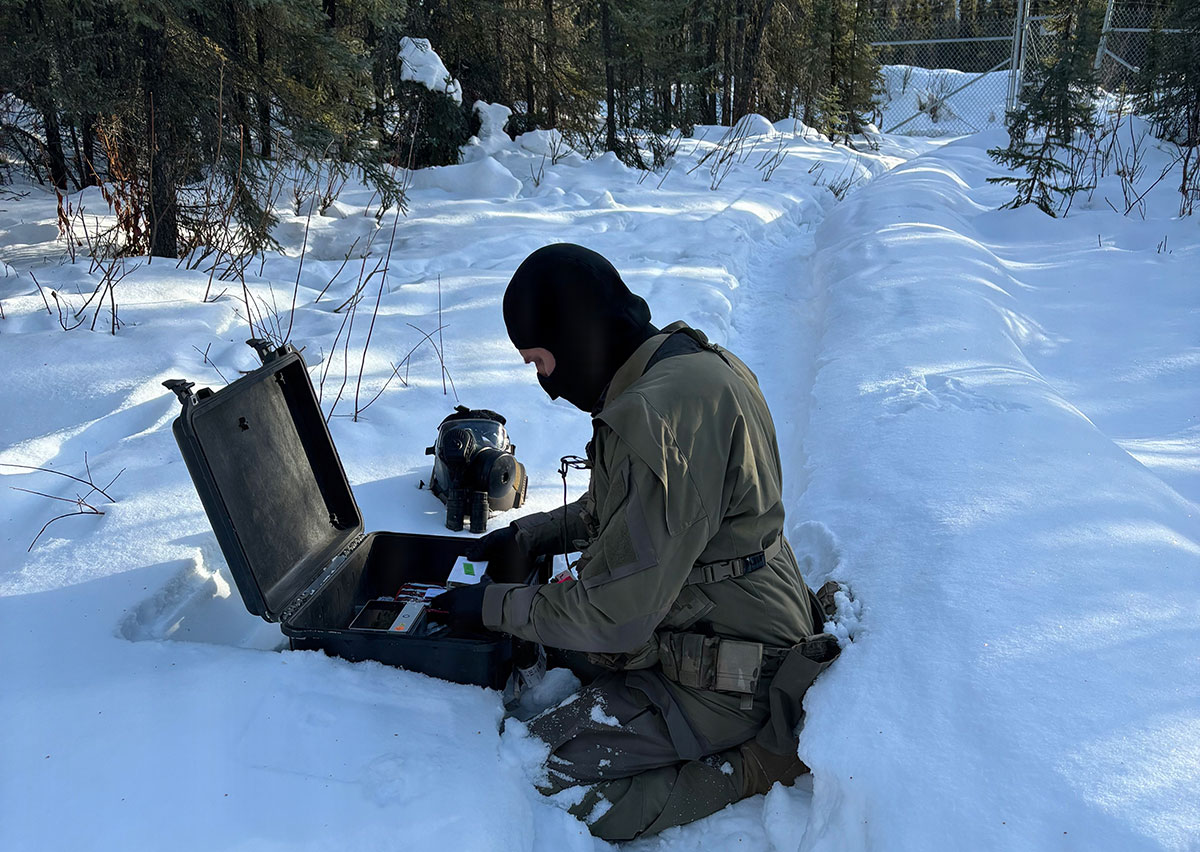
A joint military research program has successfully moved next-generation biological threat detection out of the laboratory and into the hands of forward-deployed troops, marking a significant advance in how the U.S. armed forces identify and respond to biological hazards in the field.
The U.S. Naval Research Laboratory (NRL), working alongside the Defense Threat Reduction Agency (DTRA) and multiple Army and Navy research commands, has developed and transitioned two portable sequencing platforms — Far-Forward Advanced Sequencing Technology (F-FAST) and Far-Forward Biological Sequencing (FFBS) — designed to identify harmful pathogens in less than 30 minutes. The program, which formally closed earlier this year, has now transitioned to the Capability Program Executive for Chemical, Biological, Radiological and Nuclear Defense (CPE-CBRND) for incremental fielding across the joint force.
Beyond Rapid Diagnostics: What Makes FFBS Different
Traditional rapid diagnostic tests used in military and public health settings are designed to detect specific, known pathogens. FFBS goes further by characterizing genetic material directly, allowing it to confirm results from targeted tests, flag previously unknown threats, and provide commanders with actionable biological intelligence at the point of need.
“This sequencing technology provides a deeper level of information, beyond what existing rapid diagnostic tests currently provide for many missions,” said NRL Associate Director of Research Dr. Peter Matic. “By characterizing genetic material directly, F-FAST and FFBS can confirm results from targeted tests, detect previously unknown threats, and provide critical data for medical and operational decision-making at the point of need.”
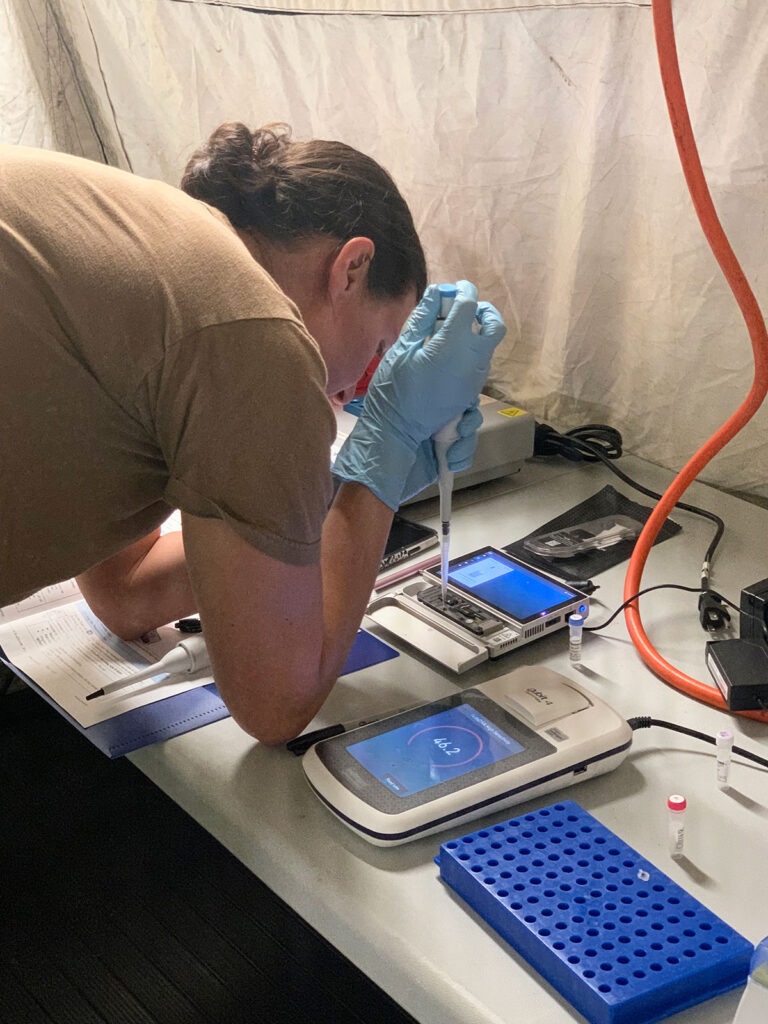
The system is also specifically designed for military personnel without formal laboratory training. Simplified protocols and ruggedized hardware allow Navy microbiologists, hospital corpsmen, and hospitalmen to operate the technology in non-traditional settings — from Arctic field exercises to desert operations and shipboard environments.
A Decade of Research, Tested Across the Globe
NRL has been developing DNA and RNA sequencing expertise for more than a decade. Researchers previously tested portable sequencing systems aboard Navy ships, in Chesapeake Bay, and at fleet locations before applying those lessons to the F-FAST program. Field demonstrations included exercises such as Arctic Edge, the Rim of the Pacific Exercise (RIMPAC), Desert Ice, Bronze Ram, and Tenacious Dragon, among others.
Close collaboration with the U.S. Army Combat Capabilities Development Command Chemical Biological Center (DEVCOM CBC), the U.S. Army Medical Research Institute of Infectious Diseases (USAMRIID), and the Naval Medical Research Command’s Biological Defense Research Directorate (BDRD) was central to refining the technology under real-world conditions.
“We worked side-by-side with Navy and Army partners in environments ranging from desert exercises to Arctic operations,” said Gary Vora, Ph.D., an NRL principal investigator for F-FAST. “That allowed us to see firsthand how sequencing could be integrated into real-world missions and to refine the system based on operator feedback.”
Notably, the Non-targeted Sequencing Identification System (NSIS) — developed for the National Guard Bureau’s Weapons of Mass Destruction Civil Support Teams and other joint force customers — recently achieved a successful Milestone B decision through the Joint Project Manager CBRN Sensors, representing another formal program transition.
Why This Matters for Biodefense and Health Security
The ability to sequence genetic material in the field — and to identify synthetically modified genes — represents a meaningful capability shift for both military biodefense and broader biological threat response. Lt. Cmdr. Chaselynn Watters, formerly of the BDRD Mobile Laboratory team, noted: “The ability to conduct sequencing in the field and even identify synthetically modified genes is a huge step in deterring biothreats. I am not aware of anyone else in the U.S. operating at this technical level in the field.”
Rapid, field-deployable sequencing can compress the time between exposure and identification, a critical factor in outbreak response, biosurveillance, and consequence management following a deliberate biological attack.
Sources and further reading:
Joint Service Program Delivers Genetic Intelligence for the Modern Battlefield – U.S. Naval Research Laboratory (NRL)