

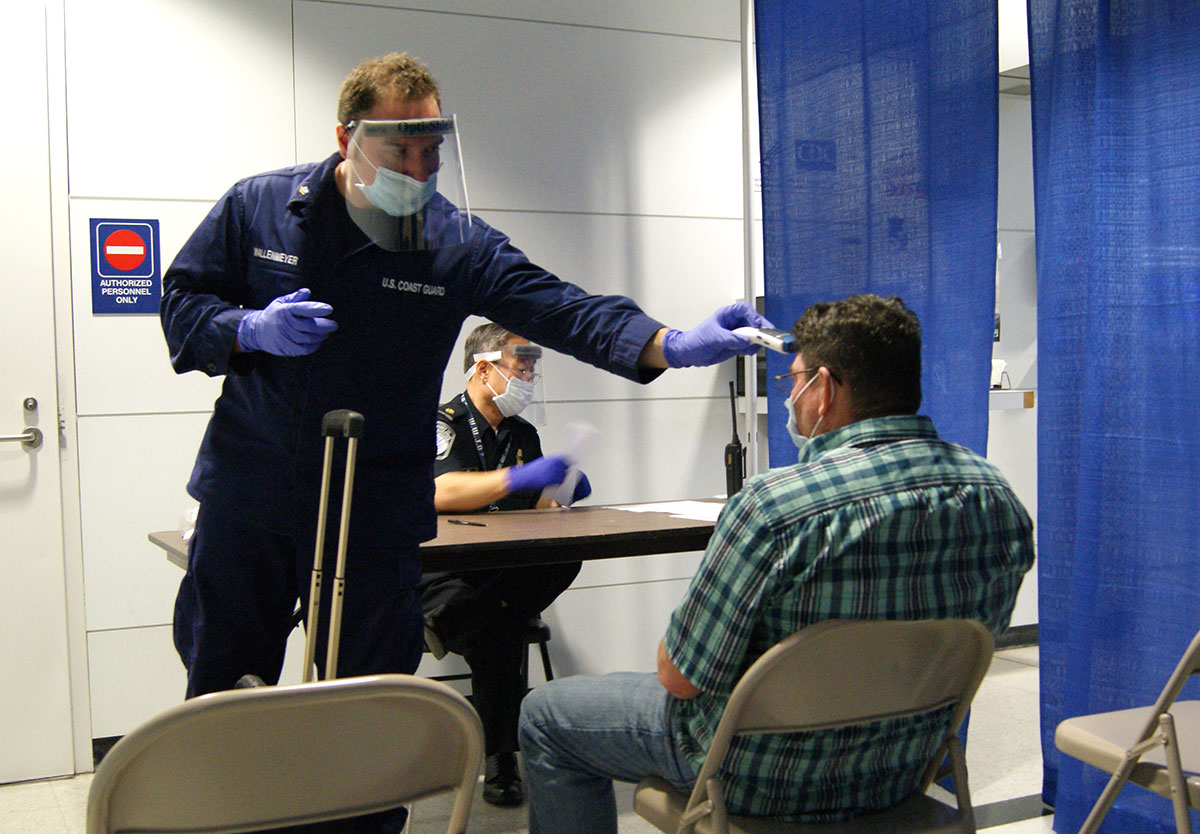
An ongoing outbreak of Bundibugyo virus disease — a type of Ebola — in the Democratic Republic of the Congo and Uganda has prompted the U.S. Centers for Disease Control and Prevention and the Department of Homeland Security to implement a coordinated set of entry restrictions, travel advisories, and enhanced airport screening measures aimed at preventing spread to the United States.
As of mid-June 2026, the DRC has reported 837 confirmed cases and 196 confirmed deaths. Uganda has recorded 19 confirmed cases, 2 confirmed deaths, 1 probable case, and 1 probable death, with confirmed cases linked to travel from DRC. The outbreak is concentrated in northeastern DRC, specifically the Ituri, Nord-Kivu, and Sud-Kivu provinces, where CDC recommends avoiding non-essential travel.
What Travelers Need to Know
Under the new measures, air passengers arriving from DRC, South Sudan, and Uganda will have their travel rerouted to one of four designated U.S. airports: Washington Dulles International (IAD), Atlanta Hartsfield-Jackson International (ATL), George Bush Intercontinental in Houston (IAH), or John F. Kennedy International in New York (JFK). Airlines are working directly with affected travelers to rebook flights. South Sudan has not reported any confirmed cases to date but is included in these measures due to its shared borders with affected countries.
CDC has issued Travel Health Notices for both DRC and Uganda. Travelers to these countries are advised to take precautions to avoid Ebola exposure and to monitor for symptoms both while traveling and for 21 days after departure, consistent with the virus’s known incubation period of 2 to 21 days.
The Bundibugyo Virus: A Strain Without Approved Treatments or Vaccines
This outbreak is caused by Bundibugyo virus (Orthoebolavirus bundibugyoense), which presents specific challenges for response efforts. There are no FDA-approved treatments for Bundibugyo virus disease, and the FDA-approved vaccine effective against the Orthoebolavirus zairense (Zaire ebolavirus) species — the strain responsible for major past outbreaks — is not considered effective against this strain. Supportive care, including fluids and symptom management, remains the primary clinical intervention and is associated with improved survival outcomes.
Bundibugyo virus has caused two previous outbreaks: one in Uganda in 2007 and one in DRC in 2012, with case fatality rates of 25% and 50%, respectively. Ebola disease more broadly carries death rates ranging from 25% to 90% depending on the species and availability of supportive care.
The disease spreads through direct contact with the body fluids of an infected person who is showing symptoms. It does not spread through the air, and a person is not contagious until symptoms begin. Healthcare workers and caregivers without proper infection control measures face the highest risk of infection.
One U.S. Case Confirmed; Public Risk Remains Low
One American citizen who was exposed to the virus during humanitarian work in DRC tested positive for Ebola, but has since fully recovered and been released from care. High-risk contacts associated with that exposure did not develop symptoms and have completed the 21-day monitoring period without incident. CDC officials assess the risk to the general U.S. public as low. No domestically acquired cases have been reported.
The absence of approved countermeasures specific to Bundibugyo virus underscores the importance of border screening, international outbreak containment, and investment in broad-spectrum medical countermeasure development as pillars of global health security.
Sources and further reading:
Ebola Outbreak: Current Situation 16 Jun 2026 – U.S. Centers for Disease Control and Prevention