

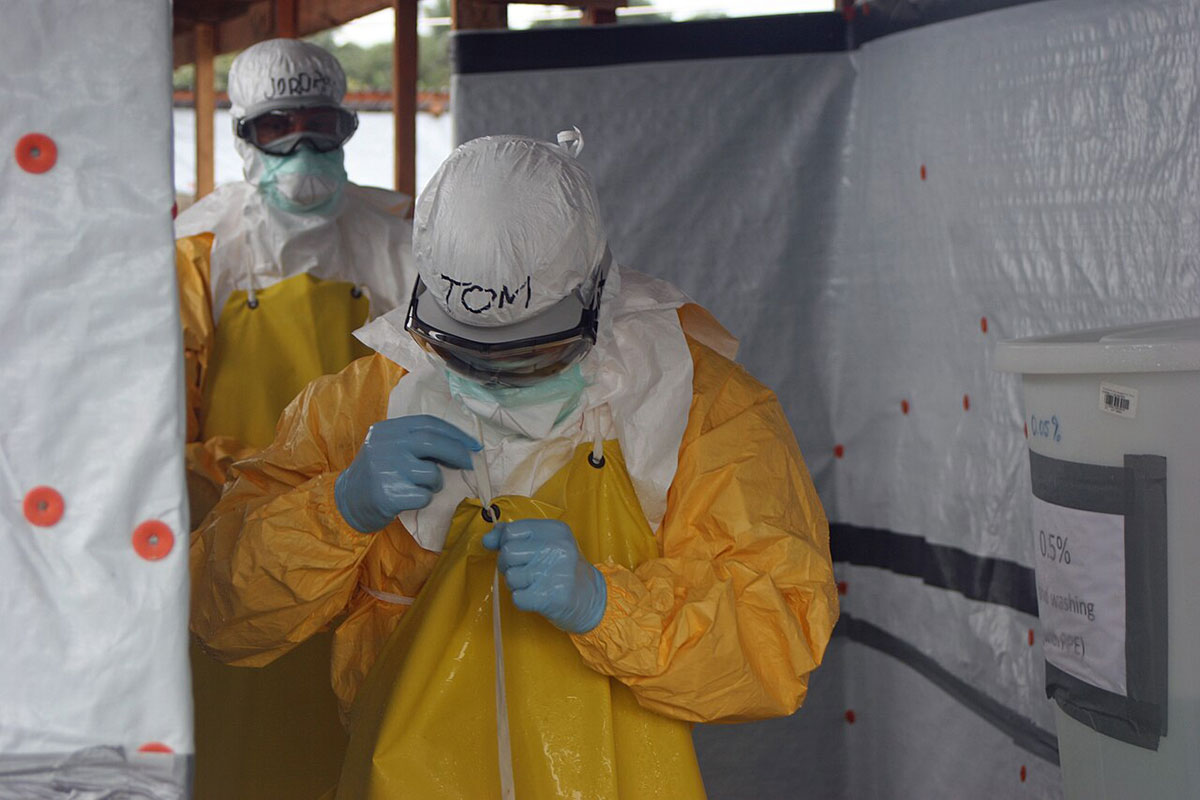
With case counts climbing rapidly across two African nations and an imported case reaching Europe, the Centers for Disease Control and Prevention declared its highest internal emergency activation level for the ongoing Ebola outbreak on June 26, elevating its response to Level One — a designation that signals maximum agency-wide mobilization of staffing and resources.
Speaking during a media briefing, CDC Incident Manager Dr. Satish Pillai confirmed that confirmed cases in the Democratic Republic of Congo and Uganda have now exceeded 1,100, making this the second largest Ebola outbreak ever recorded in DRC and the third largest globally. “We are very concerned about the trajectory of cases which are rising rapidly as well as the continued geographic threat,” Pillai said.
Scale of Outbreak Triggers Emergency Designation
The Level One activation is an internal agency designation that signals the outbreak has become a top priority across all of CDC, unlocking access to staff and resources from throughout the agency. Pillai described the move as reflecting “the urgency, scale, and complexity of the outbreak” and noted that he had briefed HHS Secretary on the situation earlier in the week.
CDC’s recently published modeling has warned that without rapid and sustained public health interventions, the outbreak could surpass the two largest Ebola events on record: the 2014–2016 West Africa epidemic and the 2018–2020 North Kivu outbreak in DRC. The agency is deploying approximately 19 personnel overseas to augment an already substantial existing presence — 24 staff permanently stationed in DRC and nearly 100 in Uganda — with responsibilities ranging from data analysis and exit screening support at airports to infection prevention and laboratory assistance.
Beyond direct deployment, CDC is funding 25 field epidemiologists operating in parts of DRC where U.S. government personnel cannot travel, and drawing on a cadre of nearly 1,000 field epidemiologists trained in-country over two decades of sustained investment. CDC has also accessed more than $100 million from the Infectious Disease Rapid Response Readiness Fund to sustain all response pillars, including surveillance, laboratory testing, border health, and domestic and international operations.
Imported Case in France Raises Awareness, Not Alarm
An imported case identified in France, involving a humanitarian medical worker who returned from DRC, has drawn international attention. According to Pillai, the individual reported symptoms to French authorities upon arrival and was immediately isolated, with contact tracing launched promptly. “There is currently no indication of community transmission associated with this case,” Pillai said, adding that no U.S. citizens were among reported exposures.
CDC characterized the event as a demonstration of the value of preparedness investments and surveillance systems strengthened after previous outbreaks, rather than a signal of widening international spread.
U.S. Domestic Preparedness Running in Parallel
While the agency characterizes the risk to the United States as low, domestic readiness preparations have been underway in parallel since the outbreak was declared in mid-May. Dr. Kevin Chatham-Stephens, CDC’s Deputy Incident Manager for Domestic Preparedness, detailed a broad engagement effort: more than 6,000 clinicians attended a recent COCA call on diagnosing and managing suspected Ebola cases; weekly calls with over 2,000 health department staff are ongoing; and CDC has responded to more than 100 technical assistance inquiries.
Updated guidance has been issued for assessing and managing travelers from affected countries, along with a new checklist for health department response planning for viral hemorrhagic fevers. CDC also maintains 24/7 clinical consultation services and laboratory testing capacity through its network of Laboratory Response Network public health labs.
On the countermeasures front, HHS, BARDA, and CDC are working with DRC and Uganda health ministries to evaluate monoclonal antibody therapeutics and diagnostic tools through rigorous trial designs. CDC is assessing the sensitivity and specificity of available diagnostic tests to help partner countries identify cases quickly and inform treatment decisions.
Pillai closed the briefing with a clear framing of the stakes: “The more quickly and effectively we can support containment of Bundibugyo virus in the DRC, the more we can reduce the risk to other countries.”
Sources and further reading: