

Months before flu season peaks, the World Health Organization and the Centers for Disease Control and Prevention must predict which influenza strains will dominate, so manufacturers can build them into that year’s vaccine. Even a well-matched shot is typically only 30 to 60 percent effective, and when a new variant slips through entirely, the consequences can be severe. In 2025, an unanticipated variant called subclade K contributed to one of the country’s more damaging flu seasons in recent memory: more than 320,000 Americans were hospitalized and more than 10,000 died, according to CDC data.
A team at the University of Michigan Engineering is developing a vaccine that could make that annual guesswork obsolete. The findings, presented at the American Chemical Society’s fall 2026 conference, show that a novel nanoparticle vaccine, manufactured using ordinary baker’s yeast, protected mice against three different influenza strains. The work is part of a broader push toward a universal influenza vaccine, one capable of durable, cross-strain protection without annual reformulation.
The approach hinges on which part of the virus the vaccine targets. Conventional flu vaccines train the immune system to recognize hemagglutinin, the surface protein that makes up roughly 80 percent of the virus’s outer coat. Hemagglutinin triggers a strong immune response, but it also mutates rapidly, with 19 variants currently in circulation and new ones emerging regularly. That instability is what allowed the 2009 swine flu pandemic to take hold, and what let subclade K catch last season’s vaccine off guard.
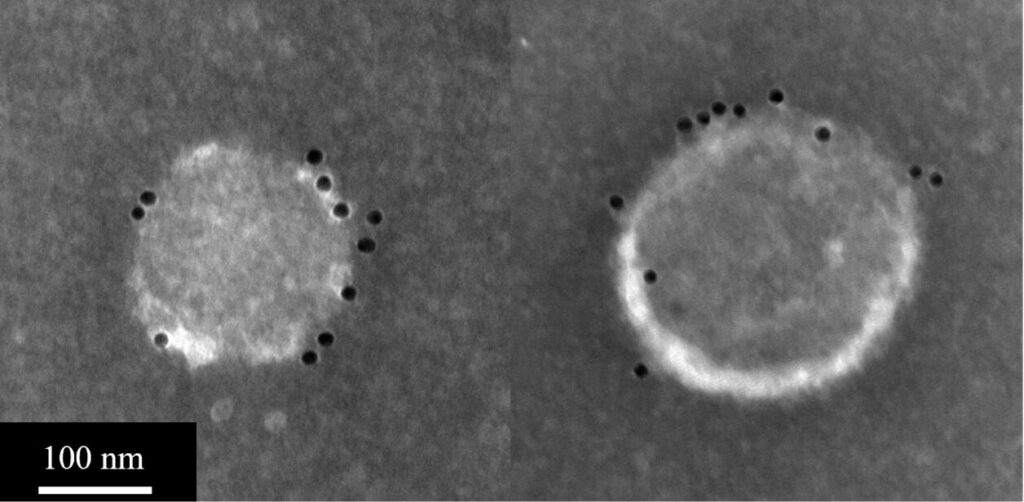
The Michigan team instead built their vaccine around M2, a surface protein found across influenza A viruses, including seasonal, swine, and avian strains. M2 is a far more stable target: mutations there tend to impair the virus’s ability to replicate, and the protein has changed little since 1918. The catch is that the immune system doesn’t naturally prioritize M2, since hemagglutinin is so much more abundant on the virus surface. The new vaccine works around that by presenting M2 as the sole antigen on engineered virus-like particles, noninfectious structures that mimic a virus’s size and shape without carrying any genetic material.
Strong results in mice, and a faster path to production
Researchers vaccinated 18 mice with the M2 particles and found their blood serum carried antibodies against M2 from five different influenza strains. When those mice were later exposed to three of the strains, all were fully protected. “Our goal is to develop a broadly protective and more effective flu vaccine, so you don’t have to get a flu shot every season,” Wen said. “Eventually, with enough effort and research, we believe that you might need one shot to be protected for life.”
The team genetically modified Saccharomyces cerevisiae, the same yeast used in baking and brewing, to churn out large quantities of M2 protein. Stripping the yeast’s outer cell wall with mild chemicals causes it to naturally bud off virus-like particles coated in M2, letting researchers go from concept to candidate vaccine in roughly a month, compared with the six months typical of conventional egg-based production. In a pandemic scenario involving a novel influenza A strain, that shortened timeline could be decisive. The technology has already been licensed to Esperovax, through the university’s Innovation Partnerships office, to develop an oral vaccine formulation.
Important caveats apply. The work is early-stage and preclinical, conducted entirely in mice, and researchers have not yet measured how long protection lasts. Larger animal studies and eventual human trials will be needed before any conclusions about human efficacy can be drawn.
Even so, the biosecurity implications are worth flagging now. Because M2 is stable across influenza A subtypes, a validated vaccine built around it could in principle offer baseline protection against both seasonal flu and emergent pandemic threats, including H5N1 avian influenza. A platform that is faster to manufacture, strain-agnostic, and potentially longer-lasting would address three persistent weaknesses in current influenza countermeasures at once. The researchers’ next step is determining how long that protection lasts in mice, a result that will shape how the field evaluates the platform going forward.
Sources and further reading:
Hoang T, Vanderzee I, Wen F. Toward an affordable universal influenza vaccine: M2-based virus-like particles. American Chemical Society Fall 2026 Conference, August 24, 2026.
Yeast-derived universal flu vaccine could someday replace yearly injections — EurekAlert / American Chemical Society
New flu vaccine protects mice against multiple strains — University of Michigan News
This article was researched and sourced by Global Biodefense editors and reported with Claude AI assistance for drafting and editing.