

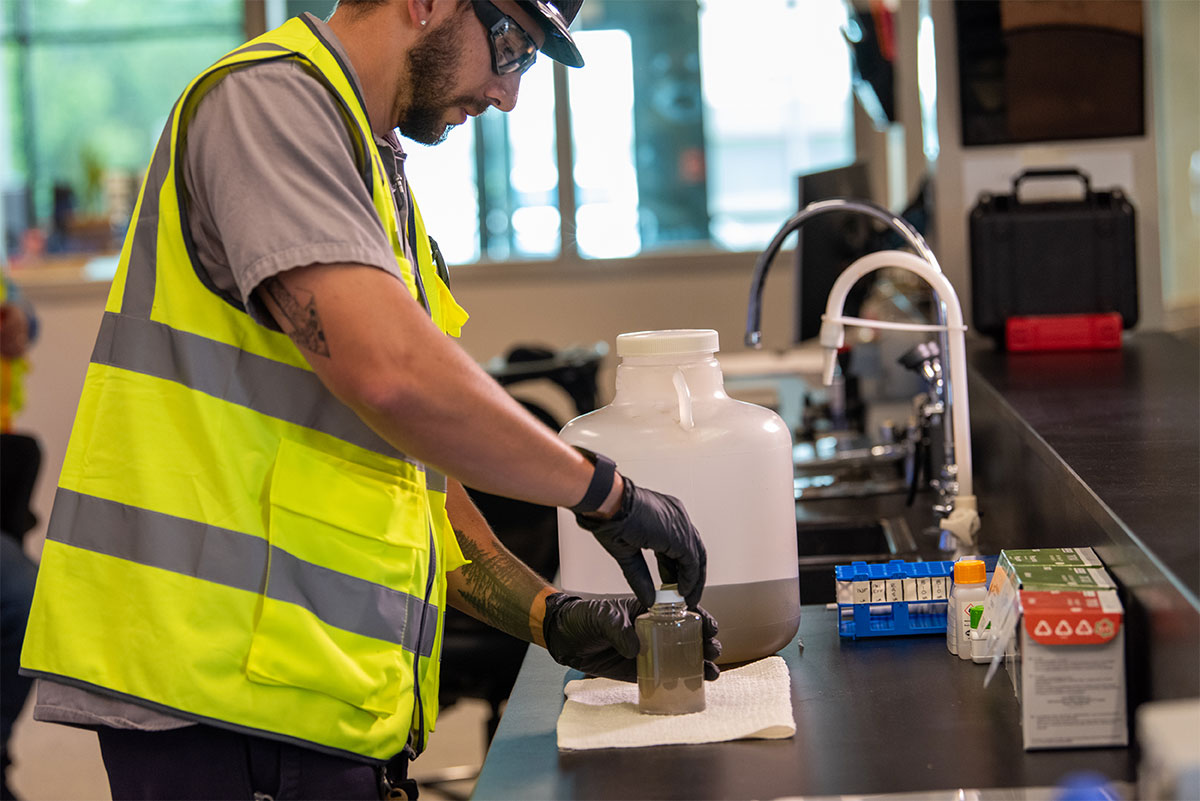
In Bethel, Alaska, a Tribal health organization built a wastewater surveillance system using the same rapid PCR technology already in its hospital lab, and it outperformed expectations. Over two seasons, the system gave up to ten days of advance warning on flu outbreaks and consistently flagged rising COVID-19 and RSV activity before clinical data confirmed it.
Wastewater surveillance has become a familiar public health tool since the pandemic, but isolated, underserved communities carrying a disproportionate burden of respiratory illness have largely been left out. A new study in CDC’s Emerging Infectious Diseases journal challenges that gap, documenting two years of data from the Yukon-Kuskokwim Health Corporation (YKHC), a Tribal health organization serving roughly 28,000 people in southwestern Alaska.
Bethel, the study site, has about 6,300 residents, three-quarters Alaska Native, and sits 400 miles west of Anchorage, accessible only by air or water. Its wastewater infrastructure is a patchwork of piped and truck-hauled systems. YKHC researchers sampled the community’s main lift station and analyzed results on-site using the same cartridge-based PCR platform as the hospital lab, skipping the cost and delay of shipping samples to distant reference labs.
The results were strong. Wastewater signals for SARS-CoV-2, influenza A, influenza B, and RSV all correlated significantly with clinical case counts from the region’s only hospital. Influenza B and A led clinical detection by five and ten days respectively. RSV detection carried an eight-day lead and improved sharply in year two, with sensitivity rising from 37 to 73 percent. SARS-CoV-2 surveillance hit 95.9 percent sensitivity.
YKHC used the data to time flu vaccine campaigns and RSV prophylaxis distribution, including nirsevimab, a monoclonal antibody for infants, and built a public dashboard translating results into recommended actions for residents.
A few choices explain the program’s success: local ownership, an organization that already had community trust and water-testing experience, an on-site PCR system avoiding shipment delays, and a simplified protocol that skipped a concentration step without hurting detection.
The study has real limitations. Its semi-quantitative sampling method constrains trend analysis, Bethel’s truck-hauled sewage system adds variable lag, the clinical PCR platform wasn’t independently validated for wastewater use, and some underascertainment of community infections likely remains.
None of that undermines the central finding: community-run wastewater surveillance works in remote, resource-limited settings and can drive real public health decisions. YKHC is now expanding to remote villages in the region and piloting wastewater-based tuberculosis surveillance, and the results suggest decentralized, tribally operated models like this one deserve comparable funding consideration alongside the urban surveillance networks that have dominated national investment to date.
Sources and further reading:
Lefferts B, et al. Wastewater Respiratory Virus Surveillance in Remote Community, Alaska, USA, 2022–2024. Emerging Infectious Diseases. September 2026.
This article was researched and sourced by Global Biodefense editors and reported with Claude AI assistance for drafting and editing.