

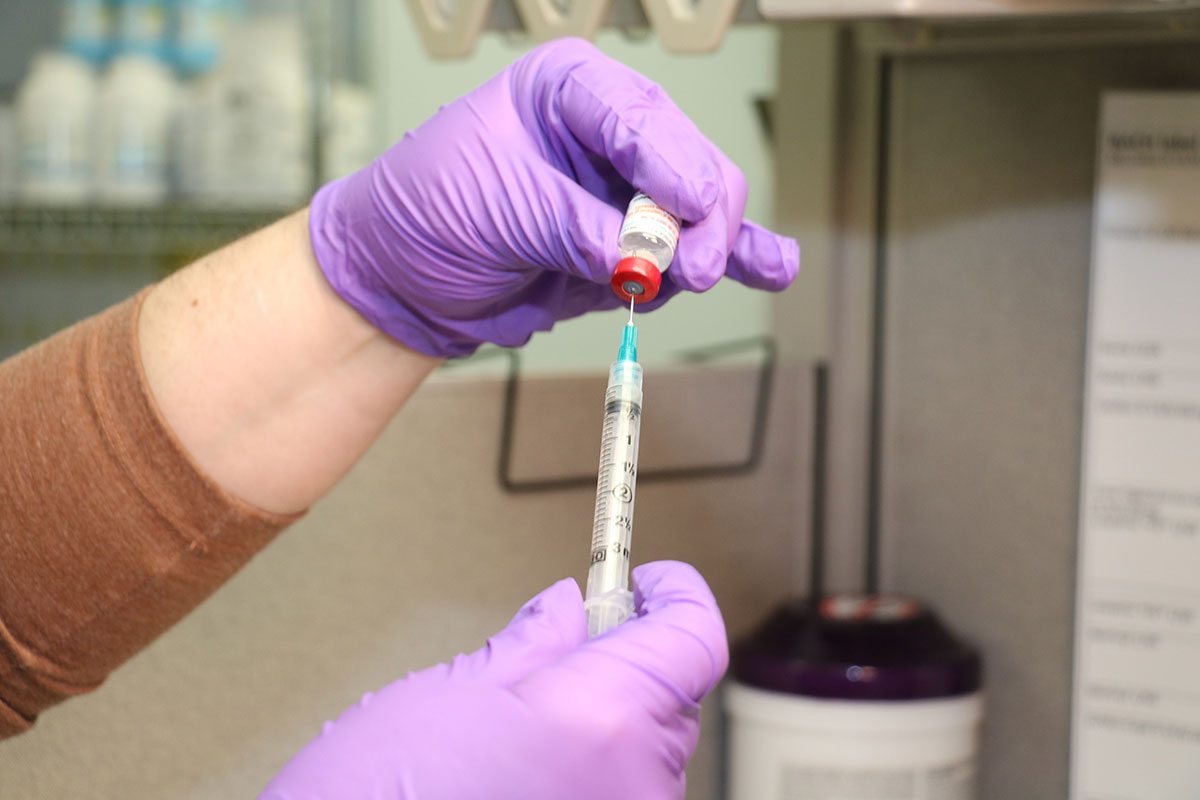
A vaccine already recommended for adults over 50 may be delivering a powerful bonus: protection against heart attacks, heart failure, and stroke. A large study published this week in Nature Medicine found that people who received Shingrix, the current recombinant shingles vaccine, spent significantly more time free of cardiovascular disease compared to those who received an older shingles vaccine. The findings, drawn from the health records of more than 72,000 Americans, represent some of the most methodologically rigorous evidence yet that vaccination against shingles may carry benefits extending well beyond its primary purpose.
Shingles is caused by the varicella zoster virus, the same pathogen responsible for chickenpox. After an initial chickenpox infection, the virus lies dormant in nerve tissue and can reactivate decades later, causing a painful rash most commonly in adults over 50. Shingrix, manufactured by GSK, differs from the earlier Zostavax vaccine in that it combines a viral protein with an immune-boosting compound rather than using a weakened live virus. It became the standard of care in the United States after October 2017, when health authorities recommended it over Zostavax.
The research team used that policy transition as a natural experiment. Rather than comparing vaccinated people to unvaccinated individuals, which tends to inflate apparent benefits because healthier people are more likely to seek vaccination, the researchers compared two groups of more than 36,000 adults aged 60 and older: one vaccinated between April and September 2017, when the older live vaccine still predominated, and one vaccinated during the same calendar months a year later, once Shingrix had taken over. Drawing on electronic health records from the TriNetX US Collaborative Network, a large multi-institution healthcare database, they tracked cardiovascular outcomes over seven years.
People who received Shingrix spent, on average, 9% more cumulative time free of the composite cardiovascular endpoint, which included ischemic heart disease, heart failure, and stroke. Their burden of ischemic heart disease was 10% lower and heart failure 12% lower, and men specifically showed a 12% lower burden of ischemic stroke. An association with atrial fibrillation, a 7% reduction in burden, also emerged.
They also compared people who received the Tdap vaccine during the same two time windows, 2017 versus 2018, and found no difference in cardiovascular outcomes between those groups, evidence against the possibility that shifting diagnostic patterns or recordkeeping changes, rather than the shingles vaccine itself, explain the result.
A question of mechanism
The biological explanation for these findings remains under investigation. One leading hypothesis centers on the AS01 adjuvant, the immune-boosting compound in Shingrix. Research suggests this compound may trigger lasting changes in the immune system, including reduced inflammatory signaling through interleukin-6, a molecule already known to be causally linked to cardiovascular risk. The protective effect appeared strongest in the first half of the follow-up period and attenuated over time, which the authors note may be consistent with a time-limited immune effect and could support future research into repeated vaccination schedules.
Preventing shingles itself seems unlikely to be the full explanation. The difference in actual shingles cases between the two vaccine groups was less than 0.5% at mid-follow-up, while the reduction in ischemic heart disease burden was 1.5%, a gap suggesting that something beyond shingles prevention is at work.
The study adds to a growing body of research on vaccines and cardiovascular health. Separately, a 2025 study published in Clinical Infectious Diseases using Kaiser Permanente Southern California data found that two doses of Shingrix were associated with a 28% reduction in hospitalized heart attacks and a 42.5% reduction in hospitalized stroke compared to unvaccinated individuals, though that design was more susceptible to healthy-vaccinee bias.
Researchers are careful to note that even this more rigorous natural-experiment design cannot definitively establish causation. The authors call for clinical trials and mechanistic studies to confirm the findings. If confirmed, the implications are substantial: the researchers estimate that a 0.8% absolute reduction in heart disease and heart failure among adults over 60 in the United States alone would translate into hundreds of thousands of cases prevented.
Sources and further reading:
Corsi-Zuelli F, Li F, Upthegrove R, et al. Recombinant shingles vaccination and the risk of cardiovascular events. Nature Medicine, 26 August 2026.
Does the shingles vaccine cut heart-disease risk? Mounting evidence suggests a link — Nature
Rayens E, Sy LS, Qian L, et al. Adjuvanted Recombinant Zoster Vaccine is Effective Against Herpes Zoster Ophthalmicus, and is Associated With Lower Risk of Acute Myocardial Infarction and Stroke in Adults Aged ≥50 Years. Clinical Infectious Diseases, 15 November 2025.
This article was researched and sourced by Global Biodefense editors and reported with Claude AI assistance for drafting and editing.