

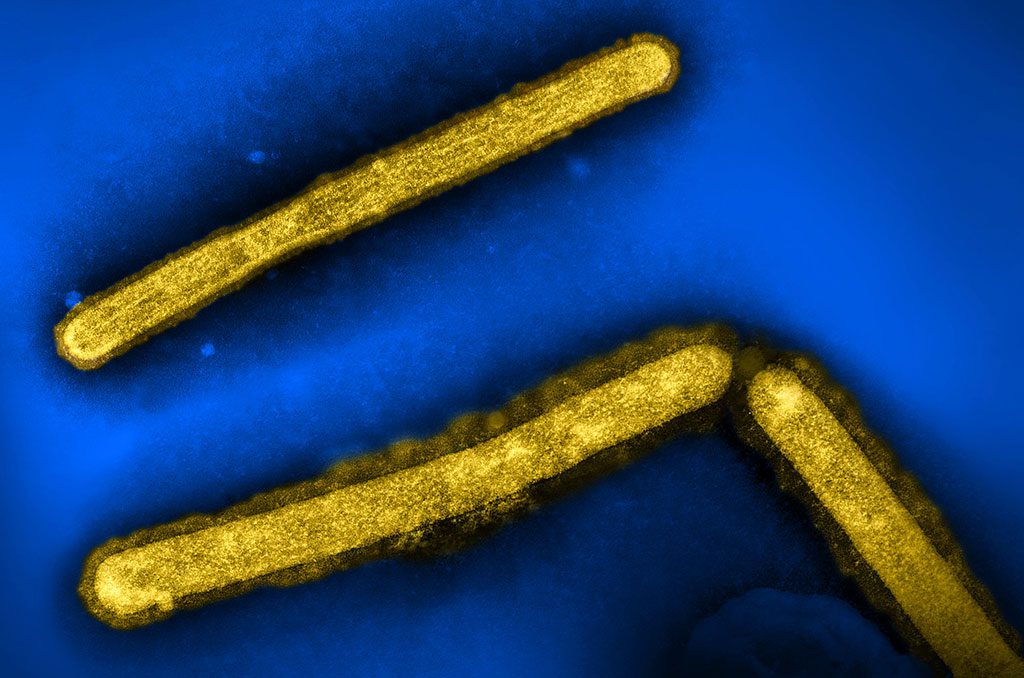
As H5N1 continues turning up in animals no one expected it to infect, from dairy cattle to marine mammals to household cats, the tools available to track where the virus has already spread have struggled to keep pace. A new test developed by researchers in Germany and the Netherlands addresses this challenge: a single antibody assay validated to work reliably across a strikingly broad range of species, birds and mammals alike, including humans.
The study published recently in the Journal of Clinical Microbiology. The researchers built a new double-antigen ELISA, a type of antibody test, using luciferase-based detection technology, a method that produces a glowing light signal to indicate a positive result, offering high sensitivity while working with very small sample volumes.
The core problem the test addresses is a longstanding gap in H5N1 surveillance: most existing antibody tests were developed and validated primarily for poultry, and their reliability drops off, or simply remains unverified, when applied to other bird species or to mammals. That gap has become increasingly consequential as the current H5N1 clade 2.3.4.4b panzootic has spilled over into more than 80 mammalian species since 2016, including a 2024 outbreak in U.S. dairy cattle that has since spread to more than 1,000 farms across 18 states, alongside documented infections in cats, other farm animals, and farmworkers.
Because the virus has shown signs of adapting toward more efficient replication in mammals, researchers say broader, more reliable surveillance at the human-animal interface has become an urgent priority, and that surveillance depends on having a test that actually works consistently across the full range of species involved.
The new assay, referred to as the H5-NanoLuc ELISA, performed well against that challenge. In testing, it reliably detected H5-specific antibodies across a wide range of bird species, cattle, domestic pigs, wild boar, ferrets, and humans, and in several cases outperformed a commercially available reference ELISA. Notably, the test showed superior sensitivity in waterfowl like ducks, geese, and swans, species whose distinct antibody makeup can cause false negatives in older competition-based test formats, and detected antibody responses in vaccinated cattle and humans at lower concentrations than the existing commercial test could.
The researchers also found the assay could distinguish between antibodies targeting the H5 “head” region versus the more conserved “stalk” region, a technical distinction with direct practical value: it means the test can tell the difference between someone who has actually been exposed to or vaccinated against H5N1 specifically, versus someone carrying only broader, cross-reactive antibodies from prior seasonal flu exposure or vaccination.
Because reliable reference samples and gold-standard comparison tests don’t exist for many wildlife species, validating a truly species-independent assay remains inherently difficult, and the researchers acknowledge this as a limitation of their own validation data. The test also showed only moderate agreement with existing assays when applied to samples from wild carnivores, likely due to degraded sample quality from postmortem specimens. And because the assay is optimized specifically for clade 2.3.4.4b, the currently dominant strain, it may have reduced sensitivity for detecting antibodies against other H5 clades, meaning it would need to be used alongside broader-reacting tests in regions where multiple H5 lineages are circulating simultaneously.
The researchers frame the test as a complement to, rather than a replacement for, existing H5 ELISAs, recommending the two be used in combination to compensate for each other’s blind spots across the growing list of species now considered at risk.
Source and further information:
Development of a multi-species luciferase-based double-antigen ELISA for the detection of antibodies against influenza A virus H5 clade 2.3.4.4b. Journal of Clinical Microbiology, August 13, 2026.
This article was researched and sourced by Global Biodefense editors and reported with Claude AI assistance for drafting and editing.