

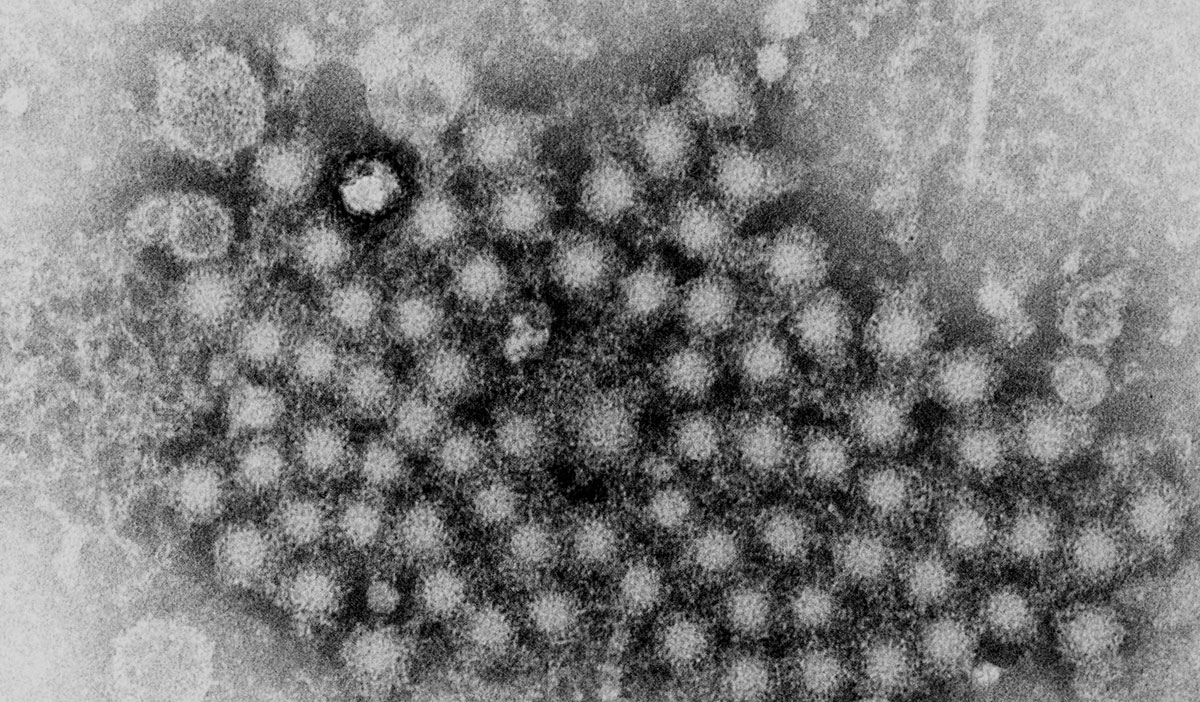
New CDC surveillance data show Florida continuing to dominate the nation’s acute hepatitis C case count by a wide margin, accounting for roughly 43% of all confirmed cases reported nationally so far this year. The figures, published through CDC’s National Notifiable Diseases Surveillance System (NNDSS) for the week ending September 12, 2026, put Florida’s year-to-date total at 1,018 confirmed acute cases, out of 2,358 reported nationwide, a share far out of proportion to the state’s roughly 6.5% share of the U.S. population.
Hepatitis C is a bloodborne viral infection that attacks the liver, most commonly transmitted through sharing needles or other equipment used to inject drugs, though it can also spread through unscreened blood products, unsterile tattooing or piercing equipment, and less commonly through sexual contact. Acute infections are frequently asymptomatic, meaning many people who contract the virus are unaware of it until, in roughly half to three-quarters of cases, it progresses to chronic infection capable of causing cirrhosis, liver failure, or liver cancer over years or decades.
A Pattern, Not an Anomaly
Florida’s outsized share of the nation’s cases this week reflects a well-documented, longstanding trend. Florida has consistently ranked among the states with the highest reported acute hepatitis C cases nationally, and a 2026 study of hepatitis C care in Florida emergency departments similarly describes the state as having the second-highest rate of acute HCV infection in the country. State health data likewise show Florida’s overall hepatitis C prevalence rate (950 cases per 100,000 residents from 2013-2016) running close to the national average, with an estimated 151,000 Floridians living with the virus and nearly 700 hepatitis C-related deaths recorded in 2023 alone.
Injection Drug Use Remains the Primary Driver
Public health researchers and state officials point to injection drug use, fueled by the broader opioid and fentanyl crisis, as the leading factor behind Florida’s elevated case counts. Younger adults under 30 account for a meaningful share of the state’s HCV cases, a trend directly tied to rising injection drug use nationally, a pattern Florida has not been exempt from. The Florida Department of Health identifies non-sterile injection drug use as the most common transmission route in the state, and separately flags non-professional tattooing as a notable risk factor, particularly among populations with histories of incarceration.
Demographic data compiled by HepVu, a hepatitis surveillance mapping project, show Florida’s hepatitis C burden skews heavily toward men, who account for roughly 69% of prevalent cases despite making up just under half the state’s population, and toward adults aged 50 to 74, who represent over 72% of cases despite comprising less than a third of the population, a pattern consistent with the well-documented “baby boomer” wave of hepatitis C linked to blood transfusions and medical procedures before widespread blood-supply screening began in 1992.
Active But Varied Surveillance Contributes to Strong Case Counts
Florida’s high case counts likely reflect, at least in part, more active case-finding rather than infection rates alone. The state maintains a comparatively robust hepatitis surveillance and testing infrastructure, including county-level hepatitis investigators and CDC-funded initiatives to expand testing in high-risk populations, factors that tend to surface more cases in jurisdictions that test more aggressively, independent of any underlying difference in true infection rates.
Research specific to Florida complicates any simple “more testing equals more cases” explanation. A 2026 analysis in Public Health Reports found HCV screening across the state was generally low and geographically uneven, concentrated in north and northeastern Florida, with disparities tied to socioeconomic status. A separate 2025 study of Florida’s federally qualified health centers found screening remained inconsistent across racial and insurance groups, with non-Hispanic white and English-speaking Hispanic patients, despite having some of the state’s highest rates of hepatitis C-related liver cancer, showing lower odds of being screened than other groups. Together, this suggests Florida’s true case burden, including undiagnosed infections, may exceed what NNDSS reporting captures
A Global and National Backdrop
Florida’s situation sits within a broader global health challenge. The World Health Organization estimates roughly 47 million people worldwide live with chronic hepatitis C infection, with about 0.9 million new infections occurring annually and approximately 239,000 deaths attributed to the virus in 2024, primarily from cirrhosis and liver cancer. While curative antiviral treatments can eliminate the virus in more than 95% of patients within roughly two to three months, WHO estimates only about 36% of people ever infected globally know their diagnosis, and just 20% of those diagnosed have received treatment, underscoring a persistent gap between the availability of a cure and actual access to diagnosis and care, a gap reflected at the state level in Florida’s own uneven screening patterns.
As with all NNDSS surveillance data, these figures carry standard provisional caveats: case counts are voluntarily submitted by state and local health departments and are subject to revision as delayed or corrected reports are processed, and reporting completeness can vary by jurisdiction based on local testing and reporting practices.
Sources and further reading:
Centers for Disease Control and Prevention. Hepatitis C, Acute, Confirmed — Weekly cases of notifiable diseases, United States, U.S. Territories, and Non-U.S. Residents, week ending September 12, 2026 — National Notifiable Diseases Surveillance System.
Hepatitis C — Florida Department of Health
Understanding the Hepatitis C Epidemic in Florida — HepVu
Hepatitis C Fact Sheet — World Health Organization
This article was researched and sourced by Global Biodefense editors and reported with Claude AI assistance for drafting and editing.