

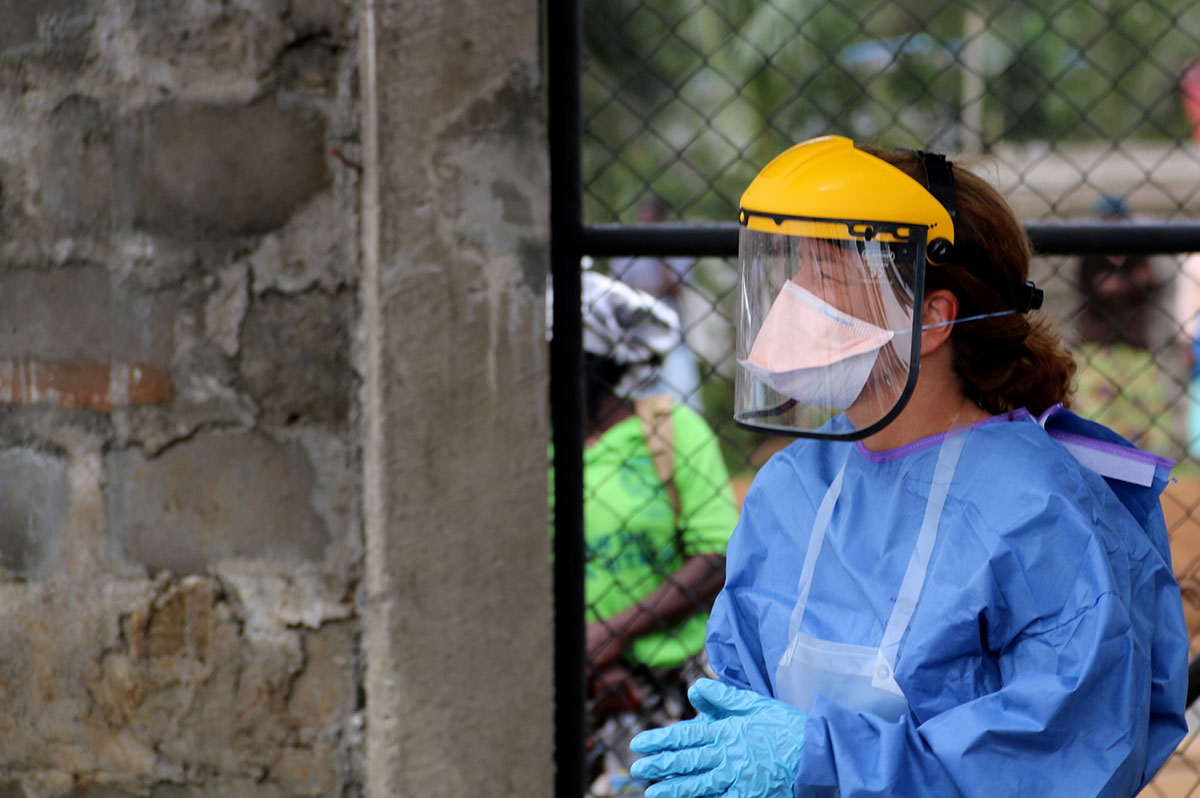
An active Ebola outbreak has now crossed international borders, surpassed 600 suspected cases and 130 suspected deaths, and prompted the World Health Organization to declare a Public Health Emergency of International Concern. For professionals in global health security, the trajectory of this outbreak is alarming — but it is not surprising. The conditions that allow a contained cluster to become a regional emergency do not appear overnight. They are built, slowly, through institutional decisions that erode the detection, response, and coordination infrastructure that keeps outbreaks from becoming catastrophes.
“Ebola does not wait for bureaucratic reorganizations. It spreads when surveillance systems are weakened, health workers are laid off, clinics lack protective equipment, and communities lose the trusted partners who help detect and contain outbreaks before they become public health emergencies.“
That infrastructure has been under sustained pressure. Across the Democratic Republic of Congo and surrounding countries, programs supporting disease surveillance, infection control, emergency supply chains, and frontline health response were cut, paused, or destabilized following the Trump administration’s dismantling of the U.S. Agency for International Development (USAID) and broader reductions in U.S. global health assistance. According to reporting cited by the House Appropriations Committee’s Democratic members, response teams in some of the most vulnerable countries were frozen mid-operation, local health systems were weakened, and organizations working in the field were forced to reduce staff and programming — in some cases, in the very communities now contending with Ebola.
The consequences of those decisions are now measurable in human lives.
Ranking Member Rosa DeLauro (D-CT), the senior Democrat on the House Appropriations Committee, did not mince words in a formal statement this week: “Ebola does not wait for bureaucratic reorganizations. It spreads when surveillance systems are weakened, health workers are laid off, clinics lack protective equipment, and communities lose the trusted partners who help detect and contain outbreaks before they become public health emergencies.” Her statement directly attributed the conditions enabling the current outbreak to the administration’s elimination of USAID, the withholding and slashing of U.S. assistance to the region, and the firing of critical global health staff.
The United States did not build its global health security architecture out of generosity alone. It built it because early detection and containment of infectious disease abroad is categorically less expensive — in dollars, in diplomatic capital, and in lives — than responding to an international emergency after borders have been crossed. The investments made over years in laboratory capacity, community health worker networks, trusted local partnerships, and supply chain logistics exist precisely because outbreak response cannot be improvised at scale.
When the WHO declares a Public Health Emergency of International Concern, it signals that a pathogen has demonstrated the potential to spread internationally and requires a coordinated global response. The DRC-Uganda outbreak has now met that threshold. What is particularly sobering for the health security community is that the DRC has managed previous Ebola outbreaks — some of them larger — in part because of the very response infrastructure that has now been degraded. Institutional memory, community trust, trained personnel, and functional supply chains are operational assets, and their absence is felt immediately when an outbreak begins.
A disease that spreads in a context of weakened surveillance and depleted health worker capacity does not remain a remote problem for long. International travel, regional trade, and population movement mean that containment failures abroad translate into elevated risk at home. The CDC’s capacity to engage internationally — including through disease surveillance and coordination with global partners — is also central to the domestic early-warning system. Calls to ensure the CDC retains the resources necessary for international disease surveillance are a direct line of defense for American communities.
The argument that foreign assistance and global health programs represent expendable budget lines has never been supported by the epidemiological record. What the current Ebola emergency illustrates, with painful clarity, is the cost of testing that argument in practice. Rebuilding that capacity — the laboratories, the community health networks, the trusted partnerships, the trained workforce — will take time, resources, and sustained political will.
Sources and further reading:
Trump Created the Perfect Storm to Allow for Rapid Spread of Ebola – House Committee on Appropriations