

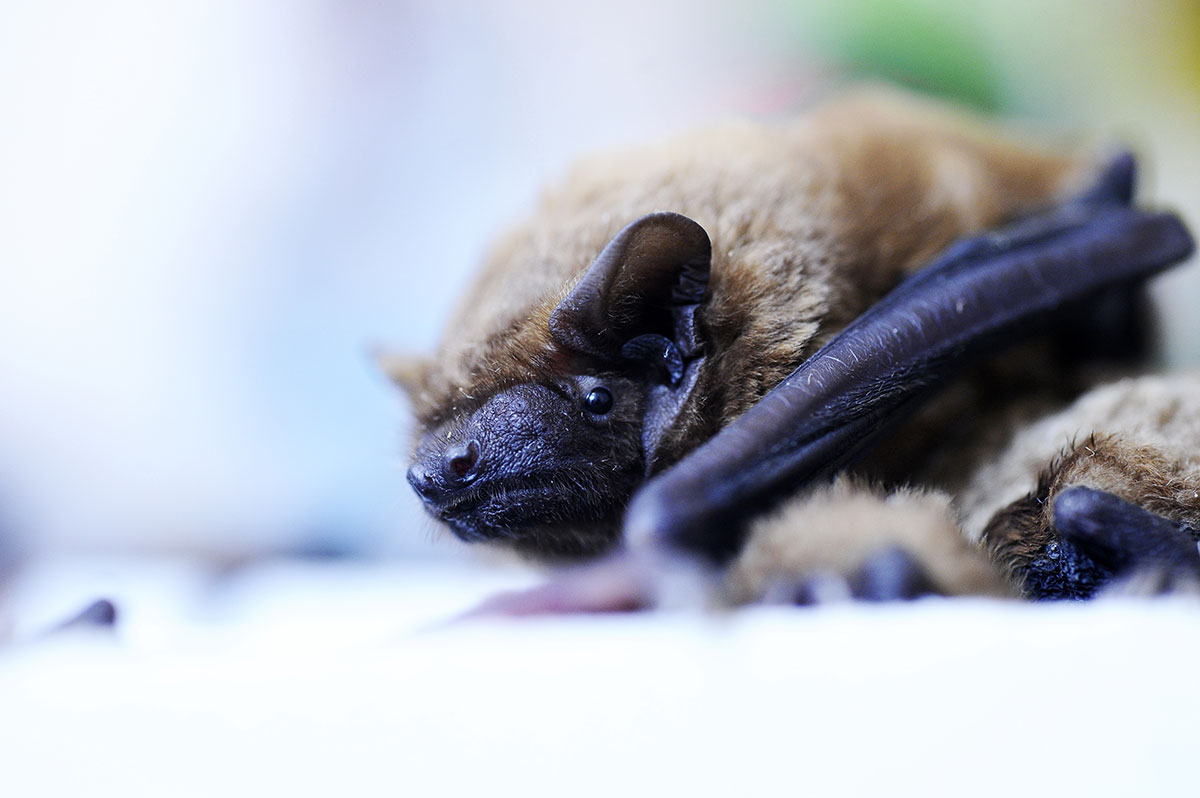
The research, led by Giulia Gallo and colleagues at The Pirbright Institute, the University of Cambridge, the KEMRI-Wellcome Trust Research Programme, the University of York, and the National Museums of Kenya, represents a systematic, genus-wide efforts to map how alphacoronaviruses — a large and largely understudied family of bat-borne viruses — might find their way into human cells. The study was published on April 22, 2026.
A New Receptor, a New Risk Category
The central finding is both technically specific and broadly significant. The research team identified that a coronavirus called CcCoV-KY43, isolated from the heart-nosed bat (Cardioderma cor) in Kenya, uses a human protein called CEACAM6 as an entry receptor — the molecular “door handle” the virus can grip to gain access to a cell. CEACAM6 is found on the apical surfaces of mucosal epithelia, including in the human lung, making it biologically relevant for respiratory infection.
This matters because CEACAM6 has not previously been reported as a primary entry receptor for any coronavirus. The broader coronavirus surveillance and pandemic preparedness enterprise has been almost entirely focused on betacoronaviruses — the lineage that includes SARS-CoV-2, MERS-CoV, and the original SARS virus — and on their use of well-characterized receptors like ACE2 and DPP4. This study demonstrates that an entirely separate branch of the coronavirus family tree may be exploiting a different molecular pathway into human cells, one that was not previously on the pandemic preparedness radar.
What the Data Showed
Of the 40 spike proteins tested, the vast majority showed no ability to bind any of the known human receptors — suggesting that use of ACE2 and APN, the two established alphacoronavirus entry receptors, is relatively rare across the genus. The standout exception was CcCoV-KY43, whose spike protein demonstrated productive interaction with human CEACAM6. Importantly, the team also conducted sero-surveillance of human populations living near the bat colonies in Kenya and found no evidence of prior infection, which experts commenting on the study described as reassuring but not definitive.
Limitations Worth Noting
Several independent experts emphasize that receptor binding is only the first of many hurdles a virus must clear to cause human disease and onward transmission. The study’s panel of 40 spike proteins, while phylogenetically optimized, represents roughly 1.5 percent of known sequences, meaning viruses with spillover potential may have been missed. Additionally, the pseudovirus approach, while safe and informative, cannot fully replicate the behavior of a live virus, particularly with respect to immune evasion and intracellular replication dynamics.
Implications for Biosecurity and Pandemic Preparedness
The identification of CEACAM6 as a functional human entry receptor for alphacoronaviruses means that global coronavirus surveillance programs — which have largely been calibrated around ACE2-dependent betacoronaviruses — may be systematically blind to an entire risk category. The authors also report that related bat alphacoronaviruses from Europe and East Asia show similar receptor usage patterns.
Upon identifying CEACAM6 as a receptor in early 2024, the researchers proactively notified colleagues at the National Museum of Kenya, flagged potential risks to bat-sampling teams, and made a deliberate decision — in consultation with UK biosecurity advisors — not to attempt to rescue or propagate the live virus in their laboratories.
For policymakers and health security practitioners, the broader lesson is structural: pandemic preparedness frameworks built around the last pandemic pathogen will always be a step behind. This study argues for expanding both the taxonomic scope of viral surveillance and the repertoire of human receptors screened for zoonotic compatibility — investments that, if made now, could compress the warning time before the next spillover event becomes a public health emergency.
Sources and further reading:
Gallo G, et al. Heart-nosed bat alphacoronaviruses use human CEACAM6 to enter cells. Nature. 22 April 2026.
Study investigating whether bat alphacoronaviruses can enter human cells – Science Media Centre
Expert reaction to study looking at whether a bat alphacoronavirus can enter human cells – Science Media Centre