

Diseases are appearing in places they have never been. Pathogens are expanding their ranges, vectors are surviving in new climates, and outbreak timing is shifting in ways that catch health systems off guard. The scientific community broadly accepts that climate change is driving these changes, but a precise, quantified understanding of how specific climate shifts cause specific disease burdens has remained elusive. Without that precision, public health policy rests on associations rather than evidence, preparedness investments may be misallocated, and public trust in scientific claims can erode.
A new report published by the American Academy of Microbiology (AAM) and the American Geophysical Union (AGU) addresses this gap directly. Developed by leading experts in epidemiology, microbial ecology, infectious disease, and climate science who gathered in October 2025, the report charts a research and policy agenda for moving the field from documenting correlations to establishing causes, and from reactive case management to proactive preparedness.
The Attribution Problem
The report centers on detection and attribution science, a set of formal statistical methods that asks not merely whether disease patterns are changing alongside climate, but whether anthropogenic climate change is causally responsible for a measurable share of the disease burden. As the report notes, not all changes in infectious disease incidence result from climate change, and overstating the climate connection without rigorous evidence can distort prevention strategies and undermine public confidence.
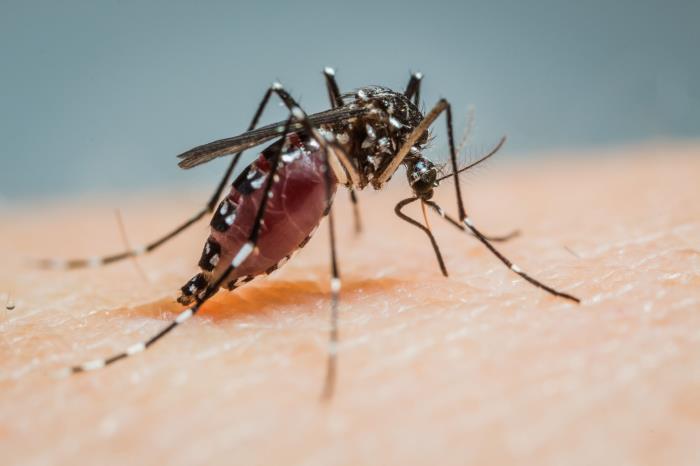
To date, only five formal infectious disease attribution studies exist globally, all focused on mosquito-borne diseases. Three have been published in peer-reviewed journals; two remain preprints. Among the findings: approximately 18% of the dengue burden across 21 countries in Asia and the Americas between 1994 and 2015 is attributable to climate change, with projections suggesting 49 to 76% increases in dengue burden by mid-century depending on emissions scenario. In Peru, extreme precipitation driven by Cyclone Yaku in 2023 was found to be 189% more likely due to anthropogenic forcing, and that precipitation accounted for roughly 60% of dengue cases in affected districts during Peru’s record-breaking outbreak that year. For West Nile virus, New York State’s transmission season has lengthened by approximately 20 days since 1999, a trend 6.4 times more likely attributable to anthropogenic warming than natural variability.
For malaria, the picture is more nuanced: a century of warming has produced opposing regional effects in sub-Saharan Africa, with modest increases in historically cooler highland and southern areas and slight decreases in already hot western regions, with an overall continent-wide effect not significantly different from zero. The authors note that in the malaria case, historical control programs produced substantially larger changes in prevalence than climate change.
These five case studies represent the current frontier of a field that the report calls underdeveloped relative to the urgency of the challenge.
Why So Few Attribution Studies?
Formal attribution is methodologically demanding. It requires mechanistic understanding of how a specific climate driver affects transmission, long-term observational data spanning multiple years or decades, and the construction of counterfactual scenarios modeling disease outcomes in the absence of anthropogenic forcing. Most existing disease-climate research lacks one or more of these elements. Long-term coordinated datasets linking climate, pathogen, and health outcome data have historically been rare, especially in low- and middle-income countries where disease risks are often greatest. Many studies examine single climate drivers without accounting for the interacting effects of land use change, public health interventions, human mobility, and socioeconomic factors that shape transmission in the real world. Evolutionary adaptation in pathogens and vectors is similarly understudied, even though rapid pathogen evolution may allow microbes to respond to climate faster than hosts can.
The report also flags data infrastructure as a systemic bottleneck. Clinical and environmental data streams remain largely siloed: epidemiological surveillance, meteorological monitoring, and genomic sequencing operate in parallel rather than in concert. Health record systems do not integrate environmental data in real time. This limits the ability to detect climate-driven disease emergence and attribute outbreaks to specific environmental drivers.
The Emerging Disease Landscape: What Is Already Changing
Beyond the attribution studies, the report documents a broader and accelerating shift in infectious disease geography. Arboviruses are expanding latitudinally and altitudinally. Vibrio infections are occurring at higher latitudes and for longer portions of the year. Plague, caused by the bacterium Yersinia pestis, is reemerging as warmer and wetter seasons drive rodent expansion and increase human-animal contact. Invasive fungal diseases, including Valley fever, are expanding in association with drought and changing soil conditions. Aedes-borne virus transmission risk is redistributing globally as thermal and moisture conditions shift.
The report also flags a practical consequence of this geographic expansion that deserves more attention: clinicians and public health systems in regions newly affected by a disease may lack the training, diagnostic tools, and protocols to recognize and respond to it. Diseases outside their historic transmission range are, by definition, diseases that local health workers may never have encountered in practice.
Building Systems That Can Respond
The report’s recommendations cluster around three areas: improving predictive models and policies, strengthening public health infrastructure and workforce capacity, and coordinating more effectively at both local and global levels.
On predictive models, the authors call for hybrid approaches that combine mechanistic biological understanding with machine learning and data science, while cautioning that purely data-driven models are vulnerable to the nonstationarity of climate change, meaning historical relationships between climate and disease may not persist under novel climate conditions. Artificial intelligence holds promise, particularly through physics-informed neural networks and mechanistic-statistical hybrid approaches, but requires validation under extrapolation conditions not yet seen in the historical record.
On infrastructure, the report calls for investment in integrated surveillance systems that link health and environmental data in real time, expansion of wastewater surveillance as an early detection tool, and development of thermostable diagnostics and vaccines deployable in low-resource and cold-chain-constrained settings. The COVID-19 pandemic’s demonstration of the mRNA platform’s rapid-response capability is noted as a model, alongside recognition that cold chain requirements and political hesitancy remain significant deployment barriers. The report specifically identifies fungal infections as a major gap, noting that no approved vaccines exist for fungal diseases in humans and that diagnostic access remains limited globally.
On global coordination, the report is direct about the challenges. Countries that share surveillance data risk economic punishment for transparency, as South Africa’s rapid identification of the Omicron variant demonstrated when immediate travel bans followed. Journal paywalls and the dominance of English in scientific publishing disadvantage researchers in lower-income countries. Funding for global health research has contracted since 2023, and reductions in support for global health security infrastructure are, in the authors’ assessment, occurring precisely when climate-driven disease pressures are intensifying.
The report calls explicitly for mechanisms that reward rather than punish early detection, for open-access data and publication norms, for community-led research agendas that ground global initiatives in local realities, and for a model of international partnership that builds local data analysis capacity rather than exporting biospecimens and research outputs to high-income institutions.
The evidence for broad climate-disease linkages is already sufficient to justify action. What is missing is the precision needed to direct that action most effectively, and building that precision requires sustained, longitudinal, cross-disciplinary, and globally coordinated scientific effort.
Sources and further reading:
Role of Climate Change on Infectious Diseases – American Society for Microbiology
New Report Charts Path for Climate-Disease Preparedness – American Society for Microbiology