

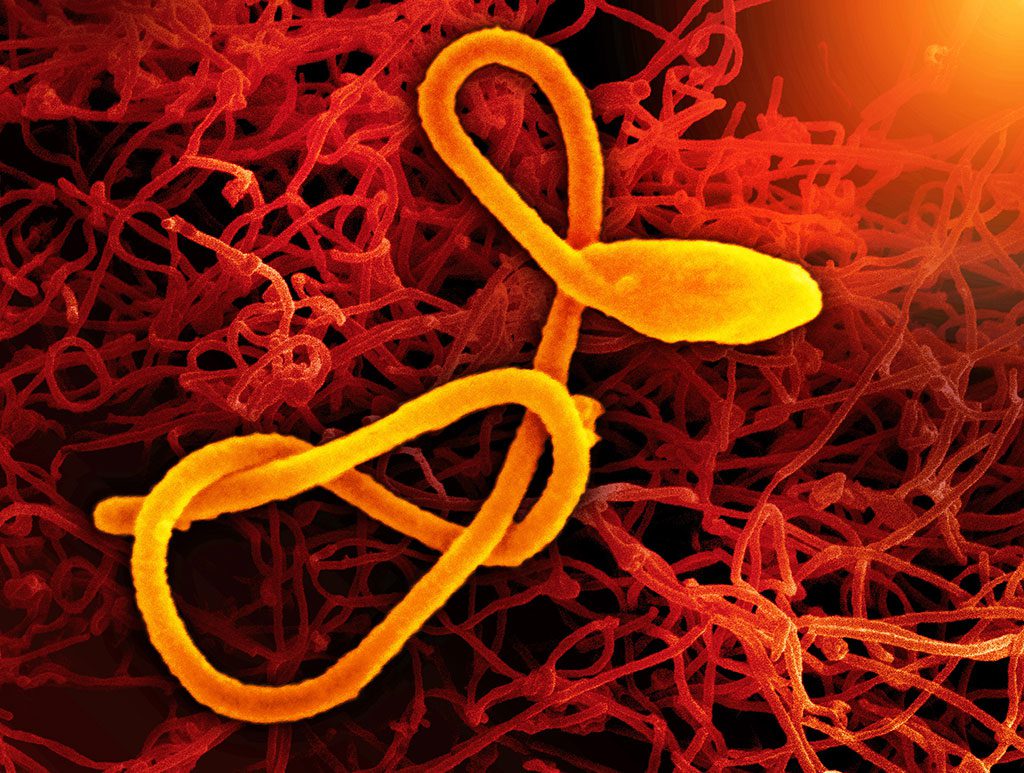
A fast-moving Ebola outbreak in the Democratic Republic of Congo has killed at least 65 people and generated 246 suspected cases, prompting Africa’s top public health body to convene an emergency coordination meeting with regional governments and global partners.
The Africa Centres for Disease Control and Prevention (Africa CDC) confirmed the outbreak on May 15, 2026, centered in Ituri province in northeastern DRC — marking the country’s 17th recorded Ebola outbreak since the virus was first identified there in 1976.
The outbreak is concentrated in the Mongwalu and Rwampara health zones, with suspected cases also reported in Bunia, Ituri’s provincial capital. Laboratory analysis by the Institut National de Recherche Biomédicale (INRB) in Kinshasa detected Ebola virus in 13 of 20 samples tested. Critically, preliminary results suggest the circulating strain is not Ebola Zaire — the species responsible for most previous DRC outbreaks and the only type for which a licensed vaccine currently exists. Sequencing to confirm the exact species was underway, with results expected within 24 hours of the announcement. Uganda’s Ministry of Health separately confirmed an Ebola case in a 59-year-old Congolese man who died in a Kampala hospital on May 14, identified as the Bundibugyo strain — an imported case with no confirmed local transmission as of May 15.
Non-Zaire Strain Changes the Response Calculus
The identification of a likely non-Zaire ebolavirus has significant implications for the response. The WHO-approved Ervebo vaccine and several leading therapeutic candidates were developed specifically against the Zaire strain. DRC maintains a stockpile of approximately 2,000 Ervebo doses and a supply of treatments, but these may offer limited protection against Sudan or Bundibugyo variants.
“If it is confirmed that this is not the Zaire species, this could be potentially challenging to control in the absence of a vaccine,” said Dr. Anne Cori, Associate Professor in Infectious Disease Modelling at Imperial College London’s School of Public Health, in comments to the Science Media Centre. She noted that only two monoclonal antibody therapeutics are licensed for Ebola treatment, and both are specific to the Zaire species, leaving other strains without approved therapeutic options beyond supportive care.
Africa CDC said it would assess the availability and appropriateness of medical countermeasures once sequencing results confirm the species. The WHO noted that field testing equipment used in Ituri initially returned negative results because it was calibrated only for the Zaire strain — a factor that delayed early detection.
Conflict, Mobility, and Delayed Detection
Public health experts expressed concern that the outbreak was already large before it was publicly reported. The WHO said it was first notified of suspected cases on May 5 and dispatched a team to investigate, but initial field samples tested negative. If the case count of 246 is confirmed, Dr. Cori’s team noted it would rank as the seventh largest Ebola outbreak across all species — and if caused by a non-Zaire strain, the second largest non-Zaire outbreak on record.
The geographic and security context amplifies the challenge considerably. Ituri is located more than 1,000 kilometers from Kinshasa, is characterized by poor road networks, and has experienced sustained violence from armed groups including an Islamic State-linked militant organization. Prof. Paul Hunter, Professor in Medicine at the University of East Anglia, pointed to the security situation as a direct impediment to response: vaccine workers have been killed during previous outbreaks in the province, and conflict likely contributed to delayed recognition of the current one. Mining activity in Mongwalu drives intense population movement, and the province borders both Uganda and South Sudan, raising cross-border spread concerns.
Massive Coordination Mobilized Across Governments and Industry
In response, Africa CDC convened a high-level emergency coordination meeting on May 15 bringing together health authorities from DRC, Uganda, and South Sudan alongside an extensive list of international partners, including the WHO, UNICEF, FAO, the U.S. CDC, the European CDC, China CDC, the Public Health Agency of Canada, and major pharmaceutical companies including Gilead Sciences, Merck, Johnson & Johnson, Regeneron, Roche, BioNTech, and Moderna. The WHO announced the release of $500,000 in emergency funding to support DRC’s response.
The U.S. CDC, under acting director Dr. Jay Bhattacharya, confirmed it was coordinating with country offices in both DRC and Uganda. However, experts noted that recent reductions to U.S. global health infrastructure — including the virtual elimination of U.S. Agency for International Development (USAID), cuts to NIH grants, and reduced CDC staffing — raise questions about the depth of U.S. financial and technical support available for the response. During a 2021 Ebola response, USAID provided up to $11.5 million in support across Africa; the extent of U.S. financial commitment to the current response has not yet been announced.
Despite these concerns, DRC brings substantial institutional experience to bear. “DRC has extensive experience responding to Ebola outbreaks and response capacity is significantly stronger today than it was a decade ago,” said Dr. Daniela Manno, Clinical Assistant Professor at the London School of Hygiene and Tropical Medicine, in comments to the Science Media Centre. “The country has established laboratory networks, trained outbreak response teams, vaccination strategies, and international partnerships that can be rapidly mobilised.” The country has contained multiple outbreaks, including a devastating 2018–2020 Zaire strain outbreak that killed more than 1,000 people.
Africa CDC is urging residents in affected and at-risk areas to follow national health authority guidance, report symptoms promptly, avoid contact with suspected cases, and cooperate with response teams.
Sources and further reading:
Africa CDC Calls Urgent Regional Coordination Meeting Following Ebola Virus Disease Outbreak in Ituri Province, DRC – Africa CDC
Ebola outbreak kills 65 people in eastern Democratic Republic of the Congo – The Guardian
New Ebola outbreak in the Congo kills dozens as Uganda confirms separate case – CBC
Large Ebola outbreak is declared in Congo – The New York Times
What to know about the Ebola outbreak blamed for scores of deaths in the Congo – AP News