

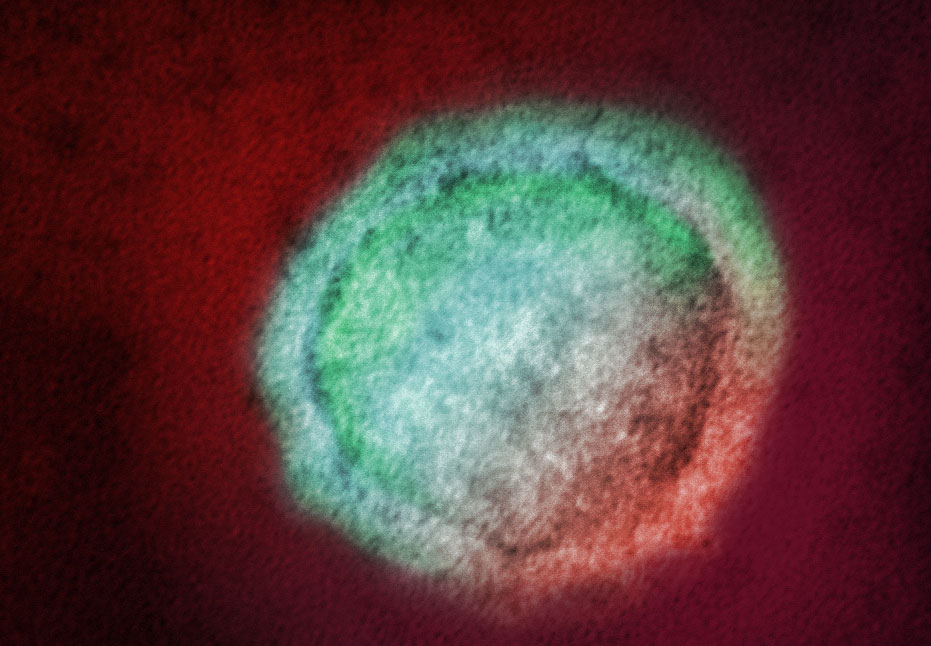
The global health community has spent years preparing for the next Nipah virus outbreak — developing candidate vaccines, modeling transmission dynamics, and refining clinical protocols. But a critical dimension of Nipah’s disease burden has remained largely uncharacterized: what happens to survivors after they leave the hospital. New research suggests the answer, for a substantial share of patients, involves months or years of neurological dysfunction, debilitating fatigue, and the unsettling possibility of symptoms returning after apparent recovery.
A review and meta-analysis published in eClinicalMedicine synthesizes, for the first time, the fragmented evidence base on post-acute sequelae following Nipah virus infection. Drawing on eight studies published through November 2025, the analysis finds that nearly one in four survivors experiences residual neurological deficits — a figure that nearly doubles among those who developed encephalitis during the acute phase of illness.
Encephalitis Survivors Bear the Greatest Burden
Among survivors of Nipah encephalitis specifically, the pooled prevalence of residual neurological deficits reached 45%. Among all Nipah infection survivors, including those with milder acute presentations, the estimate was 24%, or about 1 in 4 people. These deficits span a wide clinical spectrum, from relatively mild symptoms such as numbness and cognitive slowing to severe outcomes including vegetative states and seizure disorders. Researchers identified 34 distinct potential post-acute sequelae across included studies, the large majority neurological in nature.
Fatigue emerged as a particularly prominent complication, affecting approximately 48% of survivors — a figure that held even at ten-year follow-up, where fatigue and daytime somnolence remained significantly more prevalent among Nipah survivors than among seronegative household controls. For most affected patients, fatigue resolved within roughly eight months; for a subset, it persisted far longer. Cognitive impairment, motor and sensory dysfunction, ataxia, and cranial nerve palsy were among the other frequently reported sequelae.
A One-in-Ten Risk of Relapse — Even After Recovery
One of the more clinically significant findings concerns late-onset and relapsing neurological symptoms. Approximately 10% of all Nipah survivors developed new neurological symptoms after initially recovering — including patients who had experienced only mild or asymptomatic acute illness. Most delayed-onset episodes appeared within the first year following infection, though case reports describe potential late-onset encephalitis occurring up to eleven years after exposure. The authors note this pattern resembles features seen with other paramyxoviruses, though evidence for viral persistence in the human central nervous system remains absent for Nipah specifically.
Critical Evidence Gaps Ahead of Future Outbreaks
The analysis carries important caveats. Seven of the eight included studies drew exclusively from survivors of the 1998–1999 Malaysia and Singapore outbreak, meaning nearly all available data reflects the Malaysia strain of Nipah (NiV-M). Current and future outbreaks in Bangladesh and India are driven by a distinct Bangladesh strain (NiV-B), which produces a different acute clinical profile with greater respiratory involvement and a higher case fatality ratio. Whether post-acute sequelae following NiV-B infection resemble those documented here remains unknown. Additional limitations include the absence of control groups in seven of eight studies, small sample sizes, heterogeneous outcome measures, and potential publication bias — compounded by the fact that fewer than 320 known Nipah survivors have been identified worldwide as of May 2024.
A Neglected Dimension of a High-Priority Pathogen
Nipah is a WHO priority pathogen with pandemic potential, a broad bat reservoir range, and no approved vaccines or therapeutics. The disease has historically been assessed through the lens of its high acute case fatality rate — approximately 61% globally — but this analysis makes clear that survival is not synonymous with full recovery.
The authors recommend survivors be monitored for late-onset or relapsing neurological symptoms for at least one year following infection, regardless of initial presentation severity. Incorporating disability burden into outbreak impact models will be essential for accurate risk assessment. For vaccine developers and therapeutic researchers, the evidence strengthens the case for defining post-acute neurological outcomes as secondary trial endpoints. And for governments and health ministries in South Asia, it underscores the urgent need for prospective, controlled cohort studies among NiV-B survivors — research that does not yet exist.
Sources and further reading:
Zhang T, Wei Q, Schmit N Post-acute sequelae after Nipah virus infection: a systematic review and meta-analysis. eClinicalMedicine, April 2026
Study highlights long-term neurologic impacts of Nipah infection – CIDRAP