

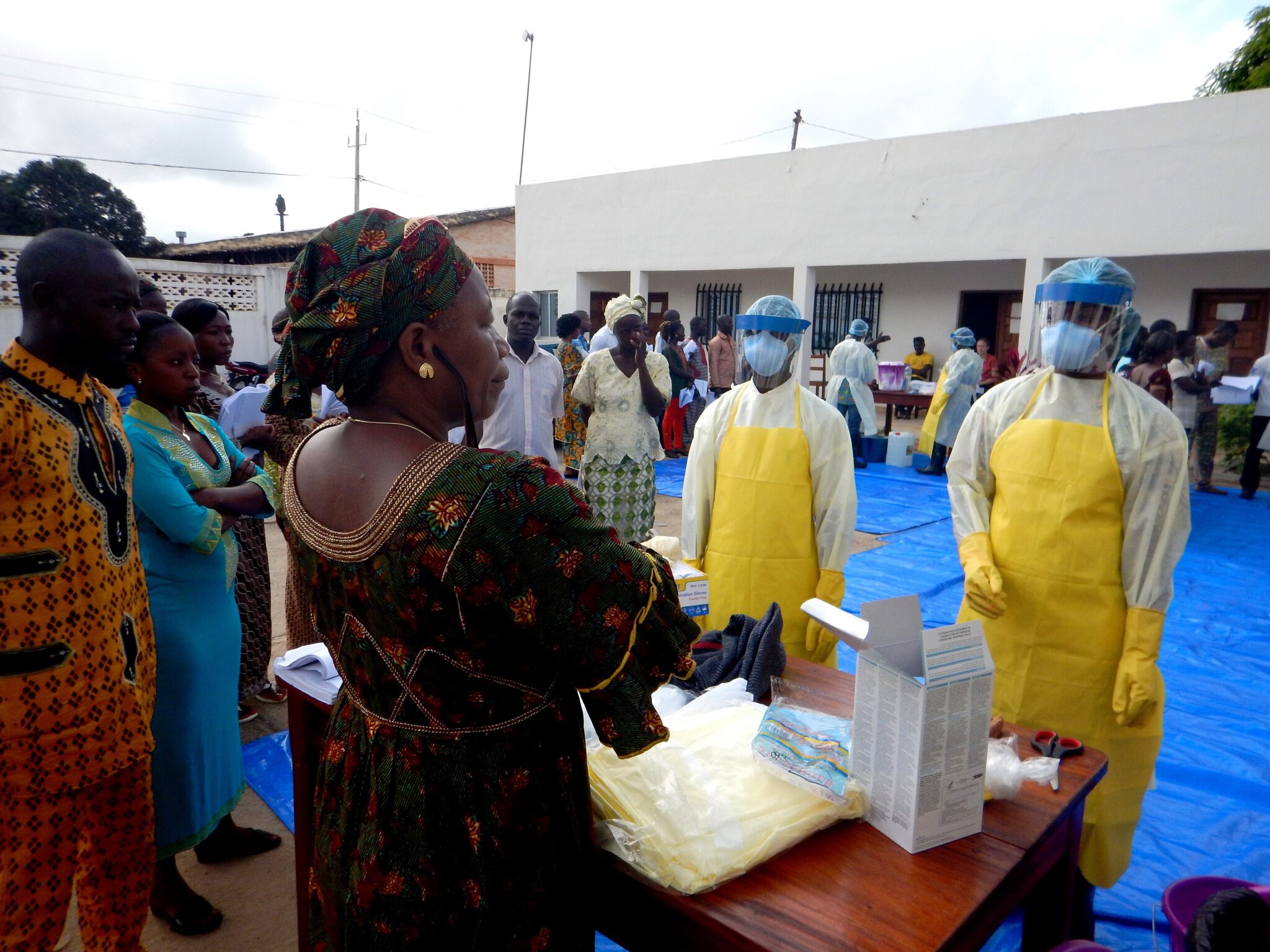
When a public health emergency of international concern is declared, the global health community mobilizes: diagnostic teams deploy, ring vaccination campaigns begin, and incident management systems activate. Yet by that point, the window for true prevention has already closed. A new analysis argues that this reactive posture is the defining vulnerability in Ebola preparedness — and that closing it requires a fundamental shift in where and when surveillance begins.
The analysis was prompted by the declaration of a PHEIC for an outbreak of Bundibugyo virus (BDBV) in Uganda and the Democratic Republic of the Congo. As of mid-May 2026, the outbreak had generated eight laboratory-confirmed cases, 246 suspected cases, and 80 probable deaths according to WHO figures, with Africa CDC reporting an even higher suspected caseload. Recent examination of the outbreak documented these trends and proposed decentralized molecular testing and a pan-orthoebolavirus vaccine as priority solutions. But researchers at Makerere University in Kampala argue these measures, while necessary, are insufficient on their own.
The Surveillance Gap That Precedes the First Human Case
The core argument is that the most consequential delay in Ebola response is not the one between human infection and laboratory confirmation — it is the one between viral evolution or increased shedding in wildlife and the first, undetected human infection. Every current response architecture, including field-deployable qRT-PCR and ring vaccination, is triggered only after a person is already sick. The spillover event itself goes unmonitored.
For BDBV, fruit bats are the likely reservoir. Yet the authors note that most wildlife sampling near outbreak foci — including seropositive bat detections near the Bikoro region during the 2018 Ebola outbreak — occurred only after human cases had already emerged. Continuous genomic monitoring of bat populations near high-risk zones such as the DRC-Uganda border, they argue, could detect shifts in viral prevalence, genetic drift, or recombination well before any human becomes infected. Portable nanopore sequencing, GPS tracking of bat movements, and remote sensing of habitat change make this technically feasible, even in resource-limited settings.
AI-Driven Risk Prediction as an Operational Tool
The Makerere team proposes integrating that wildlife surveillance data into machine learning models capable of generating dynamic spillover risk scores. Rather than relying on static genomic snapshots, such a model would ingest real-time inputs (weekly viral prevalence in bat populations, roost occupancy, rainfall patterns, deforestation rates, and human mobility data) alongside periodic features such as glycoprotein mutation profiles. The goal is a continuously updated risk signal, not a periodic report.
Machine learning has already been applied to predict undiscovered bat hosts of filoviruses, and ensemble methods have been used to map orthoebolavirus spillover risk spatially. The Coalition for Epidemic Preparedness Innovations’ VISTA project is already using AI to rank spillover potential in near real-time. The Makerere authors propose piloting similar forecasting systems in well-characterized, high-risk regions such as North Kivu in the DRC, where existing infrastructure could support an initial operational research phase.
Cost, Feasibility, and the Case for Acting Before the Outbreak
The authors acknowledge four principal objections to pre-spillover surveillance: cost, community distrust around bat sampling, the risk that AI models trained on BDBV data may not generalize to novel pathogens, and the operational difficulty of sustained surveillance in volatile settings like the Congo Basin. They address each in turn. On cost, the containment of the 2014-16 west African Ebola epidemic carried a price tag of $30 to $50 billion, and modeling suggests that pre-spillover prevention strategies would be highly cost-effective by comparison. On trust, the authors note that community distrust around bat sampling is real but manageable through sustained engagement. On model limitations, they call for systems that are pathogen-agnostic, continuously updated, and kept under human oversight. On feasibility, they propose an incremental approach — beginning with pilot programs in stable, high-risk zones using solar-powered portable sequencers and existing WHO, FAO, and WOAH One Health platforms.
The public health security implications are substantial. BDBV joins EBOV and Sudan virus as a cause of major human outbreaks, yet no licensed vaccines exist for it, and the current PHEIC reflects precisely the danger of preparedness systems built around a single pathogen. The Makerere commentary makes the case that the institutional architecture needed to anticipate the next spillover — permanent wildlife sentinel sites, integrated genomic and ecological pipelines, and AI-assisted forecasting feeding into event-based surveillance systems — already has viable technical foundations. What is missing is the political will and sustained financing to build it before, not during, the next emergency.
As the authors conclude, without proactive wildlife surveillance and predictive analytics, global health security will always be chasing the last epidemic rather than anticipating the next one.
Sources and further reading:
Aruhomukama D, et al. Strengthening pre-spillover surveillance: the missing link in Ebola preparedness. The Lancet Microbe. June 25, 2026.
Velavan TP, Kremsner PG, Ntoumi F. Bundibugyo Ebola: why preparedness still fails at the point of detection. The Lancet Infectious Diseases. May 26, 2026.