

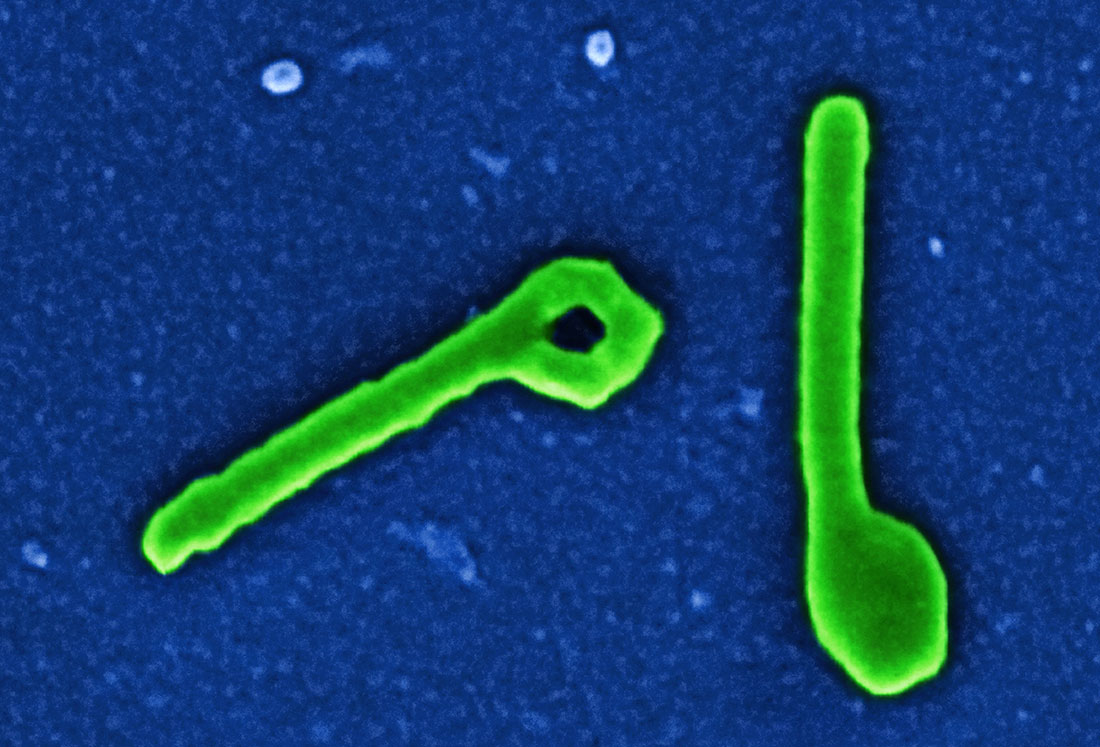
When an unusual strain of Ebola began spreading in the Democratic Republic of the Congo and Uganda this May, researchers at two high-containment laboratories in the U.S. were already positioned to respond. The Galveston National Laboratory (GNL) at the University of Texas Medical Branch and the National Emerging Infectious Diseases Laboratories (NEIDL) at Boston University — both equipped with Biosafety Level 4 containment — immediately began accelerating vaccine and therapeutic research on Bundibugyo, the rare Ebola virus now driving the current outbreak.
This readiness did not happen by accident. It is the result of nearly two decades of sustained federal investment in a specialized research network built in response to the 2001 anthrax attacks, which exposed critical gaps in the nation’s capacity to study and counter biological threats. The National Institutes of Health, through the National Institute of Allergy and Infectious Diseases (NIAID), funded the construction of 14 high-containment laboratories on university campuses with established infectious disease research programs. Today that network comprises 12 Regional Biocontainment Laboratories capable of Biosafety Level 3 work and the two National Biocontainment Laboratories with maximum containment capability.
The current response illustrates how the network was designed to function. At Galveston, researchers are accelerating work on a Bundibugyo vaccine candidate originally developed in 2013, when the same strain last caused significant human disease. That vaccine showed promising results in nonhuman primate studies. When the Zaire strain emerged in West Africa in 2014, scientific priorities shifted — a Zaire vaccine was developed and eventually approved by the FDA in 2020. The earlier Bundibugyo research remained available and on record. With the virus circulating again, that foundation allows researchers to move faster than if beginning development entirely from scratch.
High-consequence biological events — whether naturally emerging, zoonotic, or deliberate — demand research capabilities and trained personnel that cannot be assembled quickly under emergency conditions. By housing specialized research within academic institutions rather than government facilities alone, the network gains operational flexibility: universities can more readily pivot scientific priorities, engage international partners, and train the next generation of scientists in microbiology, virology, and related fields.
“Preparedness is not something that can be built overnight during a crisis,” said Dr. Gene Olinger, Director of Galveston National Laboratory. “It requires years of investment in facilities, people, partnerships, and scientific innovation. The National Biocontainment Laboratories provide a critical foundation that enables the nation to rapidly respond when new infectious disease threats emerge.”
Dr. Robert Davey, Interim Director of NEIDL, emphasized the collaborative dimension. “No single institution can address every challenge posed by emerging infectious diseases. By combining expertise, sharing resources, and coordinating research efforts, we create capabilities that are far greater than the sum of their parts.”
Beyond research, the laboratories serve as training grounds for the next generation of biosafety professionals and public health leaders. Recent collaborative work on flexible vaccine platforms designed to be rapidly adapted for emerging pathogens demonstrates how the network advances science during periods of relative calm — building capabilities that will be deployed when the next crisis arrives.
Sources and Further Reading: