

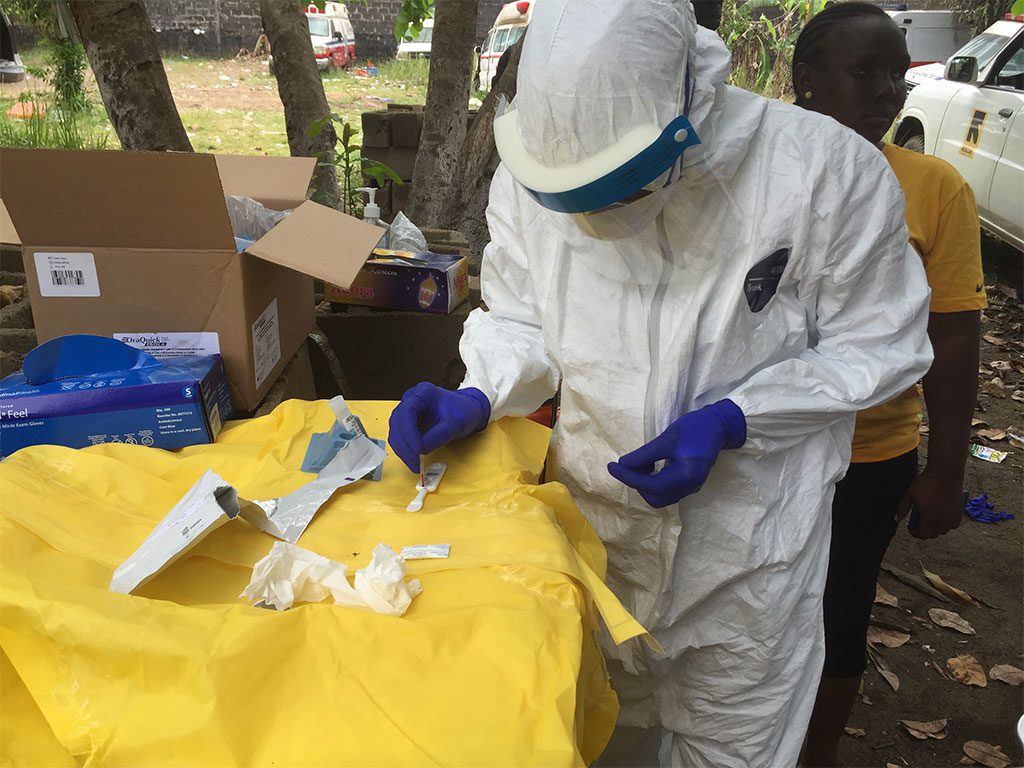
With an active Ebola outbreak unfolding in the Democratic Republic of the Congo, the World Health Organization has released its most comprehensive clinical management guidelines to date, covering the full spectrum of filovirus disease, including all known Ebola variants and Marburg virus. Published June 17, 2026, the guidelines consolidate lessons from decades of outbreak response into 16 evidence-based recommendations aimed at improving patient survival and standardizing care across health systems worldwide.
The DRC is currently battling an outbreak caused by the Bundibugyo virus, one of the Ebola species for which no licensed vaccines or treatments currently exist. The same gap applies to Sudan virus disease and Marburg virus disease, making optimized supportive care the primary clinical tool available to frontline health workers. That reality gives the new WHO guidance immediate operational relevance.
A Unified Framework Across All Filoviruses
Filovirus diseases have caused 72 documented outbreaks in Africa since Marburg virus was first identified in 1967, with case fatality rates ranging from 25% to 90% depending on the virus and circumstances. Previous WHO clinical guidance focused exclusively on Ebola virus disease and was based largely on expert-defined best practice rather than systematic evidence review. The new guidelines expand scope to all filoviruses, standardize approaches across pathogen types, and apply the GRADE framework, a rigorous international standard for assessing certainty of evidence, to each recommendation.
A multidisciplinary, geographically representative Guideline Development Group was convened to develop the framework, with representation across clinical disciplines, regions, and genders. Clinical questions were framed using the PICO format, and evidence synthesis relied primarily on recent high-quality systematic reviews, several of which were commissioned specifically for this guideline.
“These new guidelines are a perfect example of how WHO leverages science to better protect and care for people during outbreaks and health emergencies,” said WHO Director-General Dr. Tedros Adhanom Ghebreyesus. “The current Bundibugyo virus outbreak is a stark reminder of the need for diligent, holistic and person-focused medical care, to save lives and preserve human dignity.”
Key Clinical Recommendations
The guidelines are designed primarily for frontline health workers, though they also provide a planning framework for health facility administrators and policymakers. Among the most significant recommendations:
The panel emphasized that systematic patient monitoring must be directly linked to clinical intervention, with individualized decision-making based on disease severity. Abnormalities identified during assessment require immediate action, and the panel noted that failure to recognize abnormal physiology carries catastrophic risk.
On laboratory monitoring, WHO issued a strong recommendation for systematic lab testing based on clinical assessment rather than routine protocols. The panel highlighted that life-threatening conditions such as hypoglycemia and hyperkalemia have no reliable clinical correlates and can only be identified through testing, but are treatable when caught early. A core test set was defined, including electrolytes, glucose, complete blood count, lactate, malaria rapid diagnostic tests, and pregnancy testing, with expanded panels recommended at higher levels of care.
For fluid management, WHO issued strong recommendations for protocolized oral rehydration in patients with some dehydration, and for the use of balanced crystalloids such as Ringer’s lactate over normal saline for intravenous resuscitation. The panel noted moderate certainty evidence of mortality benefit with balanced solutions, and flagged that hyperchloremic acidosis is a recognized risk with normal saline. For patients in shock, the guidelines provide conditional recommendations supporting serial lactate measurement and capillary refill time assessment as perfusion guides, and recommend early initiation of vasopressors rather than delayed use.
On vasopressor selection, WHO issued a strong recommendation for norepinephrine over dopamine, driven by evidence of mortality reduction and lower rates of cardiac arrhythmia. A conditional recommendation also favors norepinephrine over epinephrine, while leaving clinical flexibility for settings where epinephrine may be preferred or where norepinephrine is unavailable. When vasopressors are needed, the guidelines suggest initiating through peripheral rather than central venous catheters to reduce delays, with a strong recommendation for ultrasound-guided placement when central venous access becomes necessary.
For secondary infections, WHO conditionally recommends presumptive broad-spectrum antibiotics when bacterial co-infection or sepsis is suspected, recognizing that the sepsis-like syndrome of severe filovirus disease makes bacterial co-infection difficult to exclude. The panel advised antibiotic stewardship and de-escalation when possible.
On hemorrhage management, WHO conditionally recommends against tranexamic acid for general hemorrhage in filovirus patients, citing concerns about disseminated intravascular coagulation as a likely mechanism and evidence of harm in analogous clinical scenarios. An exception is made for postpartum hemorrhage, where a separate conditional recommendation supports tranexamic acid use within three hours of delivery.
Finally, WHO issued a strong recommendation for structured post-discharge follow-up for survivors, citing high rates of chronic symptoms including depression, uveitis, and viral persistence in sanctuary sites. The panel estimated that without structured follow-up, fewer than one in four survivors with depression would receive treatment, and noted that viral persistence following recovery poses a documented risk of secondary transmission.
Implications for Preparedness and Global Health Security
Filovirus outbreaks are inherently unpredictable, high-consequence events that can rapidly overwhelm local health systems and generate international concern. The absence of licensed medical countermeasures for several filovirus species makes clinical care protocols one of the most important tools in the outbreak response toolkit.
WHO emphasizes that optimized supportive care is not merely a fallback in the absence of antivirals; it is a clinical prerequisite and creates the necessary foundation for conducting trials of new antiviral therapies. By aligning clinical approaches across contexts, the guidelines can reduce variation in care quality, improve outcomes in resource-limited settings, and better equip policymakers to pre-position supplies and personnel before an outbreak strikes. WHO is urging governments and health authorities to integrate the new recommendations into national preparedness plans and outbreak response frameworks.
Sources and further reading:
WHO issues comprehensive guidelines on filovirus disease, including Ebola and Marburg disease – World Health Organization
Disclaimer: The content published on this site is intended for informational and professional reference purposes only. It does not constitute medical advice, clinical guidance, or a substitute for the judgment of a licensed healthcare provider. Readers should consult qualified medical professionals and refer to official clinical guidelines from recognized health authorities for guidance on patient care and treatment decisions.