


The United States has recorded 2,170 confirmed measles cases in 2026 with half the year still ahead, nearly matching the 2,289 cases logged across all of 2025 and underscoring a measles crisis that public health officials have not seen at this scale in decades. Updated figures from the U.S. Centers for Disease Control and Prevention, current as of July 2, 2026, show cases spread across 41 jurisdictions, with 93% of confirmed infections linked to active outbreaks.
The pace of transmission marks a sharp escalation from just two years prior. In 2024, the United States reported 285 cases and 16 outbreaks for the full year. By 2025, that number had surged to 2,289 cases and 48 outbreaks. So far in 2026, 31 new outbreaks have been reported, with 1,360 cases still attributable to outbreaks that originated in 2025, reflecting ongoing chains of transmission that have not been contained.
Unvaccinated Drive the Vast Majority of Cases
Vaccination status tells a consistent and stark story. In 2026, 93% of confirmed cases occurred in individuals who were either unvaccinated or whose vaccination status was unknown — a figure identical to the share seen in 2025. Only 4% of cases involved individuals who had received two doses of the measles, mumps, and rubella (MMR) vaccine, which is 97% effective at preventing infection. Two doses of MMR remain the standard of protection recommended for all children.
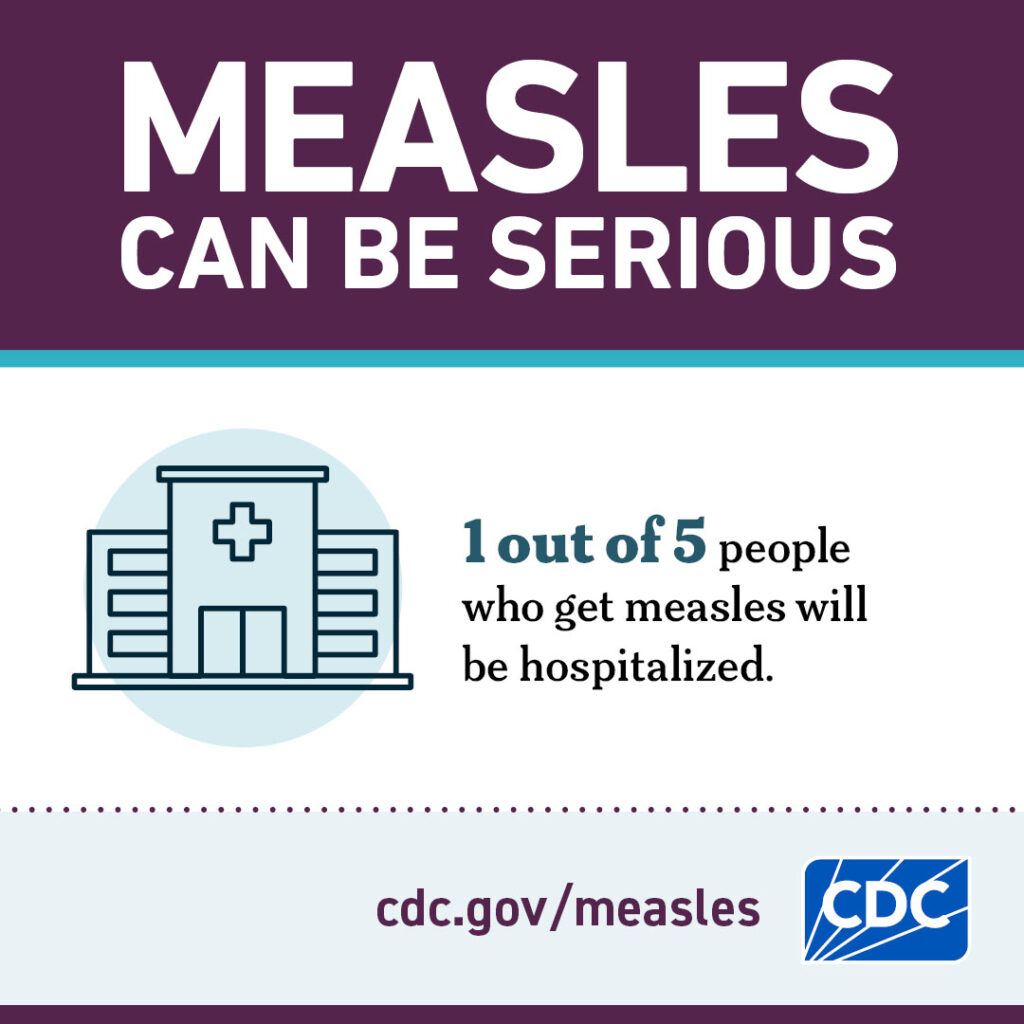
Children and adolescents bear a disproportionate burden of the 2026 caseload. Those aged 5 to 19 account for 51% of all confirmed cases, while children under five represent 20% and face elevated hospitalization risk: 10% of infected children under five have required hospitalization. Overall, 6% of all 2026 cases — 138 individuals — have been hospitalized. No deaths have been reported in 2026; three deaths were recorded in 2025.
Declining Vaccine Coverage Creates Dangerous Gaps
A critical driver of the ongoing crisis is the erosion of MMR vaccination coverage among kindergartners. National coverage has declined from 95.2% during the 2019–2020 school year to 92.5% in 2024–2025, falling below the 95% threshold required for community immunity. CDC estimates this left approximately 286,000 kindergartners unprotected during the most recent school year. The problem is compounded by uneven local coverage: even in states with relatively high overall rates, pockets of unvaccinated individuals can sustain outbreak conditions when measles is introduced.
Measles was declared eliminated from the United States in 2000, a landmark achievement made possible by high MMR uptake. Elimination is defined as the absence of endemic transmission for at least 12 consecutive months. The sustained outbreak activity since 2025 makes it likely that the U.S. will lose elimination standing.
What the Trajectory Means for Public Health Security
The scale and geographic reach of the 2026 outbreak — spanning 41 jurisdictions and more than 2,100 confirmed cases before the summer travel season is complete — reflects the convergence of two well-documented vulnerabilities: declining domestic vaccination rates and increasing global measles activity. International travel remains a key introduction pathway, though only 12 of the 2026 cases were reported among international visitors; the majority of importations involve unvaccinated U.S. residents returning from abroad.
For public health systems, the practical implications are significant. Outbreak investigation and response consume substantial state and local health department resources, and high transmission in under-vaccinated communities creates risk for immunocompromised individuals who cannot receive the MMR vaccine regardless of their willingness to do so.
Sources and further reading:
Measles Cases and Outbreak Update (July 2, 2026) – U.S. Centers for Disease Control and Prevention