

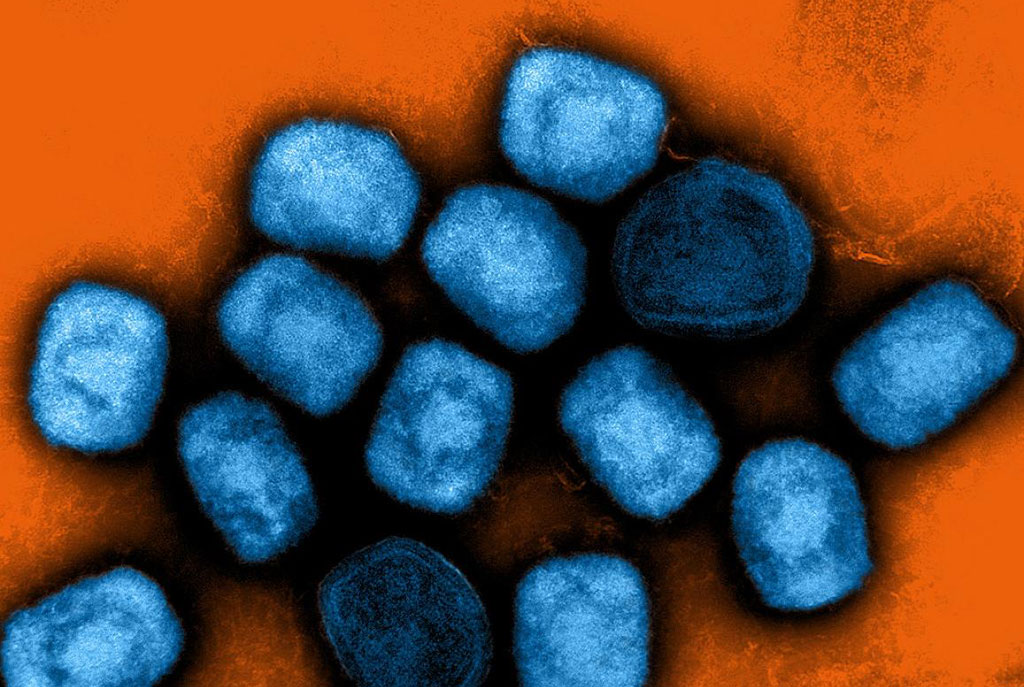
A years-long outbreak has reshaped what public health officials know about monkeypox virus (MPXV) vaccination. The Centers for Disease Control and Prevention has updated its recommendations for healthcare providers on monkeypox vaccine use in the United States, incorporating the latest data on vaccine effectiveness, booster dose policy, traveler risk, and population-specific considerations.
The updated CDC guidance, dated September 4, 2026, covers both available vaccines — JYNNEOS and ACAM2000 — but centers on JYNNEOS as the primary tool for outbreak response. JYNNEOS, manufactured by Bavarian Nordic and marketed internationally as Imvamune or Imvanex, became commercially available in the United States in April 2024 and has been the dominant vaccine deployed since the clade II outbreak began in 2022. The older ACAM2000 vaccine remains in the U.S. stockpile but carries more side effects and contraindications, limiting its use.
A Broader Outbreak Picture
Perhaps the most significant policy update involves the clade I monkeypox virus, which has driven a separate and more severe outbreak originating in Central and East Africa. CDC has determined that ongoing human-to-human transmission of clade I monkeypox meets criteria to be classified as an active outbreak, triggering formal vaccination recommendations for certain travelers. Americans planning trips to affected countries who expect to engage in specific higher-risk sexual behaviors — including sex with new partners, at commercial sex venues, in exchange for goods, or in association with large public events — should now be offered the full two-dose JYNNEOS series before departure.
Who Should Get Vaccinated?
For domestic use, the Advisory Committee on Immunization Practices (ACIP) continues to recommend the two-dose JYNNEOS series for gay, bisexual, and other men who have sex with men, as well as transgender and nonbinary people, who have had recent indicators of elevated exposure risk: a new sexually transmitted infection diagnosis, multiple sex partners, sex at commercial venues, or sex connected with large public gatherings where transmission is occurring. Sexual partners of individuals meeting those criteria are also included, as are people who anticipate those risks in the near future.
CDC is not recommending routine monkeypox vaccination for the general public or for most healthcare personnel. Routine vaccination for clinical healthcare staff is not indicated unless sexual risk factors are present. Clinical laboratory workers who handle blood and other bodily fluids from patients are similarly excluded from current recommendations. However, research and diagnostic laboratorians who work directly with orthopoxviruses in laboratory settings — often handling high-concentration virus and at risk of needlestick injuries — are recommended to receive both primary vaccination and booster doses every two to three years.
How Long Does Protection Last?
One of the more consequential updates involves booster dose policy for the general population. Despite knowing that antibody levels decline several months after the two-dose primary series, CDC is not recommending boosters for people vaccinated during the 2022 clade II outbreak. The reasoning draws on multiple data sources, including a CDC study in the Democratic Republic of the Congo that followed 1,600 healthcare workers who received JYNNEOS in 2017. That study recorded only one laboratory-confirmed infection over years of follow-up in a high-transmission region and found that a booster dose given five years later produced a rapid and robust immune response. Unpublished data showed similar results at seven years. A 2023 United Kingdom study estimated ongoing vaccine effectiveness at approximately 80% for people who received the two-dose series up to a year earlier.
CDC notes that antibody titers are not the only measure of protection. Cell-mediated and innate immunity also contribute to defense against infection, and declining antibody counts do not necessarily indicate lost protection. The guidance acknowledges that some countries have recommended boosters for people vaccinated two or more years ago, but CDC finds the current evidence insufficient to support that approach for the broader U.S. population.
Post-Exposure Use and Special Populations
The updated guidance reaffirms that JYNNEOS can function as post-exposure prophylaxis. The vaccine is most effective when given within four days of known or presumed exposure, though some benefit may persist through 14 days. Administration beyond that window is not routine but may still be worth considering in specific clinical circumstances, such as for severely immunocompromised individuals.
For children under 18, JYNNEOS remains available under an FDA Emergency Use Authorization for subcutaneous administration. Infants under six months should receive Vaccinia Immune Globulin Intravenous instead, accessed through jurisdictional health departments. Pregnant and breastfeeding individuals may receive the vaccine through shared clinical decision-making; animal data show no evidence of fetal harm, and the vaccine’s replication-deficient design suggests a low risk of transmission through breast milk.
New Safety Data in Vaccinated Healthcare Workers
A March 2026 study published in The Lancet Infectious Diseases, co-authored by CDC researchers, assessed safety outcomes in 1,600 healthcare workers in DRC’s Tshuapa province and Kinshasa over two years. The study found minimal differences in adverse events across vaccine formulations and no serious reactions attributable to the vaccine. The findings extend the safety record for JYNNEOS to populations in endemic settings and add data relevant to building vaccine confidence in regions where clade I monkeypox remains an ongoing threat.
For providers with complex vaccine safety questions related to individual patients, CDC’s Clinical Immunization Safety Assessment Project is available for consultation.
Sources and further reading:
Vaccine for Monkeypox Prevention in the United States — CDC
This article was researched and sourced by Global Biodefense editors and reported with Claude AI assistance for drafting and editing.