

When a chemical disaster strikes, the popular image of the response, dispatchers sending trained crews to the scene, quick identification of the toxin, ambulances delivering decontaminated patients in an orderly sequence, bears little resemblance to what actually happens in the first critical hours. New planning guidance from the Chemical Hazards Emergency Medical Management program (CHEMM), a resource maintained by the US Department of Health and Human Services, lays out five specific assumptions that consistently prove false during real chemical events, and argues that hospitals planning around these myths are setting themselves up for chaos rather than coordinated care.
Myth one: hospitals get advance warning
The first and perhaps most consequential myth is the assumption that hospitals will be notified before chemically exposed patients start arriving. In practice, CHEMM’s guidance states plainly that medical personnel must often “operate in the blind” during a chemical event’s early stages. There is frequently no warning window at all. The practical implication for planners: emergency departments need protocols that function effectively even when the first indication of an incident is patients walking through the door, not a phone call from dispatch.
Myth two: the chemical will be quickly identified
A closely related myth is the expectation that the specific toxin will be rapidly identified, allowing on-scene responders and emergency department staff to deliver targeted, chemical-specific treatment from the outset. The reality is that the offending chemical may not be identified for hours or even days, and initial identifications are sometimes wrong. The guidance’s recommended response is to treat symptoms and injuries immediately based on the clinical picture in front of providers, rather than waiting for a definitive identification that may not come in time to matter. This is where recognizing a “toxic syndrome,” a cluster of signs and symptoms associated with a class of chemicals, becomes more clinically useful in the acute phase than the specific chemical name itself.
Myth three: trained responders will triage and decontaminate everyone
A third myth assumes dispatchers will route trained emergency personnel to the scene, where they’ll triage, decontaminate, and treat patients before transport. CHEMM’s guidance is blunt about why this frequently fails: emergency response personnel seldom have adequate tools or resources to effectively triage, decontaminate, and treat large numbers of patients in a mass chemical exposure. The practical countermeasure isn’t waiting for more resources to arrive, it’s public messaging in advance that encourages exposed individuals to remove contaminated clothing and blot or wipe residual contaminant from their skin immediately, even before any responder reaches the scene.
Myth four: patients arrive by ambulance, already decontaminated
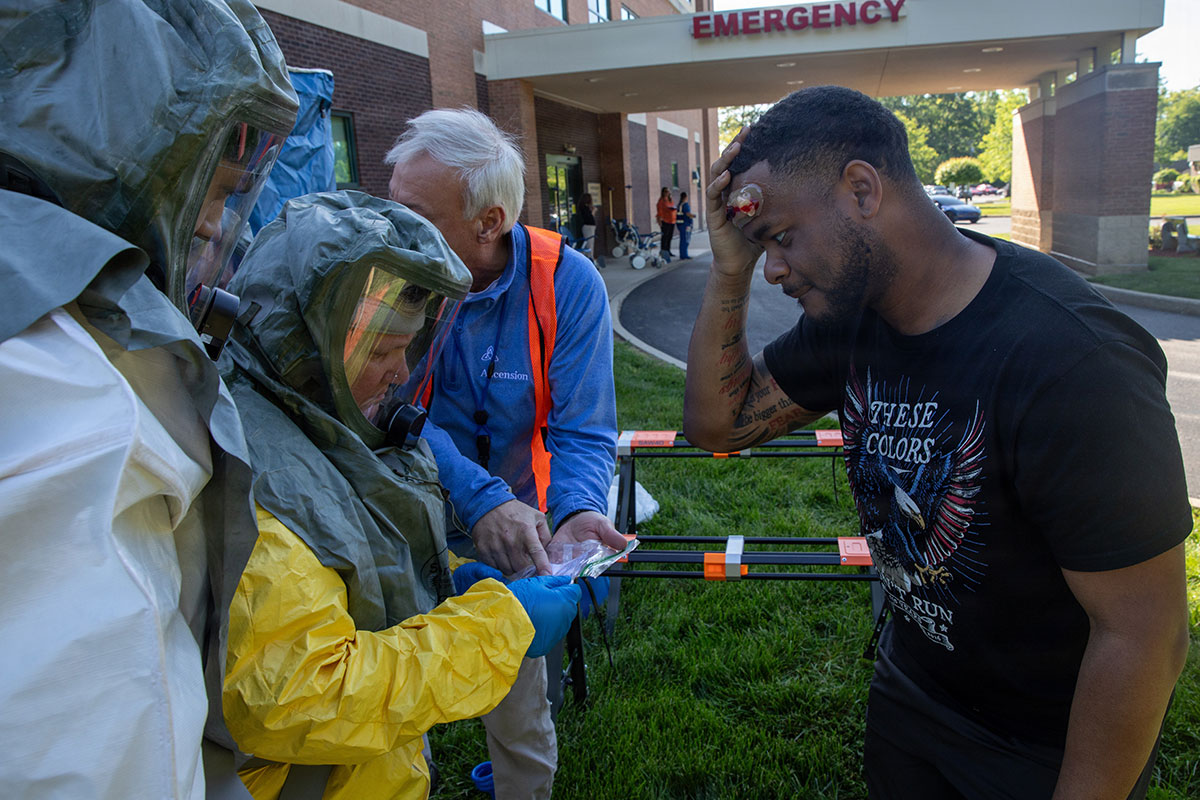
The fourth myth compounds the third: the assumption that casualties will be transported by ambulance, with the most seriously injured patients arriving first, already decontaminated by trained personnel. In reality, CHEMM notes that the first patients to reach a hospital frequently arrive under their own power, self-transporting by car, on foot, or via rideshare, with no involvement from on-scene responders at all and no decontamination performed. This has direct implications for hospital design and protocol: emergency departments need the capability to identify and manage contaminated patients who arrive unannounced at the front door, not just at a designated decontamination corridor set up in anticipation of ambulance traffic.
Myth five: the public follows instructions
The final myth assumes that the public, once given instructions, follows them. CHEMM’s guidance notes instead that public behavior can significantly erode the effectiveness of the emergency medical response, whether through panic, misinformation, or simply the instinct to flee toward the nearest hospital rather than following official guidance on where to go or what to do first. Effective planning has to account for crowd behavior and self-directed patient movement as a variable, not an edge case.
What this means for planning
Taken together, these five corrected assumptions point toward a broader planning principle CHEMM frames as doing “the best for the most:” building response capacity around a layered strategy that starts with symptom-based assessment and empiric treatment, layers in responder and staff protection based on the toxic syndrome identified, and only later incorporates chemical-specific therapies once the causative agent is confirmed. That sequence, treat first based on presentation, refine as information arrives, is a deliberate inversion of the “identify first, then treat” model.
CHEMM’s guidance also emphasizes that generic, exhaustive training on every conceivable chemical agent has limited practical value. Instead, it recommends grounding training and response planning in community-specific risk assessments, drawing on resources like EPCRA Tier II hazardous chemical inventory reports and hazardous material commodity flow data, so that scarce training time is spent preparing for the chemicals a given community is actually likely to encounter, whether from industrial accidents, transportation incidents, agricultural chemical misuse, or deliberate release.
Sources and further reading:
Developing Plans — Chemical Hazards Emergency Medical Management (CHEMM)
This article was researched and sourced by Global Biodefense editors and reported with Claude AI assistance for drafting and editing.