

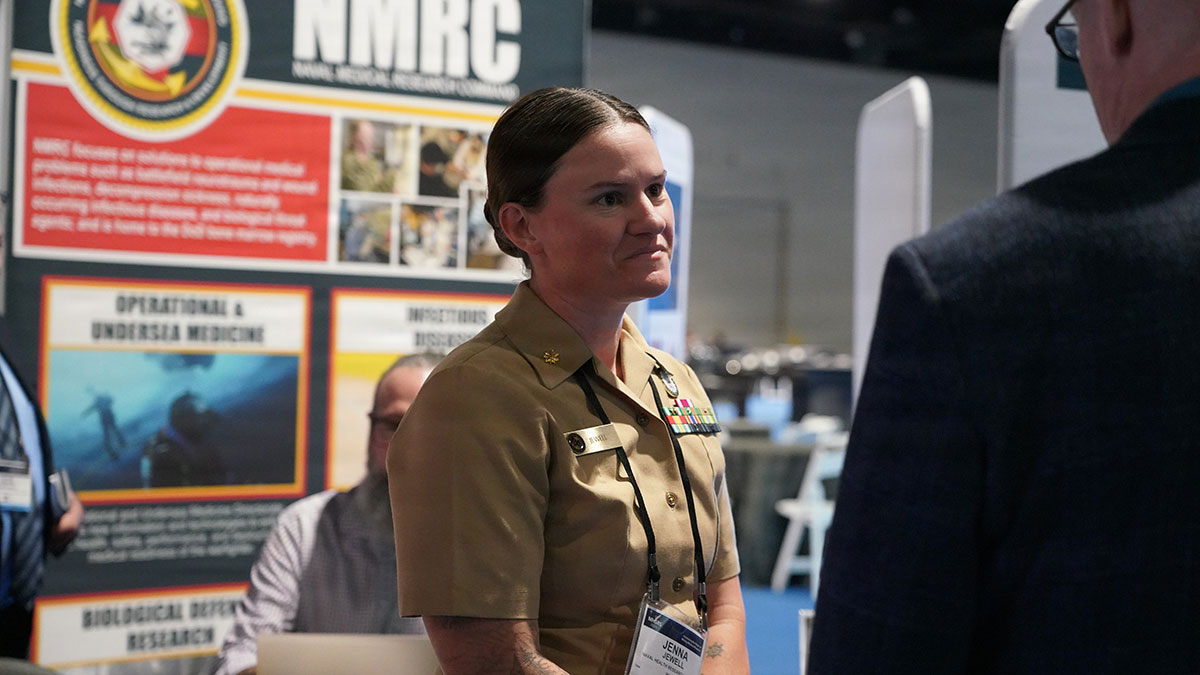
Researchers shared new findings on biosurveillance, antimicrobial resistance, and infectious disease countermeasures at the 2026 Military Health System Research Symposium, held August 3-6 in Florida. Among more than 3,700 attendees, dozens of research teams presented work with direct relevance to biosecurity and public health preparedness, from wastewater surveillance systems tracking drug resistant bacteria in real time to a new vaccine candidate targeting one of the most difficult to treat pathogens in modern medicine.
Biosurveillance Systems Aim to Catch Outbreaks Earlier
Several studies focused on turning biosurveillance data into something decision makers can actually act on. In a poster presentation, MIT Lincoln Laboratory researchers outlined a framework for evaluating whether biodetection systems produce genuinely useful information, not just data. Their analysis found that actionability depends on more than speed. It also requires confidence in results that matches the stakes of the decision being made. A companion poster from the same team described a modeling framework that simulates how early warning from biosurveillance might change outcomes during an infectious disease outbreak, whether from an intentional release or a naturally occurring pathogen such as plague or a novel respiratory virus. The models suggest that even modest gains in early information can meaningfully change how much combat power and medical capacity an outbreak ultimately costs.
That push toward real-time detection is already showing up in the field. The Defense Centers for Public Health in Aberdeen, Maryland, took the podium Tuesday afternoon as part of a session on Global Health Engagement to describe a wastewater surveillance dashboard built for the Indo-Pacific Command that tracks 12 viral pathogens weekly across multiple installations, giving decision makers early warning before clinic visits start to climb. Researchers at Walter Reed National Military Medical Center presented data pairing wastewater genomic sequencing with hospital antibiotic resistance data. Their system detected resistance genes circulating in the hospital population before they showed up in traditional clinical testing, and the team estimates the approach could save one to two weeks of manual work each year while catching emerging resistance trends sooner.
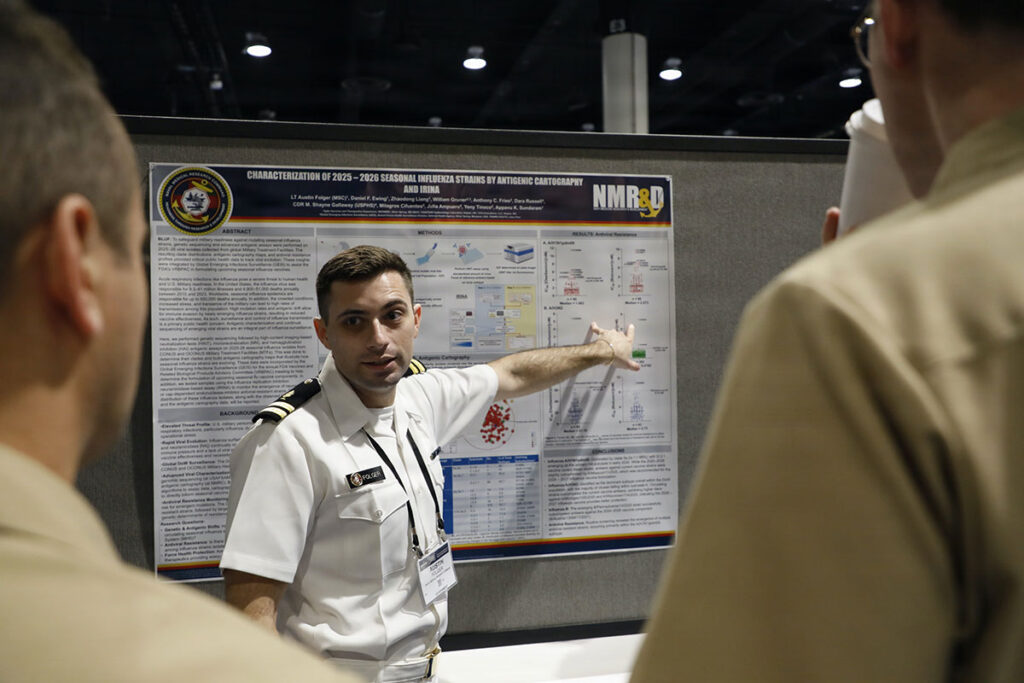
In Southeast Asia, WRAIR’s Armed Forces Research Institute of Medical Sciences has spent the past three years running real time molecular surveillance during major regional military exercises, testing hundreds of samples from service members with respiratory or diarrheal illness within 48 hours. That work turned up a notable and unexpected pattern: most respiratory viruses detected during these exercises appeared to originate in the United States and continue spreading among personnel during the event, rather than being picked up locally. The same program also confirmed high rates of ciprofloxacin resistance among diarrheal pathogens, while azithromycin remained largely effective, information that directly shapes field treatment guidance.
Platform Technologies Target Select Agents and Biothreat Pathogens
A session titled “Platform Technologies: Revolutionizing Infectious Disease Countermeasures for the Military,” moderated by Appavu Sundaram and John Dye, brought podium visibility to a cluster of research aimed at a shared problem: building medical countermeasures fast enough to matter against a threat agent that has not yet been identified.
Qoolabs Inc. opened the session with a rapid antibody discovery platform built around the “100-Day Mission,” a goal of producing fieldable diagnostics and prophylactic antibodies within 100 days of identifying a new viral threat. The company’s platform uses AI integrated single cell antibody screening to identify high affinity candidate antibodies in under eight weeks, with humanization completed in two additional weeks. In presented results, lead antibodies reached picomolar affinity within 50 days, and the team is currently developing rapid diagnostic tests for Ebola and Marburg virus under a BARDA contract, with a manufacturing partner capable of producing 80 million lateral flow tests annually.
Lawrence Livermore National Laboratory presented a complementary delivery platform built around nanolipoprotein particles, engineered nanoscale carriers modeled on the structure of high-density lipoproteins that can co-deliver vaccine antigens and adjuvants in a single formulation. Researchers demonstrated successful conjugation of antigens from three Tier 1 select agents, Yersinia pestis, Francisella tularensis, and Burkholderia pseudomallei, the bacteria responsible for plague, tularemia, and melioidosis. Multi-pathogen formulations protected rodents in aerosol challenge models as effectively as single-pathogen versions, a result with direct relevance to scenarios involving simultaneous or unknown biological exposures.
A third team presented work on transchromosomic bovines, cattle genetically modified to produce fully human polyclonal antibodies rather than bovine antibodies. The platform has already generated antibody candidates against Ebola, MERS-CoV, SARS-CoV-2, influenza, Venezuelan equine encephalitis virus, Zika, pneumonic plague, anthrax, and dengue, spanning both naturally occurring and potential biowarfare threats. Three products derived from the platform have reached human clinical trials, including one that completed Phase 2 and Phase 3 testing under the federal ACTIV-2 program during the COVID-19 pandemic. Because the antibodies target multiple epitopes simultaneously, the developers argue the approach is more resistant to viral escape through mutation than single target monoclonal antibody treatments, and can scale to more than 300 grams of human immunoglobulin per animal per month.
That podium session complemented poster work on countermeasures against two other named biothreat agents. BARDA shared interim results from a clinical trial testing whether a lower dose of the anthrax vaccine CYFENDUS could maintain effectiveness while extending the number of available doses during a public health emergency, finding that half doses performed comparably to full doses in triggering an immune response. And Tonix Pharmaceutical presented data on a new orthopoxvirus vaccine platform that proved substantially more attenuated than older smallpox vaccine strains while still protecting animals against lethal mpox challenge, including the more severe clade I strain, suggesting a path toward safer next generation vaccines against mpox and related viruses.
Underpinning much of this work is an institutional effort to move promising prototypes out of the laboratory faster. The Defense Threat Reduction Agency’s Joint Science and Technology Office described its Laboratory Analysis and Clinical Evaluation program, which independently validates diagnostic prototypes for chemical and biological threats and has transitioned four diagnostic capabilities into operational use over the past three years, with field testing conducted during exercises such as Salaknib 26.
Drug Resistant Infections Present a Growing Threat in Conflict Zones and Beyond
Antimicrobial resistance emerged as a recurring theme across multiple research abstracts, with some of the most sobering data coming out of the war in Ukraine. Researchers with WRAIR Europe-Middle East characterized bacterial isolates collected from wounded patients and found a troubling pattern: while resistant organisms were relatively rare in wounds shortly after injury, hospitals in Kharkiv yielded hundreds of multidrug resistant isolates that were nearly genetically identical to strains circulating before the conflict began, pointing to ongoing transmission within hospital walls rather than contamination on the battlefield. The vast majority of Acinetobacter baumannii isolates tested were resistant to carbapenems, a last line antibiotic class, and researchers found several concerning strains carrying both resistance and virulence genes.
Elsewhere, a Defense Centers for Public Health team analyzed nearly a million bacterial isolates collected from military health system patients between 2014 and 2024, tracking resistance patterns in seven pathogens the World Health Organization and CDC consider priority threats. The data show a decline in total isolates collected over the decade, though the researchers caution this may partly reflect changes in where military patients are tested rather than a true drop in infections. Separately, data presented on surveillance at Tripler and Madigan Army Medical Centers found extremely high rates of resistance markers in Neisseria gonorrhoeae, with genetic signs of resistance to macrolide antibiotics present in the vast majority of isolates tested, a finding researchers linked to the transient nature of military populations and regional travel patterns across the Pacific.
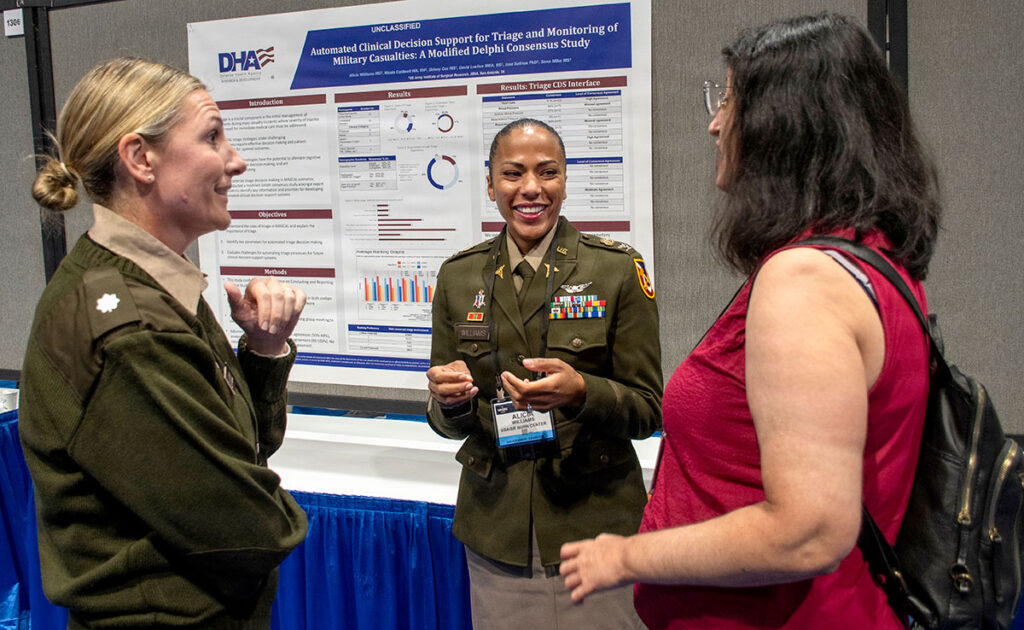
On the countermeasure side, a team from Biological Mimetics reported early success with what would be the first vaccine candidate against Acinetobacter baumannii, a bacterium nicknamed Iraqi-bacter for its association with combat wound infections and one that health agencies have flagged as an urgent threat due to widespread carbapenem resistance. In mouse models, the vaccine protected 90 percent of animals from a lethal lung infection.
Taken together, the research shared at this year’s symposium, whether from the podium or the poster hall, reflects a military health enterprise increasingly focused on catching threats earlier and closing gaps in treatment options for pathogens that no longer respond reliably to existing drugs, priorities that extend well beyond the battlefield to public health readiness more broadly.
Sources and further reading:
2026 Military Health System Research Symposium – Department of Defense, August 2026.
This article was researched and sourced by Global Biodefense editors and reported with Claude AI assistance for drafting and editing.