

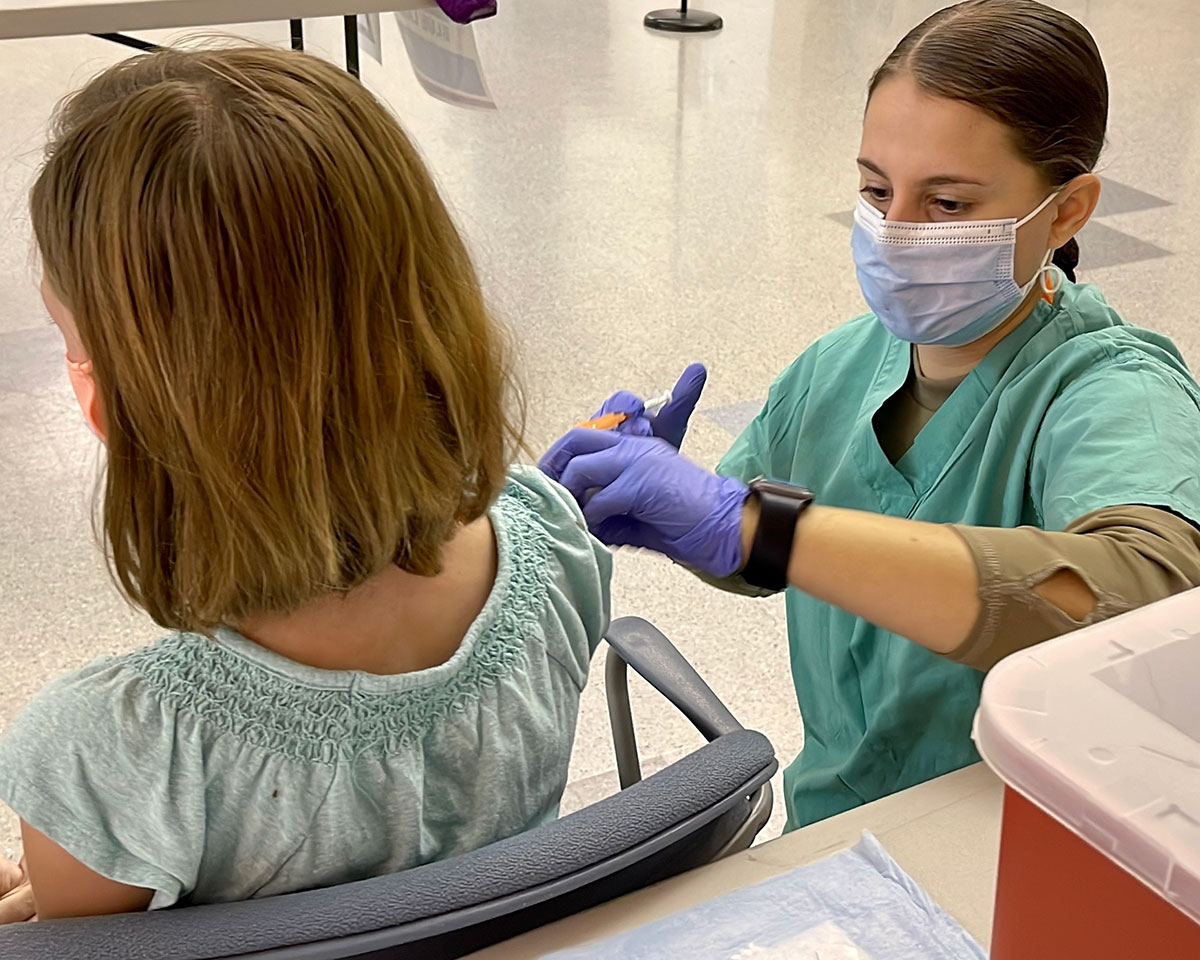
When a sitting president signs an executive order directing federal agencies to revisit childhood vaccine recommendations, the policy debate that follows is legitimate. The flood of medical misinformation that accompanies it is not. Both happened simultaneously last month, and the collision is doing measurable damage to one of the most effective public health tools in American history.
On Aug. 10, President Trump signed an order directing agencies to pursue changes to the childhood immunization schedule, including potentially separating the combined measles-mumps-rubella vaccine into individual shots and spacing out vaccine visits. The order itself generated confusion about whether it superseded state vaccination requirements (it does not). But the more consequential fallout has been the resurgence of long-debunked falsehoods about vaccine safety that have flooded social media in the order’s wake. Supporters of the policy change repeated the claim that receiving multiple vaccines at once overwhelms a child’s immune system and causes autism. Neither assertion has a credible scientific foundation. Both have been studied extensively and rejected.
The immune system argument collapses quickly under scrutiny. Babies and young children are exposed to between 2,000 and 6,000 immune-triggering substances every single day through normal environmental contact. The entire recommended childhood immunization schedule, across all vaccines, exposes a child to approximately 165 antigens total. The American Academy of Pediatrics, which has informed pediatric vaccine recommendations since the 1930s, is unambiguous: extensive research shows that receiving multiple vaccines simultaneously is safe, and there is no medical reason to delay or space them out. Dr. José Romero, a member of the AAP Committee on Infectious Diseases, notes that the schedule is designed specifically to protect children at the moments when their immune systems are most capable of responding and when they are most vulnerable to disease.
The autism claim has an origin and a history that are both well documented and instructive. A 1998 paper by Andrew Wakefield, published in The Lancet, described 12 children who received the MMR vaccine and later developed autism. The paper was subsequently retracted. Its cases were cherry-picked, not consecutive as described. Wakefield was later found to have misrepresented his data. Yet the claim took hold, in part because the age at which children typically receive the MMR vaccine coincides with the age at which autism symptoms often become apparent to parents. Correlation was mistaken for causation, and a charismatic figure with institutional credentials amplified it aggressively.
What followed was one of the most thorough investigations in modern vaccine science. As Daniel Salmon, director of the Johns Hopkins Institute for Vaccine Safety, explained in a recent public health briefing, researchers conducted 16 large, population-based epidemiological studies across multiple countries, using different methodologies, examining the MMR vaccine, the preservative thimerosal (which was never in the MMR vaccine), and the number of vaccines given simultaneously. All 16 found no relationship between any of these factors and autism. “The evidence is compelling,” Salmon said. The hypothesis shifted three times as each version was disproven. The science was done. The myth survived anyway.
A third claim, revived this month in response to FDA approval of a new mRNA flu vaccine, is the assertion that vaccinated individuals “shed” the virus or the spike protein, infecting or harming those around them. This is not biologically possible with any of the COVID-19 vaccines or with the newly approved mRNA flu vaccine. Shedding requires a live, replicating virus. None of the mRNA vaccines contain live virus. They deliver instructions that prompt the body to produce a single protein, which then triggers an immune response. “You don’t shed the protein, you don’t shed the antibodies,” Dr. Paul Offit, director of the Vaccine Education Center at Children’s Hospital of Philadelphia and a member of the FDA’s Vaccines and Related Biological Products Advisory Committee, stated plainly. “It can’t possibly affect somebody else.” The American College of Obstetricians and Gynecologists has been equally direct, calling shedding claims a conspiracy designed to undermine trust in vaccines that clinical trials have shown to be safe and effective.
These are not obscure technical disputes. Between 1994 and 2023, routine childhood vaccinations prevented an estimated 508 million illnesses, 32 million hospitalizations, and more than one million deaths in the United States. When vaccination rates fall, those numbers move in the other direction. Measles, a disease that was declared eliminated in the United States in 2000, is already resurging. The diseases that vaccines prevent are not hypothetical threats held at bay by luck. They are held at bay by sustained, widespread immunization.
Sources and further reading
Fact Checked: Receiving Multiple Vaccines Does Not Overwhelm a Child’s Immune System – American Academy of Pediatrics
Why Experts Have Concluded That Vaccines Do Not Cause Autism – Johns Hopkins Bloomberg School of Public Health
SciCheck’s COVID-19/Vaccination Project – FactCheck.org
Executive order aiming to change federal vaccine recommendations fuels confusion and debate – Infodemiology
This article was researched and sourced by Global Biodefense editors and reported with Claude AI assistance for drafting and editing.