

The United States is currently experiencing its worst measles outbreak since 1991. Whooping cough cases are climbing. Tetanus, a disease once considered nearly eliminated in wealthy countries, is reappearing. Against that backdrop, the White House has issued an executive order that would restructure the childhood vaccine schedule, separate the combination measles-mumps-rubella shot into three individual injections that do not yet exist in the U.S. market, and direct states to reconsider their school immunization requirements. The timing could not be more consequential, or more troubling.
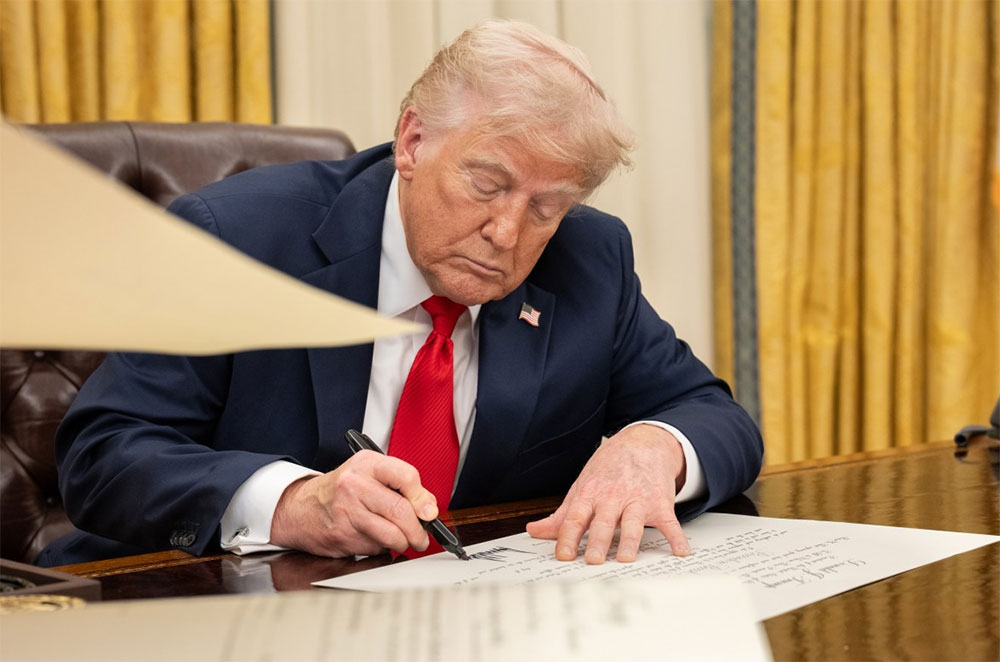
President Trump signed the order Aug. 10, flanked by Health and Human Services Secretary Robert F. Kennedy Jr. The directive calls for the existing childhood vaccine schedule to be divided into three tiers: one for all children, one for high-risk populations, and a third requiring individual “shared decision-making” between doctors and parents. While executive orders carry no direct legislative force, this one instructs every federal department and agency to take appropriate steps to advance its goals to the fullest extent the law allows. That is not nothing.
The immediate practical impact, as health policy reporters and pediatric health experts have noted, is primarily confusion. The separated MMR shots the order envisions do not exist domestically. Merck, which manufactures the combination vaccine, has indicated that developing, testing, and producing separate formulations could take up to a decade. In the meantime, parents are left asking whether the current schedule is safe, and what they should do now.
The answer from the scientific community is unambiguous. A large-scale study published just days before the executive order found no association between childhood vaccines and autism, adding to an extensive and consistent body of evidence. President Trump nonetheless cited autism concerns as justification for separating the shots in his Oval Office remarks. That framing was not incidental. It signals the ideological foundation on which this policy rests, one that conflicts directly with the current scientific consensus.
Pediatric practices across the country are already facing patient volume pressures and staffing shortages. The combination vaccine exists precisely because it consolidates multiple immunizations into a single visit, reducing the burden on families and providers alike. Breaking that into separate appointments introduces new barriers: more scheduling, more storage requirements at clinics, more opportunities for a dose to be missed.
Herd immunity thresholds for measles require vaccination rates above 95 percent. The U.S. is already struggling to maintain those levels in some communities. Any policy that meaningfully reduces adherence, even incrementally, can push transmission rates higher in ways that are felt most sharply by children too young to be vaccinated and those with medical contraindications.
The order also advises states to review and potentially revise their school immunization requirements, and at least one administration official indicated the newly confirmed Attorney General could pursue federal religious freedom claims against states that do not offer sufficiently broad exemptions. Several states currently limit non-medical exemptions. This portion of the order represents direct federal pressure on a domain that has historically been governed at the state level, and it could have lasting effects on local public health law well beyond this administration.
Meanwhile, the institutional infrastructure charged with protecting Americans from infectious disease is under significant strain. The CDC, operating under a director confirmed only last week after her predecessor was removed for refusing to approve Kennedy’s preferred vaccine advisers, is simultaneously managing an Ebola outbreak in Africa, multiple domestic foodborne illness clusters, and the ongoing spike in vaccine-preventable disease. Staff morale, by accounts from within the agency, is low. Funding has been cut. These are not the conditions under which an agency performs at its best during a public health emergency.
The Texas Attorney General’s announcement that he has opened an investigation into the American Academy of Pediatrics, the professional organization that has defended the evidence-based immunization schedule, adds another layer of concern. Framing a medical organization’s adherence to peer-reviewed science as potentially driven by financial gain is a pattern that has appeared in other policy contexts and carries real consequences for the institutions that train physicians and translate research into clinical practice.
The executive order will not immediately change what happens in a pediatrician’s office. But it signals direction. It creates pressure on states, confusion among parents, and additional burdens on providers who are already stretched. It arrives during an active and worsening measles outbreak. And it is built on a scientific premise, that vaccines cause autism, that has been repeatedly and definitively refuted.
Sources and further reading
Trump’s Vaccine Agenda – KFF Health News
Executive Order on Vaccines Bypasses an Evidence-Based Process That Has Kept Kids Safe – The Conversation
No link between MMR vaccination before age 2 and autism, large US study suggests – CIDRAP
This article was researched and sourced by Global Biodefense editors and reported with Claude AI assistance for drafting and editing.