

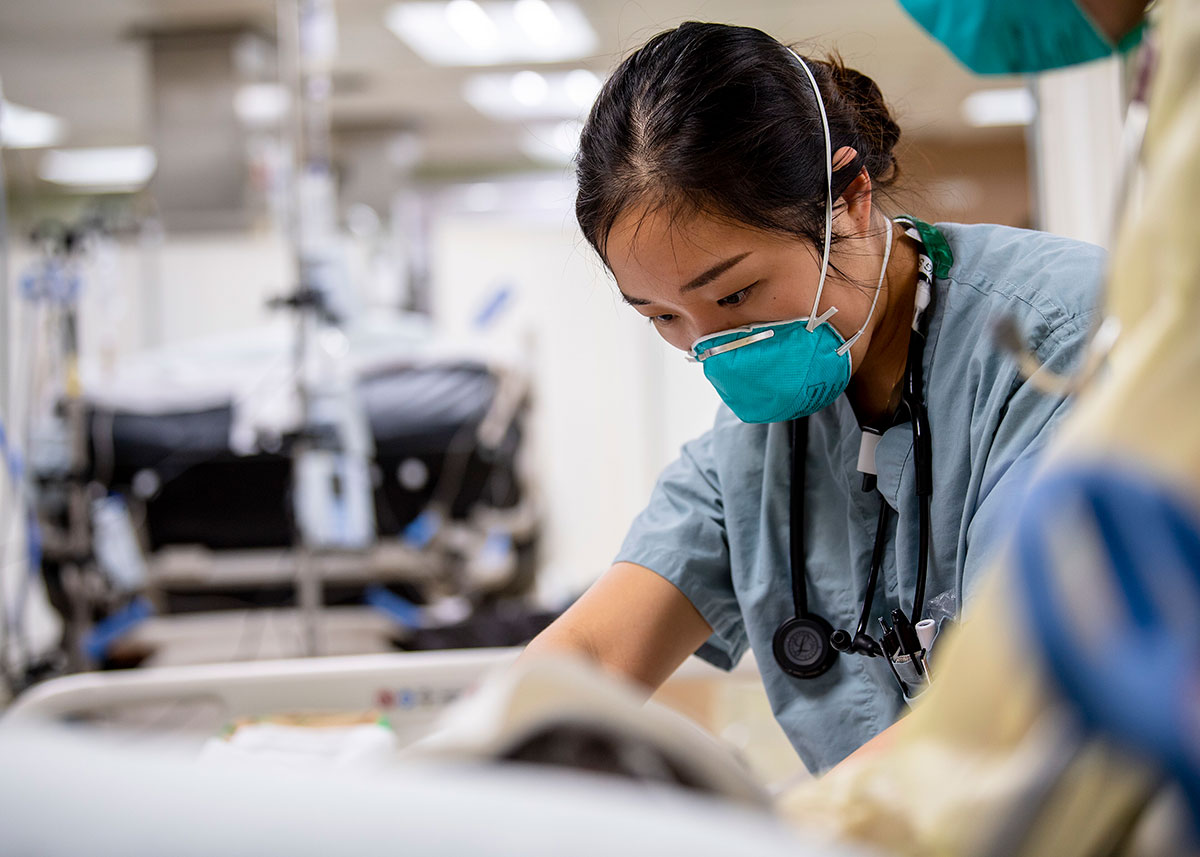
When a new pathogen emerges, or a bioterrorism event unfolds, the frontline workers who don protective gear and manage the first patients often determine how well an outbreak stays contained. A new evaluation of South Korea’s national training program for exactly those responders offers new perspectives on which training approaches actually build that capability, and which measurement gaps still need closing.
The study, published in Public Health Weekly Report (PHWR), comes from researchers at the Korea Disease Control and Prevention Agency (KDCA). It evaluates the agency’s 2025 professional training project for medical personnel responding to emerging infectious diseases and bioterrorism, run in partnership with the National Central Medical Center’s Public Health and Medical Education Training Center. The program reflects a broader post-COVID-19 push to treat workforce training as core infrastructure rather than a one-time response to a specific outbreak.
The curriculum ran fourteen separate course offerings across 2025, split between three basic-level courses and four advanced ones. Basic training covered outbreak response principles, infection control, and a full day of intensive instruction in Level C personal protective equipment, donning, doffing, and decontamination procedures, while advanced courses added case-based instruction for physicians and administrators along with scenario-driven simulation exercises modeled on real outbreak events from the prior year, covering tasks like patient transfer and isolation ward operations. Demand outpaced capacity substantially: against 230 planned training slots, the program drew 631 applications and ultimately graduated 234 people, a completion rate of 101.7 percent relative to the original target. Nurses made up the large majority of trainees, at 84 percent, with physicians and emergency responders filling most of the remainder.
Practical confidence, largely centered on comfort using Level C protective equipment, rose by 87.6 percent, the largest gain of any measure, moving from an average score of 5.09 to 9.55 out of a possible 10. Academic knowledge of outbreak response principles and infection control improved 58.2 percent, while a separate written knowledge test showed a more modest 13.3 percent gain in correct-answer rates.
Every one of the 47 trainees who completed the dedicated Level C protective equipment course passed its hands-on performance evaluation, a 100 percent pass rate the authors highlight as evidence that repeated, scenario-based practice translates into demonstrable skill.
The findings signal that hands-on, simulation-based training appears to build practical confidence more effectively than lecture-based instruction alone. The authors call for expanding practice-oriented training capacity and diversifying which occupational groups receive it, alongside sustained investment in training infrastructure for pandemic preparedness.
Sources and further reading:
Kim ES, Park EM, Kim YM, Kim IH, Min YJ. 2025 Year New and Bioterrorist Infectious Disease Medical Response Personnel Professional Training Results. Public Health Weekly Report. July 20, 2026.
This article was researched and sourced by Global Biodefense editors and reported with Claude AI assistance for drafting and editing.