

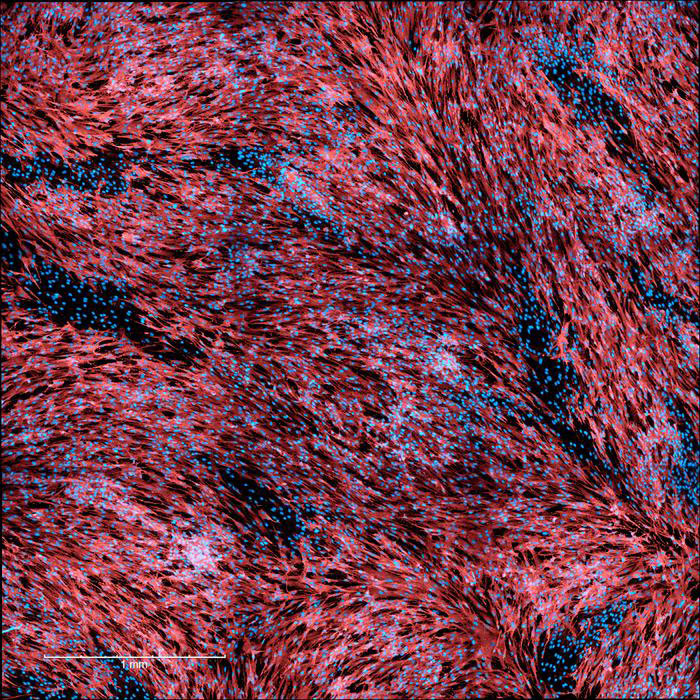
WHO declared mpox a public health emergency of international concern for the second time in August 2024, driven largely by a new, rapidly spreading strain transmitted primarily through sexual networks. Two years later, researchers are still working to explain the underlying biology behind that pattern. A new study from Germany offers a molecular explanation for one of the more consequential transmission dynamics: why sexual contact carries such elevated risk of infection.
The research, published July 2026 in Emerging Microbes and Infections by researchers from Goethe University and Universitätsmedizin Frankfurt, demonstrates that human seminal fluid does not merely transport the monkeypox virus (MPXV) but actively enhances its ability to infect human cells. The mechanism centers on naturally occurring protein fragments in semen that assemble into microscopic fibers, which in turn help the virus attach to and enter cells far more efficiently than it would on its own.
Since 2022, mpox outbreaks driven by human-to-human transmission have disproportionately affected populations with dense sexual networks, and roughly 95 percent of individuals infected during the 2022 global outbreak reported a history of sexual contact. Understanding the biology underlying that pattern is essential for designing effective interventions.
The Frankfurt team exposed several types of human cells, including skin cells (fibroblasts and keratinocytes), immune cells called monocytes, and ex vivo human skin tissue, to monkeypox virus, with and without prior incubation in seminal fluid from multiple donors. Seminal fluid markedly increased infection across all of these cell types. When the researchers isolated the responsible components, they identified two classes of semen-derived peptide fragments, known as SEVI and SEM, that self-assemble into positively charged amyloid fibrils. Because the virus surface and human cell surfaces both carry a negative charge, these fibrils effectively act as a molecular bridge, pulling virus particles closer to cells and increasing attachment and uptake.
The study also found that fibril exposure enabled a 14-fold increase in infection of corneal epithelial cells, which are not normally susceptible to the virus, suggesting that semen-derived amyloids can broaden the range of cell types the virus can infect. Enhanced infection was observed across all major mpox clades tested, though clade IIb and clade Ib showed slightly greater enhancement.
Not the first virus semen has been shown to help, or hinder
The findings fit into a broader, and until now underappreciated, pattern in how semen interacts with different viruses. Semen is already known to dramatically enhance HIV-1 infection, by several orders of magnitude, a phenomenon that may help explain why HIV is transmitted predominantly through sexual contact. Curiously, semen has the opposite effect on Zika virus, actively suppressing its infectivity despite the fact that Zika reaches high concentrations in semen and can persist there for extended periods, which may help explain why sexual transmission of Zika remains comparatively rare. Mpox, per this study, joins HIV in the category of viruses that semen actively assists rather than hinders.
Current antivirals still work, and a new drug candidate emerges
For clinicians, the study includes a reassuring finding: the two antivirals currently approved to treat mpox, tecovirimat and brincidofovir, both retained their effectiveness even when tested against virus that had been enhanced by seminal fibrils, with only minor shifts in the drug concentrations needed. That’s a notable contrast to HIV, where certain classes of antiretroviral drugs lose potency under similar semen-enhanced conditions.
The researchers also identified a potential new therapeutic angle. A fibril-disrupting compound called CLR01, sometimes described as a “molecular tweezer” for its ability to grab and neutralize amyloid structures, completely eliminated the infection-enhancing effect of seminal fluid in laboratory tests. CLR01 has separately shown activity against the lipid envelopes of several other viruses, including HIV-1, herpes simplex virus 2, and SARS-CoV-2, raising the possibility that a single compound could work through two mechanisms at once: neutralizing semen’s pro-viral effect while directly damaging the virus itself. Given that mpox is sometimes transmitted alongside HIV and herpes in the same sexual encounters, the authors suggest such a compound could eventually serve as an add-on therapy for populations at elevated risk.
The finding that semen-derived amyloids also enhance infection by cowpox and camelpox viruses raises the possibility that this mechanism is conserved more broadly across poxviruses, a point with implications for surveillance and preparedness beyond mpox specifically.
Sources and further reading
Torbica E, et al. Seminal fluid enhances monkeypox virus infection via amyloidogenic fibrils. Emerging Microbes and Infections. July 24, 2026.
Semen facilitates infection with Monkeypox virus – Goethe University Frankfurt / EurekAlert
This article was researched and sourced by Global Biodefense editors and reported with Claude AI assistance for drafting and editing.