

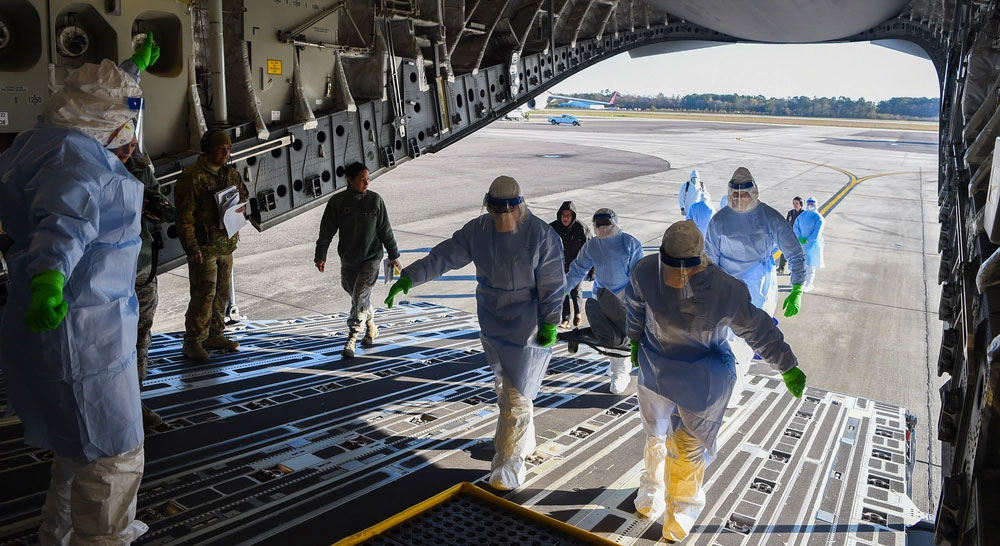
An American who tested positive for Ebola has been transported to Germany for specialized care, and six additional U.S. citizens with high-risk exposures are being evacuated to Europe rather than returned to the United States, according to a CDC media briefing held May 20, 2026. The briefing was led by Dr. Satish Pillai, incident manager for CDC’s Ebola response, who described the situation as “fast-moving and fluid” while emphasizing that the risk to the American public remains low.
The ongoing outbreak involves the Bondibugyo strain of Ebola virus and spans both the Democratic Republic of Congo (DRC) and Uganda. CDC officials confirmed that the infected American arrived in Germany and is in stable condition. The six asymptomatic individuals with high-risk exposures are being moved to Germany and the Czech Republic (Czechia) to ensure access to specialized care if their condition changes.
Why Europe, Not the United States
The decision to route exposed Americans to Europe rather than the U.S. drew pointed questions from journalists, but Dr. Pillai emphasized that the choices were driven by the speed and complexity of the unfolding situation. “These locations were chosen based on the needs that were present at that time,” he said, citing the rapid mobilization required over the weekend when these cases were identified. When asked directly whether the White House had decided to bar exposed Americans from returning home, Pillai did not confirm or deny a policy directive, saying only that movement plans were made “based on the conditions on the ground.”
The Czech Republic selection also prompted scrutiny, as it is not widely recognized as a major center for viral hemorrhagic fever treatment. Dr. Pillai explained that ASPR helps fund a network of viral hemorrhagic fever experts with relationships across Europe, including facilities in the Czech Republic, and credited that existing network for enabling a rapid placement.
No Approved Countermeasures for This Strain
A critical complication in the response is the absence of approved vaccines or therapeutics for the Bondibugyo strain of Ebola. Dr. Pillai confirmed this directly when asked about vaccine use, noting that discussions about available countermeasures, including monoclonal antibodies, are ongoing within the U.S. government and with international partners. ASPR’s Biomedical Advanced Research and Development Authority (BARDA) is coordinating the potential deployment of monoclonal antibody products, though timelines and supply levels were not disclosed during the briefing.
Dr. Pillai stressed the importance of ensuring safe administration mechanisms are in place before deploying any medical countermeasures, adding that more details on how vaccines, therapeutics, and monoclonals fit together in a “holistic Ebola response” would be “forthcoming”.
CDC Staffing and Field Operations
CDC currently has dozens of staff in the affected countries working as epidemiologists, laboratorians, and communications specialists, with additional personnel deploying imminently. However, Pillai confirmed that CDC staff are not operating directly within the outbreak zone itself, which he described as “highly unstable.” Instead, CDC’s funded partner organizations are leading on-the-ground response work, with CDC providing technical support, laboratory capacity, and coordination from country offices and headquarters.
CDC is working with more than 20 non-governmental organizations providing healthcare support in the region. Secretary of State Rubio also announced 50 health clinics as part of the U.S. response effort, though details on whether these are new or strengthened existing facilities were not available during the briefing.
Public Health Stakes and U.S. Risk Assessment
Dr. Pillai reiterated throughout the briefing that Ebola is transmitted through direct contact with the bodily fluids of sick or deceased individuals and cannot be contracted through casual contact or proximity in public spaces. Layered screening measures, including exit screening in DRC and Uganda and port-of-entry assessments in the United States, are currently in place. Since the 2014-2015 West Africa Ebola outbreak, the U.S. has developed a robust system for assessing exposures and managing the safe return of individuals from affected regions.
The evolving situation raises significant questions for global health security, particularly regarding the willingness of American volunteers and health workers to deploy to outbreak zones if the path home is uncertain.
Sources and further reading:
Transcript – Update on Ebola Outbreak in the Democratic Republic of the Congo and Uganda, 5/20/2026 – CDC