

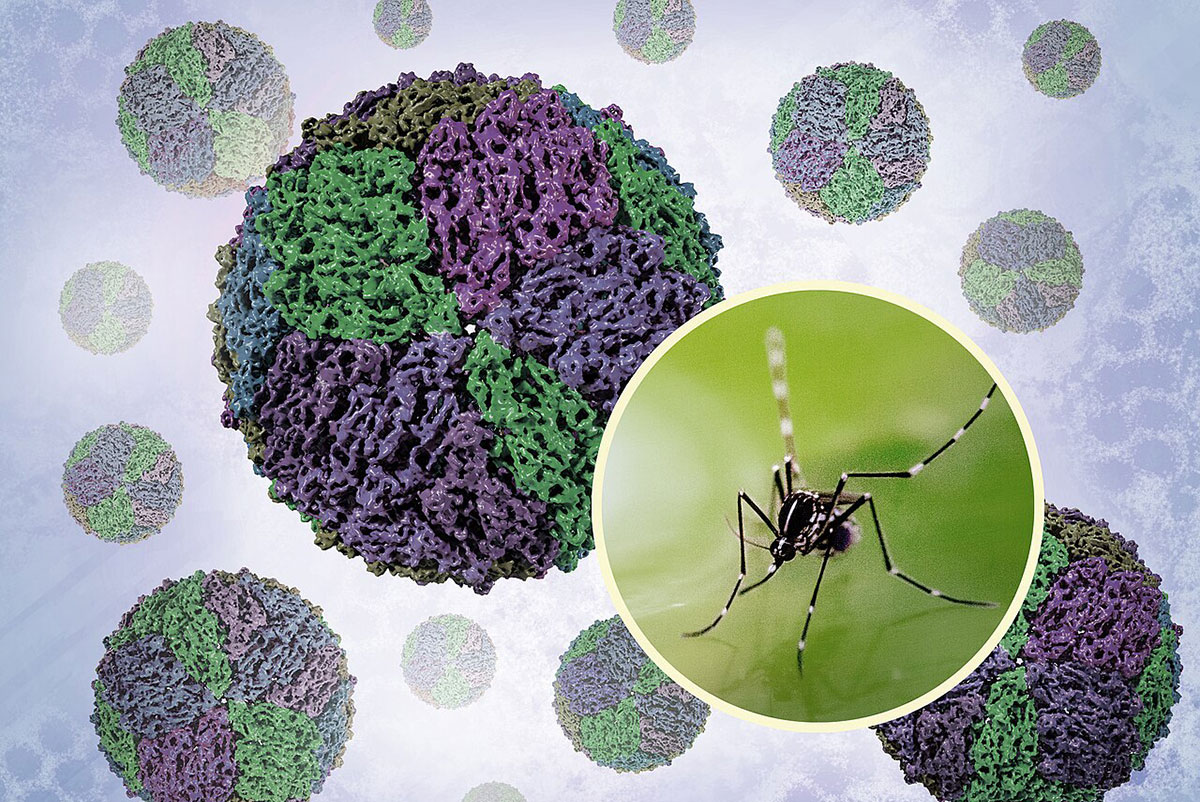
A new modeling study finds that nearly half of all Californians already live in areas where the conditions necessary for local dengue transmission are in place — and that number is poised to grow as the state continues to warm. The research, conducted by scientists at UC Berkeley, UC Santa Barbara, Stanford University, Arizona State University, and public health officials from Santa Clara and Los Angeles Counties, identifies expanding geographic and seasonal risk windows for dengue fever driven by climate change and land use shifts.
Dengue is not yet endemic in California. Only about 20 cases of local transmission have been recorded in the state to date, with the vast majority of cases tied to travelers returning from regions where the virus circulates year-round. But researchers say that pattern could change as temperatures rise.
“California is on the edge of temperature suitability for dengue,” said Lisa Couper, a researcher involved in the study. “The optimal temperature for the virus to reproduce is around 29 degrees Celsius (or 84 degrees Fahrenheit). For a lot of the year, and for most places, California is below that optimum temperature. But as the climate warms in California, we’re getting closer to it.”
46% of Californians Already in Risk Zones
The study modeled current and future habitat suitability for dengue by identifying areas where three conditions overlap: the presence of Aedes aegypti mosquitoes capable of transmitting the virus, human travel from dengue-endemic regions, and temperatures warm enough for the virus to replicate and spread. Using that framework, researchers found that parts of the Central Valley and Southern California already meet the threshold.
“We found that 18.2 million people currently live in an area where they have those necessary conditions for local dengue transmission,” Couper said, representing 46% of Californians based on 2020 census data. That population at risk could grow by more than 4 million people as conditions change.
Co-researcher Andy MacDonald, an ecologist whose work focuses on how disease risk responds to global change, noted that “the transmission risk will expand geographically and extend for longer periods seasonally as the climate and land use changes.”
A key factor in current containment is what researchers describe as a viral “bottleneck.” After a mosquito ingests dengue virus from an infected host, the virus must replicate inside the insect before the mosquito can transmit it to another person. In cooler temperatures, that replication takes longer, requiring the mosquito to survive long enough for the cycle to complete. Warming temperatures shorten that window, reducing a natural brake on local transmission.
Model Uncertainties and the Broader Mosquito-Borne Disease Threat
The researchers flag several caveats. The model may actually underestimate future risk: the Central Valley, one of the areas identified as most suitable for transmission, is also California’s fastest-growing region, meaning population exposure could increase faster than current projections suggest. The model also incorporates assumptions about travel patterns tied to ethnicity and country of origin, linking higher local transmission risk to communities with stronger ties to dengue-endemic nations — an assumption the researchers acknowledge as imprecise. Wealth-linked travel patterns to dengue-endemic destinations in Southeast Asia and elsewhere also could not be fully captured.
Despite these limitations, the findings carry clear public health significance. Dengue fever can cause severe flu-like illness, and in its more serious forms, can be life-threatening. California’s public health infrastructure has not historically needed to account for locally circulating dengue, but that may need to change.
The implications extend beyond dengue. Couper noted that other mosquito-borne diseases transmitted by Aedes aegypti — including chikungunya and Zika — may also see expanded transmission risk in California as temperatures rise. “Climate warming is increasing the transmission of these environmentally-mediated diseases in temperate regions that are at the margins of suitability, like in California,” she said.
What Californians Can Do Now
Couper encourages residents, particularly in the Central Valley and Southern California, to learn to recognize dengue symptoms and take practical steps to reduce mosquito exposure: eliminating standing water where mosquitoes breed, wearing protective clothing during mosquito season, and using DEET-based repellents.
The California Department of Public Health advises returning travelers from dengue-endemic areas to continue using mosquito repellent and protection for three weeks after return, even in the absence of symptoms, to reduce the risk of inadvertently seeding local transmission.
“At present, people in California are, by and large, more likely to get dengue from traveling to a dengue-endemic region than they are locally,” Couper said. “But the risk here does seem to be increasing.”
Sources and Further Reading:
Couper L, Sipin, TJ, Sambado S et al. Dengue transmission risk in California under climate and land-use change: a semi-mechanistic modelling study. The Lancet Regional Health, May 25, 2026
As California warms, cases of dengue fever are expected to grow – UC Santa Cruz