

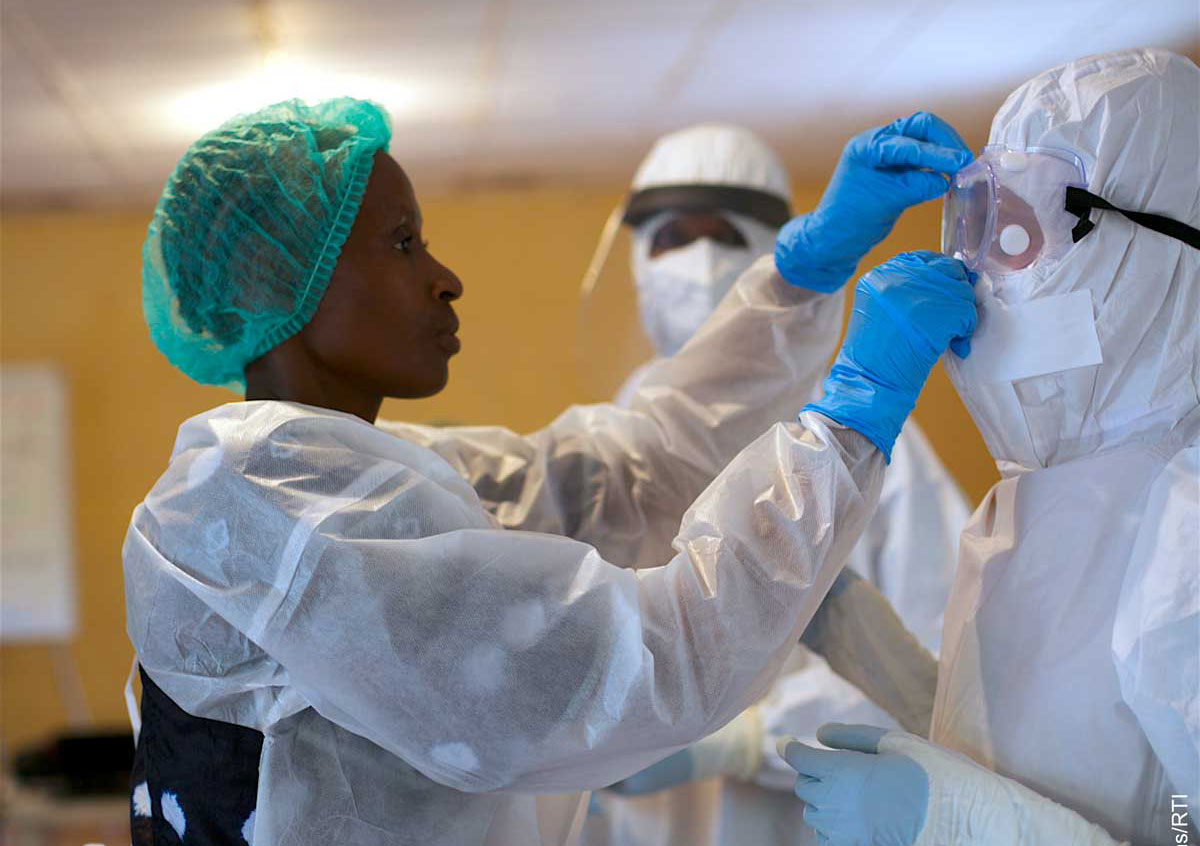
A rare strain of Ebola is spreading through densely populated urban centers in eastern Democratic Republic of Congo (DRC) and across the border into Uganda, and an advocacy organization is warning that sweeping U.S. cuts to global health programs have critically undermined the international community’s ability to respond. Physicians for Human Rights (PHR), a New York-based organization that uses science and medicine to document human rights violations, called the situation an illustration of what it termed the failures of an “America First Global Health” strategy.
The outbreak involves the Bundibugyo strain of Ebola, a rare variant for which no approved vaccine or targeted treatment currently exists. Cases have been confirmed in and around Bunia, Goma, and Bukavu in eastern DRC and in Uganda’s capital, Kampala. Over 100 deaths have been reported. Health workers have themselves become infected, and public health experts have expressed alarm that the outbreak likely went undetected for approximately two months — a delay that allowed the virus to spread and forfeited critical early opportunities for contact tracing and containment.
A Convergence of Crises in Eastern DRC
The outbreak is unfolding against a backdrop of compounding emergencies. Eastern DRC has been destabilized by ongoing armed conflict, attacks on civilians and health facilities, and mass population displacement. Violence in and around Ituri and Goma has severely disrupted humanitarian access and public health operations. PHR describes the situation as a “polycrisis” in which insecurity and displacement are simultaneously accelerating disease transmission and limiting communities’ access to care.
Health workers in the region, speaking to PHR’s network of medical and humanitarian partners, described acute shortages of basic outbreak response materials: personal protective equipment including masks, protective suits, and face shields; body bags for safe management of the deceased; laboratory access for rapid sample processing; and the basic operational funding needed to conduct epidemiological surveillance. One physician working in an Ebola-affected area told PHR that the disruption to U.S. Agency for International Development (USAID) funding has forced health workers to use personal resources — including purchasing phone credit, fuel, and transportation — just to maintain surveillance activities. “Without rapid support,” the doctor warned, “surveillance, case confirmation, the safe management of bodies, and the protection of health care workers all risk being seriously compromised.”
Decades of Infrastructure Investment Now Being Reversed
PHR argues that the current crisis is partly a consequence of decisions made in Washington beginning in early 2025. The Trump administration’s abrupt cuts to U.S. global health funding, initiated in January 2025, have included staffing and budget reductions at the Centers for Disease Control and Prevention, the effective dismantling of the USAID, and U.S. withdrawal from the WHO. According to PHR, these moves have dismantled surveillance networks, laboratory infrastructure, trained workforces, and emergency coordination mechanisms that the United States helped build over decades — and that are essential for early outbreak detection.
“Due to the Trump administration’s cuts, we no longer have the full measure of global coordination and operational capacity needed to rapidly track transmission, monitor cross-border spread, support frontline clinicians, and swiftly identify and treat people who may have been exposed,” said Thomas McHale, PHR’s public health director. PHR has documented these impacts in two recent publications: “Wasted Investments, Looming Crisis,” which examines how reductions in U.S. global health support have dismantled research platforms and frontline health systems, and “Abandoned in Crisis,” a research brief focused on early-stage impacts of U.S. aid cuts on DRC health services.
What PHR Is Calling For
With world leaders gathered at the World Health Assembly in Geneva, PHR is urging governments to immediately scale support for epidemiological surveillance, laboratory testing, contact tracing, safe clinical care, community engagement, and dignified burial practices. The organization is also calling on the United States to strengthen coordination with WHO and fully disburse congressionally-appropriated global health funds to support the Ebola response. Additionally, PHR is urging all parties to the conflict in DRC to uphold ceasefire agreements and ensure humanitarian access — including reopening Goma International Airport to allow life-saving supplies to reach affected communities.
Sources and further reading:
Failures of ‘America First Global Health’: U.S. Global Health Cuts and DRC Conflict Fuel Ebola Crisis – Physicians for Human Rights (PHR)