

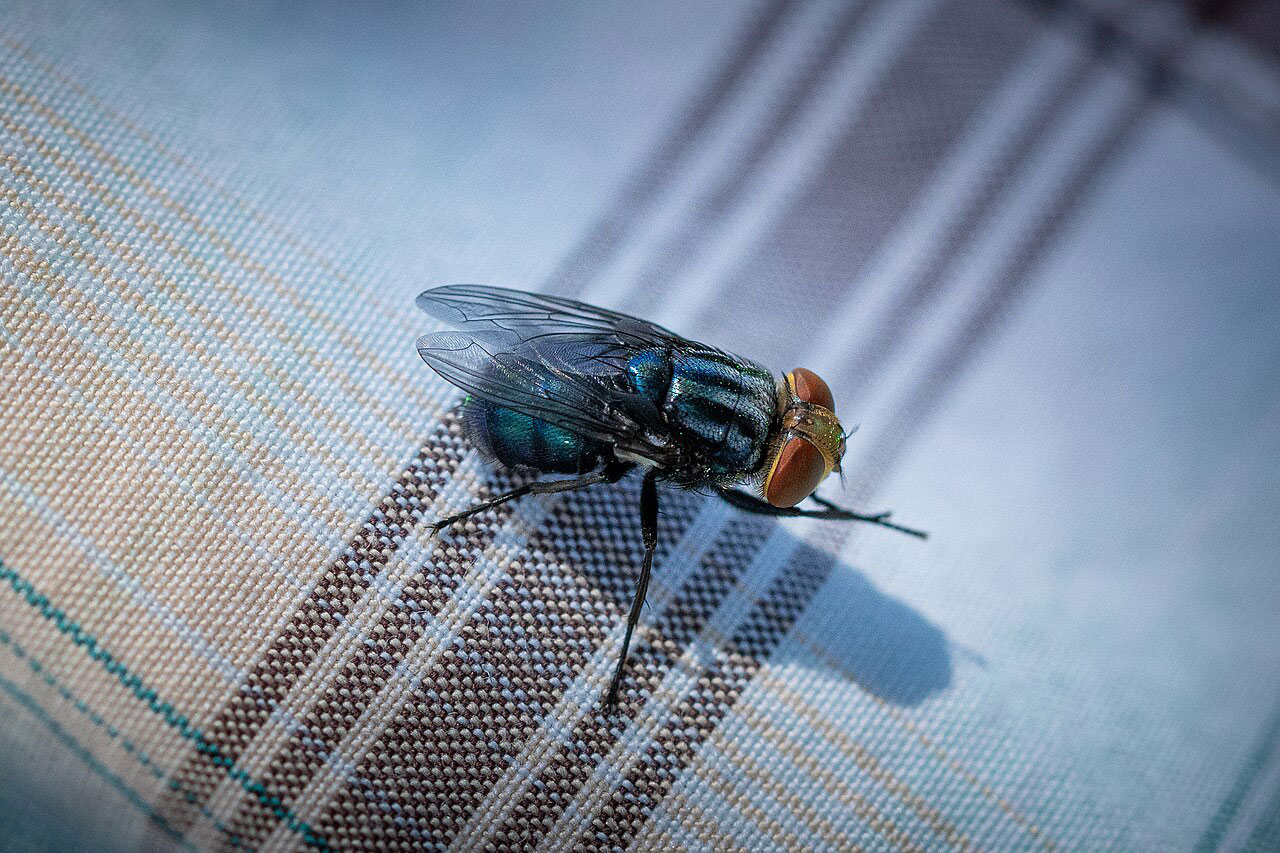
Ground beef averaging $7.06 per pound. States erecting emergency livestock permitting barriers. And underneath it all, a flesh-eating parasite that the United States once eradicated is back — burrowing into the living tissue of calves in Texas and a dog in New Mexico. The New World screwworm has returned to American soil for the first time in decades, and the agricultural and public health implications are severe.
The threat was not sudden. In February 2024, Costa Rica declared a national New World screwworm emergency. Over the subsequent months, the parasite spread steadily northward through Central America — detected in Nicaragua, Honduras, Panama, and Guatemala. By September 2025, Mexico’s National Service of Agro-Alimentary Health, Safety, and Quality confirmed a case in Sabinas Hidalgo, Nuevo León, less than 70 miles from the U.S.-Mexico border and near one of the world’s most heavily trafficked commercial corridors connecting Monterrey to Laredo, Texas. The case represented the northernmost detection of the parasite during the outbreak, a dramatic advance toward U.S. territory. Preliminary reports indicated the infected animal had been moved from a region with known active cases. Six months later, the parasite crossed the border.
A Parasite Engineered for Damage
The New World screwworm — a parasitic fly whose hatched larvae consume the living tissue of warm-blooded animals from the inside out — was eliminated from the United States through decades of sustained scientific effort. Its return to domestic livestock represents a concrete biosecurity failure. The United States has already closed its border to live cattle imports from Mexico, a trade corridor that typically moves one million head of cattle annually. Oklahoma, Missouri, California, and Georgia have imposed strict livestock permitting requirements. Agricultural economists are warning this is not a temporary price spike comparable to the avian flu-driven egg shortage — they are describing a permanent baseline shift in beef supply economics.
The eradication of New World screwworms provides billions annually in direct benefits to U.S. livestock producers and general economy. Those benefits — increased meat and milk production, decreased death losses, reduced veterinary and labor costs — are now at risk.
An Institutional Crisis at a Critical Moment
The frontline response to the outbreak falls primarily to the U.S. Department of Agriculture, which is scrambling to expand facilities to support increased deployment of sterile flies at scale to interrupt the insect’s reproductive cycle. But containing a biological incursion of this complexity requires more than a single agency acting alone. It demands a functioning, coordinated public health infrastructure in which animal health, human health, and national biosecurity operate as integrated systems. That infrastructure is currently compromised under the Trump-Vance Administration.
The Centers for Disease Control and Prevention has activated a Level 3 emergency operations response to monitor the screwworm outbreak and coordinate with state and local health departments. Under ordinary circumstances, that activation would represent a standard and reassuring exercise of federal biosecurity capacity. It does not feel routine today. Over the past year, approximately 25 percent of the CDC’s workforce — nearly 3,000 career scientists, researchers, epidemiologists, and field experts — left the agency through successive rounds of reductions in force and deteriorating institutional morale. The agency currently has no permanent director. The CDC is operating under interim leadership from the NIH director Jay Bhattacharya (a health economist with little experience in public health or epidemiology), the third ‘leader’ of the CDC in the past year and a half. The structural coherence required for rapid, multi-threat emergency response is not present.
Loss of Institutional Knowledge and Expertise
The timing could not be worse. The same depleted CDC staff now managing a screwworm emergency response is simultaneously coordinating the federal response to a lethal Ebola outbreak in Central Africa and multiple measles outbreaks in the United States. Each of these is a serious, resource-intensive public health event in its own right. Layering a domestic agricultural biosecurity emergency on top of an already strained workforce is an operational crisis unfolding in real time.
The Trump-Vance administration’s approach to federal public health agencies has emphasized workforce reduction and organizational restructuring under the direction of leadership, including HHS Secretary Robert F. Kennedy Jr., that has been openly skeptical of the scientific and institutional foundations those agencies represent. When specialized scientific capacity is eliminated — entomologists, veterinary epidemiologists, field response coordinators — it cannot be reconstituted on demand when a crisis materializes. Institutional knowledge and trained personnel are not interchangeable line items.
Costs That Will Persist
This situation is a live demonstration of a principle the field has long articulated: biosecurity resilience is built during periods of relative stability, not assembled under pressure when a threat has already crossed the border. The screwworm will not wait for the CDC to rebuild its workforce. The parasite does not recognize personnel shortfalls or interim leadership arrangements.
For the broader public, the consequences are already tangible and will likely persist. Agricultural economists are describing structural damage to the domestic beef supply chain at a moment when the herd is already at historic lows and ranchers face severe headwinds rebuilding it. Every stage of that supply chain deterioration — reduced herd recovery, constrained imports, elevated production costs — translates directly into sustained consumer prices. The cost of what was once eradicated is being paid now, and will be paid for years to come.
Sources and further reading:
The Screwworm Is the Cost of RFK Jr. All But Killing Public Health – The Contrarian
CDC Activates Emergency Operations Center for New World Screwworm Response – CDC
Mexico Confirms Case of New World Screwworm in Nuevo Leon (Sep 2025) – USDA
New World Screwworm Current Outbreak (Nov 2024) – Texas Animal Health Commission