

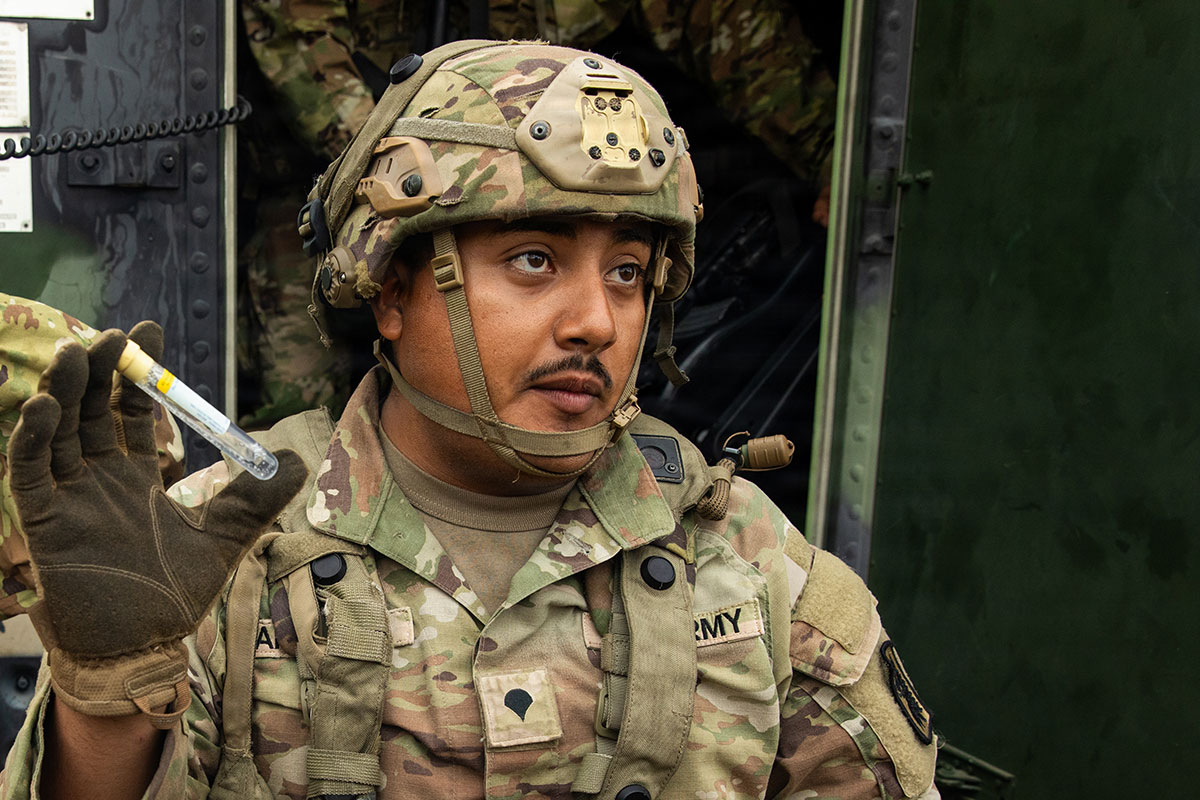
From the battlefields of the Revolutionary War to a training base in Mississippi, the U.S. military’s struggle against biological threats has never stopped evolving. In mid-June 2026, soldiers from the 307th and 308th Chemical Companies demonstrated one of the Army’s most sophisticated frontline biodetection tools during a large-scale readiness exercise at Camp Shelby, Mississippi.
The training centered on the Joint Biological Point Detection System (JBPDS), a fielded military technology capable of detecting up to 10 known biological agents of concern that can be aerosolized and used as weapons. The exercise took place June 15 as part of Operation Sentinel Justice, a major U.S. Army Reserve training event designed to validate unit capabilities and sharpen soldier readiness across multiple operational levels.
How the Detection System Works
The JBPDS operates by drawing air samples through exterior intakes and routing them through a spectrometer. When light reflected off the collected air reveals the signature of certain biological agents, such as bacteria, the system sounds an alarm. Air is then rapidly compressed into a sealed sample vial, which is labeled, secured against contamination, and sent up the chain of command to a laboratory for confirmatory testing.
First extensively tested in the early 2000s, the system represents a significant leap from the biological threat detection capabilities available to earlier generations of American soldiers. General George Washington famously remarked during the Revolutionary War that smallpox was more destructive to his army than the enemy itself, a warning that underscored the devastating potential of disease as a force multiplier in armed conflict.
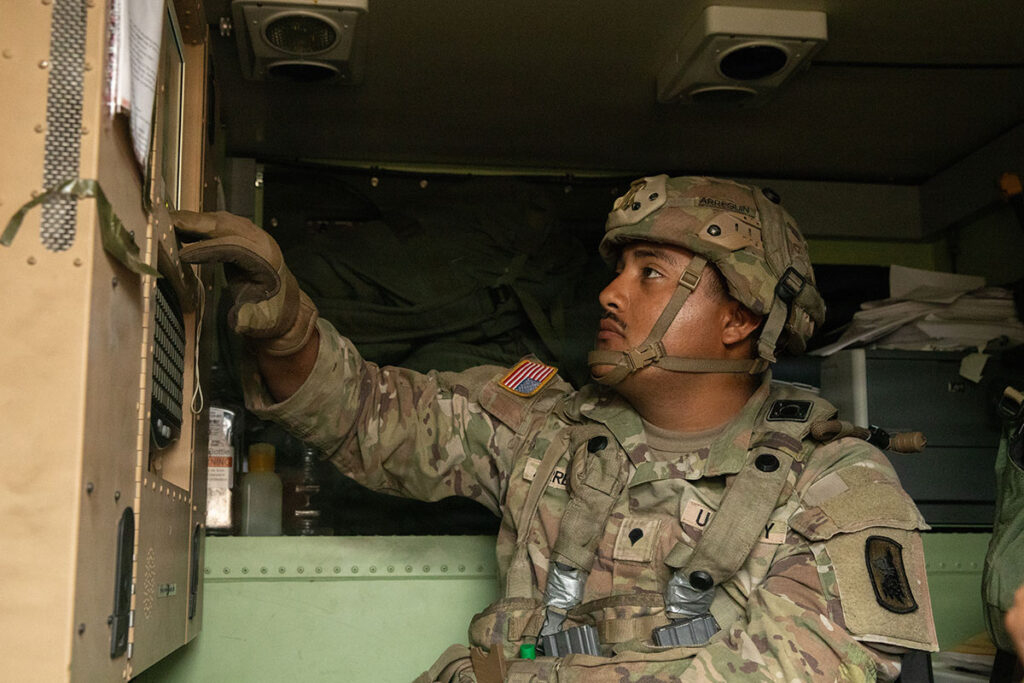
Specialist Miguel Arreguin-Silva, a Chemical, Biological, Radiological, and Nuclear (CBRN) Specialist with the 308th Chemical Company, led field training on the system during the exercise, walking soldiers through proper operating procedures, air sampling protocols, and sample security for transport. His role reflected the broader force structure requirement that frontline CBRN specialists be proficient not only in operating the equipment, but in teaching it under realistic field conditions.
“Our mission is to protect the outskirts of our area of operation,” Silva said. “So, our main duty is to detect anything before it hits anyone else, that way they can be ready for what’s coming.”
Why Biodetection Readiness Matters
Biological agents remain among the most serious threats in both military and civilian biosecurity contexts. Aerosolized pathogens can incapacitate large numbers of personnel rapidly and with little warning, making early detection a critical factor in limiting casualties and enabling an effective response.
Ensuring that CBRN units can reliably detect, characterize, and report biological threats in the field is foundational to both military force protection and the kind of whole-of-government response that a large-scale biological incident would require.
Sources and further reading:
Biological detection systems create safety for Army Reserve Soldiers – U.S. Army Reserves