

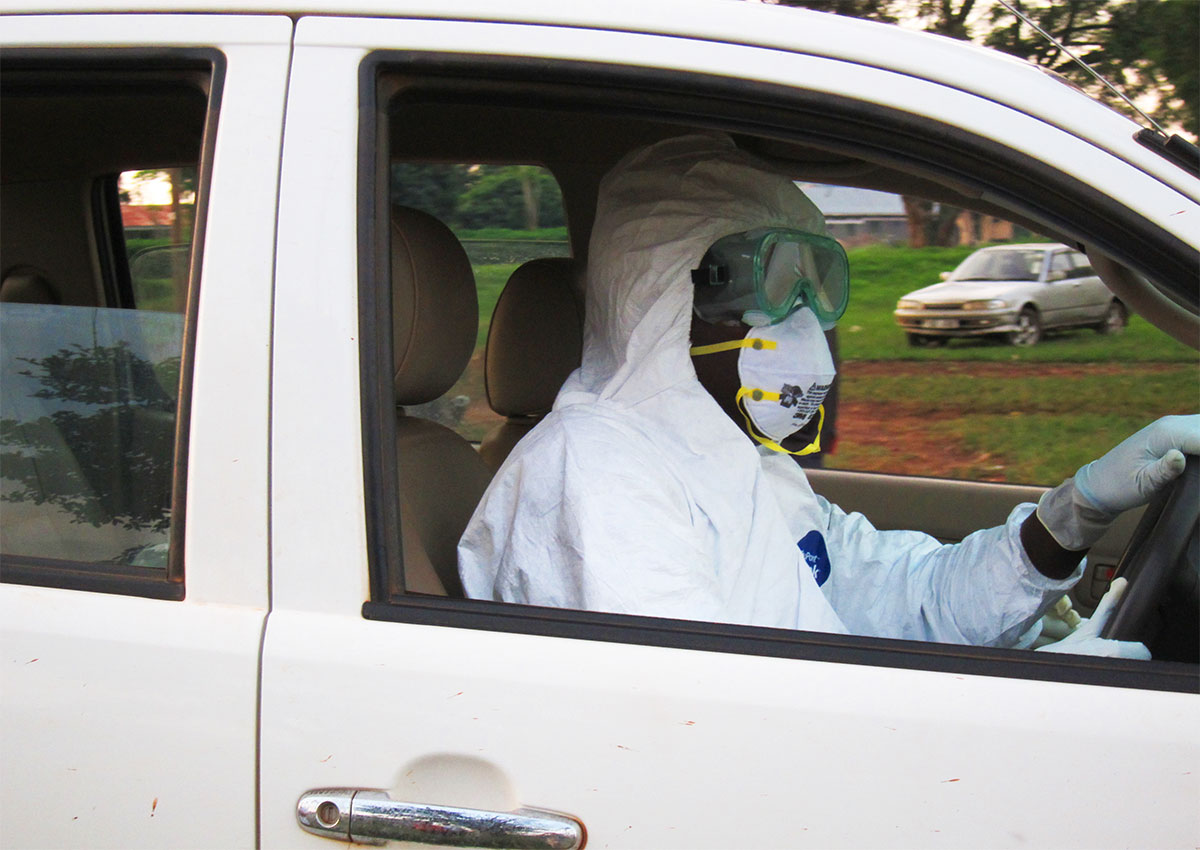
An Ebola outbreak in the Democratic Republic of the Congo has become the fastest-moving filovirus event ever recorded, and new data suggests the confirmed case count may represent only a fraction of the true scale. As of August 19, 2026, the DRC has confirmed 5,290 cases and 2,516 deaths, according to the country’s Ministry of Health, WHO, and the CDC. Africa CDC officials now estimate that only 30 to 40 percent of actual infections have been detected, meaning the real toll could run into the tens of thousands.
The outbreak, caused by Bundibugyo virus, a distinct species within the Ebola family, was declared a public health emergency of international concern (PHEIC) by WHO on May 17. It surpassed 1,000 confirmed cases within 40 days of response activation, compared with roughly 235 days for a major 2018 DRC outbreak to reach the same milestone. The World Health Organization now says the outbreak is on track to surpass the 2014 West Africa epidemic, history’s largest and deadliest Ebola event, which killed more than 11,000 people over two and a half years.
Detection and Contact Tracing Are Falling Far Short
Some of the most alarming figures to emerge this week concern how much of the outbreak remains invisible to responders. Yap Boum, head of emergency preparedness and response at Africa CDC, told reporters this week, as reported by MedPage Today, that fewer than 10 percent of current cases are being linked to known contacts, far below the 90 to 95 percent rate typically needed to consider an outbreak under control. Africa CDC data cited in that briefing, covering a recent three-week period, found that while 82 percent of identified contacts were followed up, the number of contacts actually identified fell dramatically short of what case volume would predict. Based on an average of 60 contacts per confirmed case, responders should have identified nearly 100,000 contacts from the roughly 1,663 cases confirmed in that window. Instead, Africa CDC calculated the true contact tracing rate at just 16 percent of what would be expected, meaning the vast majority of people potentially exposed to the virus are never being reached.
Compounding the problem, 97 percent of deaths reported on August 17 occurred in the community rather than in treatment centers, a marker of cases that health workers never had a chance to manage, according to the same Africa CDC data. Only 20 percent of health alerts are currently originating from within affected communities, underscoring a persistent trust and engagement gap. The national case fatality rate stands at 46.7 percent overall, but climbs to 68.2 percent in North Kivu province, one of the country’s most populous regions. WHO’s most recent rapid risk assessment, based on genomic analysis of 139 viral sequences, concluded that transmission likely began as early as February 2026, months before the outbreak was formally recognized on May 15, suggesting a substantial hidden burden of undiagnosed infections predates the current case count entirely.
Vaccine Doses Released for the First Time
In a significant development, the International Coordinating Group on Vaccine Provision informed the DRC government on August 18 that it would immediately release 70,000 doses of the Ervebo vaccine from the global Ebola stockpile, WHO and Africa CDC announced August 20. Ervebo is licensed for use against Ebola virus, formerly known as Zaire ebolavirus, but has never been confirmed effective against Bundibugyo virus specifically.
Of the released doses, 20,000 will support a Phase 3 clinical trial designed to determine whether the vaccine offers meaningful protection against this outbreak’s viral strain, while the remaining 50,000 will go to frontline and health workers in line with recommendations from WHO’s Strategic Advisory Group of Experts on Immunization.
Early laboratory and animal data suggest Ervebo may provide some cross-protection, but the clinical trial is intended to generate the evidence needed to guide future policy. WHO emphasized that anyone offered the vaccine, whether through the trial or otherwise, must be informed of its unproven status against this strain and provide informed consent.
Two additional vaccine candidates purpose-built for Bundibugyo virus, rVSV-Bundibugyo and ChAdOx1-Bundibugyo, remain earlier in development and have not yet reached clinical trials.
Separately, a randomized treatment trial known as PARTNERS is also being initiated to evaluate potential antiviral therapies against Bundibugyo virus. No antiviral treatment is currently approved for the disease, leaving supportive care, fluid replacement, treatment of complications, and organ support, as the primary clinical option for patients.
Outbreak Now Spans Six Provinces and Has Reached Three Countries
The outbreak has expanded from an initial cluster in three health zones to 56 of the DRC’s 151 health zones across six provinces, according to the ECDC’s August 21 update. Ituri province remains the epicenter by a wide margin, accounting for 4,447 cases and 1,984 deaths, more than 80 percent of the national total, concentrated in the health zones of Bunia, Rwampara, Mongbwalu, and Nizi. North Kivu has reported 663 cases and 452 deaths. Bas-Uele became the most recently affected province in mid-August, with two cases confirmed in separate parts of the region, a development WHO flagged as evidence the outbreak continues to find new geographic footholds. South Kivu remains a rare bright spot, having reported no new confirmed cases since May 29, a streak of more than 79 days as of late August.
Healthcare workers continue to bear a disproportionate share of the burden, with 155 infections and 45 deaths recorded among frontline medical staff since the outbreak began, driven by personal protective equipment shortages and direct violence against health facilities in conflict-affected areas. Outside the DRC, Uganda has confirmed 20 cases and 2 deaths, all in the capital, Kampala, with the most recent case, confirmed June 21, linked to travel from DRC rather than local transmission; no community spread has been detected there. France has confirmed a single imported case with no secondary transmission, and Germany separately treated two medically evacuated patients, both of whom recovered.
A High-Risk Outbreak, Met by a Hollowed-Out U.S. Response
WHO’s formal risk assessment, updated August 20, rates the outbreak risk as very high within the DRC, high for countries sharing a land border with it, particularly Uganda, South Sudan, and the Central African Republic, and low for the broader African region and globally. The agency cited sustained transmission across a widening geographic area, persistent gaps in contact tracing, the absence of a licensed vaccine or treatment specific to Bundibugyo virus, and a humanitarian crisis marked by active armed conflict, more than one million internally displaced people in Ituri alone, and over 26 million people facing acute food insecurity nationwide as factors sustaining the very high risk designation.
The U.S. CDC has deployed more than 120 personnel directly to the region as part of a broader response involving roughly 500 agency staff, coordinated through its National Center for Emerging and Zoonotic Infectious Diseases. Under a renewed CDC order issued August 12 pursuant to federal quarantine authority, travelers who have been in the DRC within 21 days of departure, including U.S. citizens, remain barred from boarding commercial flights to the United States, while travelers arriving from Uganda or South Sudan must enter through airports designated for enhanced health screening. CDC travel advisories remain at Level 4, urging Americans to avoid all travel to Ituri and North Kivu provinces, with a Level 3 advisory in effect for Haut-Uele and Tshopo. No Ebola cases connected to this outbreak have been confirmed in the United States, and CDC continues to characterize the risk to the American public as very low, citing the strength of domestic infection control infrastructure.
That official framing has drawn pointed criticism from public health experts and lawmakers who argue the U.S. response looks markedly different from prior outbreaks. A CDC employee described the current entry restrictions as sending exactly the wrong signal to the aid workers the response depends on. The policy bars entry for 21 days regardless of symptoms, and unlike prior outbreaks, the U.S. is not committing to medically evacuate American aid workers who contract Ebola back to domestic treatment. The U.S. maintains 13 biocontainment units and 55 designated treatment facilities built specifically for this purpose. “That is not a public health strategy,” the employee stated. “It is an obstacle to offering the support and resources needed to end the outbreak.”
Workforce depletion at CDC compounds the constraint. The agency has lost roughly a quarter of its staff over the past 18 months, while nearly 300 employees remain on paid administrative leave more than a year after being notified their positions were being eliminated, unable to work despite ongoing simultaneous emergency responses to Ebola, measles, Cyclospora, and New World screwworm.
Cuts to U.S. global health infrastructure abroad have raised similar concerns among public health advocates. Severed ties with the World Health Organization have been linked to delays in U.S. situational awareness, and disrupted multilateral coordination channels. The dismantled USAID programs has left health workers in eastern DRC covering basic surveillance costs, including phone credit and fuel, out of pocket, and that reduced U.S. coordination capacity has weakened cross-border transmission monitoring precisely as the outbreak has spread into new provinces.
Sources and further reading:
WHO and Africa CDC Welcome the Allocation of Ebola Vaccines to the Democratic Republic of the Congo — World Health Organization, August 20, 2026
Ebola Disease Outbreak in the Democratic Republic of the Congo and Uganda — European Centre for Disease Prevention and Control, August 21, 2026
Data Show How Congo’s Ebola Outbreak Is on Track to Surpass History’s Largest — MedPage Today, August 22, 2026
WHO Rapid Risk Assessment: Ebola Disease Caused by Bundibugyo Virus, Democratic Republic of the Congo, v4 — World Health Organization, August 20, 2026
Ebola Outbreak: Current Situation — CDC, August 21, 2026
I Thought the CDC Shooting Was Rock Bottom. We’re Still Sinking. — MedPage Today, August 2026
U.S. Dismantling of USAID Is Undermining Ebola Response, Experts Warn — Global Biodefense, June 15, 2026
DRC Ebola Outbreak Exposes Gaps Left by U.S. Global Health Retreat, Advocacy Group Warns — Global Biodefense, May 21, 2026
This article was researched and sourced by Global Biodefense editors and reported with Claude AI assistance for drafting and editing.