
• Red-Teaming the Post-Covid-19 Biological Weapon Threat Landscape

    Virtual Event

    Join us on August 26 for a CSWMD Spotlight Webinar on “Red Teaming the Post-COVID-19 Biological Weapons Threat Landscape” with Gary Ackerman and Ted Plasse. The Spotlight speakers will describe a project that utilized Asynchronous Strategic Dynamics Red Teaming (ASDyRT) to investigate the extent to which COVID-19 might impact the strategic decision making of 30
  • 2021 Federal Wearables Summit

    Virtual Event

    The 2021 Federal Wearables Summit is a broad effort supported by several federal agencies and intended to bring the discussion on wearable sensors for monitoring health and health quality closer to all people. The Summit is open to the public and will address issues of interest, such as the perspectives of patients and medical care

  • Towards a Post-Pandemic World: Lessons from COVID-19 for Now and the Future

    Virtual Event

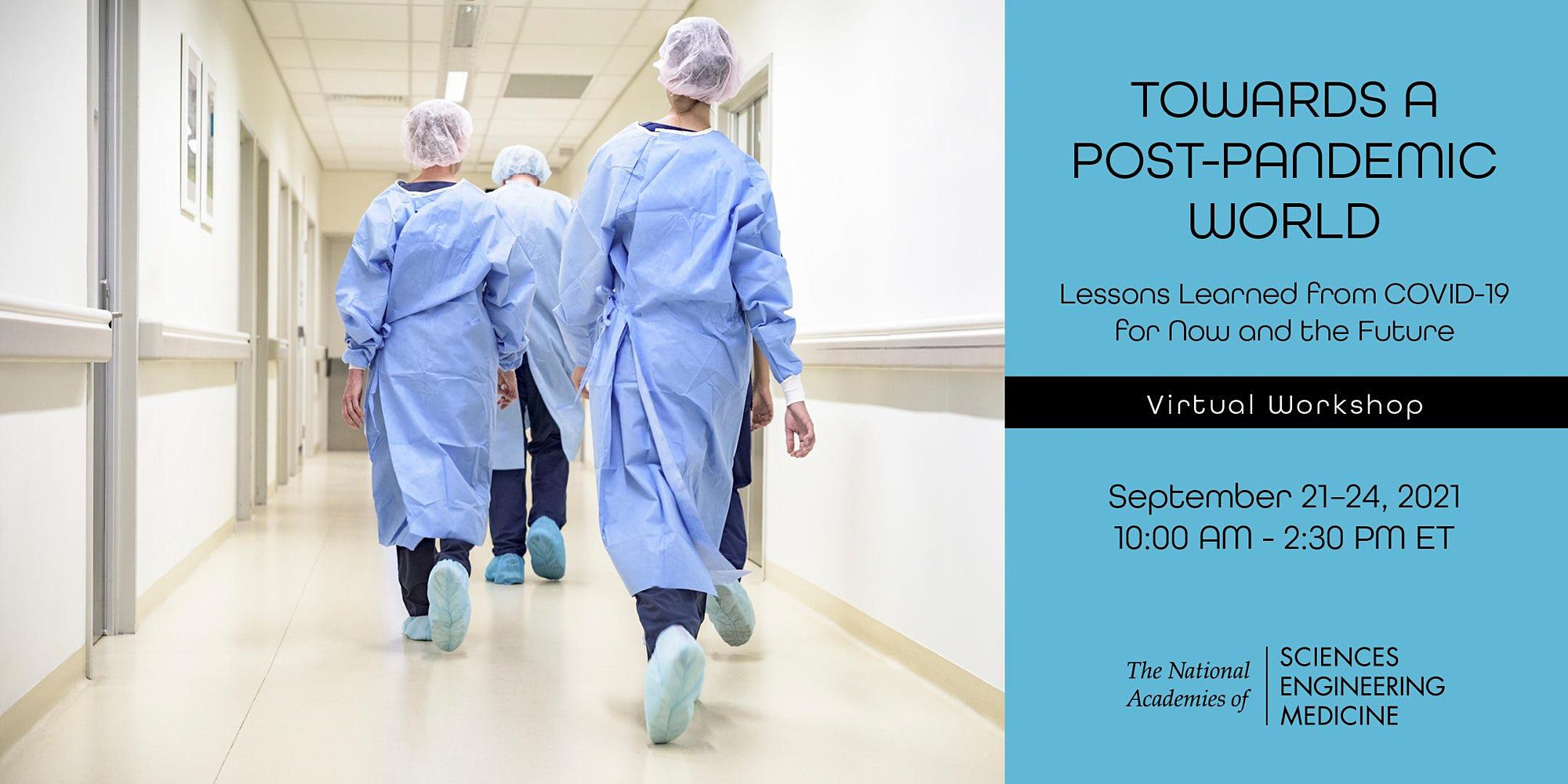
    This workshop will extract lessons from the ongoing global COVID-19 response for better recovery now and better future preparedness. September 21st - 24th, 10:00am - 2:30pm EDT Join the Forum on Microbial Threats for an exciting virtual conversation about what we've learned from 15 months of living through a global pandemic. The workshop will broadly

  • ASHG 2021 – American Society of Human Genetics

    Virtual Event

    The annual meeting of the American Society of Human Genetics will convene in a virtual format 12-14 October 2021. With over 7,000 expected attendees, the ASHG 2021 Virtual Meeting is a diverse, global community that engages and welcomes diverse voices and alliances among scientists of all nationalities. Highlighted posters or presentations include: Building Genomic Data

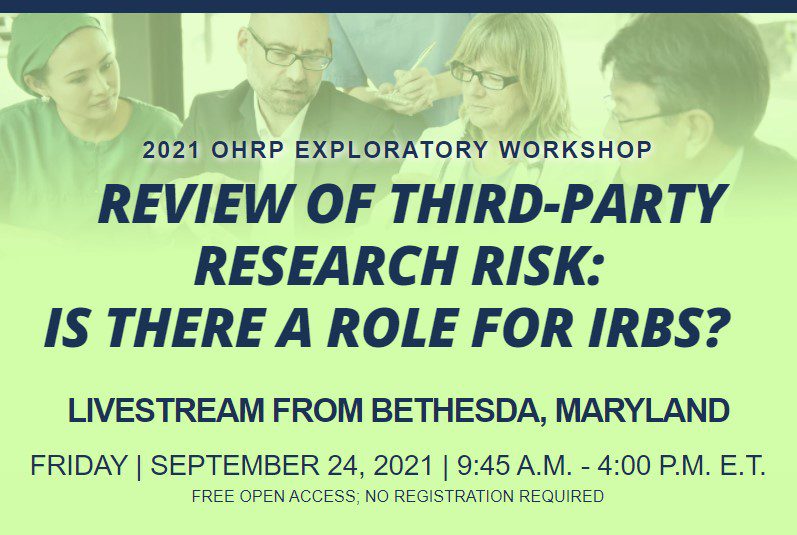
  • Review of Third-Party Research Risk: Is There a Role for IRBs?

    Virtual Event

    "Review of Third-Party Research Risk: Is There a Role for IRBs?," an HHS Office for Human Research Protections (OHRP) Exploratory workshop, will be livecast on 24 September 2021. The research community has generally focused on the protection of human research subjects as defined by the Common Rule. However, sometimes the conduct of research can have

  • Developing a Long-Term Strategy for Low-Dose Radiation Research in the U.S.

    Virtual Event

    Join the Committee on Developing a Long-Term Strategy for Low-Dose Radiation Research in the United States at its third public meeting on Friday, September 24. The Committee will hear from federal agencies, research institutes, and international organizations on coordination of low-dose radiation research. Highlighted topics include: Coordination of Low-Dose Radiation Research with the National Cancer

  • ABRCMS 2021 – Annual Biomedical Research Conference for Minority Students

    Virtual Event

    The Annual Biomedical Research Conference for Minority Students (ABRCMS), recipient of the 2019 AIMBE Excellence in STEM Education Award, is one of the largest communities of underrepresented minorities in science, technology, engineering and mathematics. Students attend this conference to present their research, enhance professional development skills, explore graduate schools, and network. Research faculty and program directors

  • Evolving Crisis Standards of Care and Ongoing Lessons from COVID-19

    Virtual Event

    COVID-19 has fundamentally challenged the delivery of health care services worldwide, forcing difficult choices on health professionals and laying bare many preexisting health, medical, and public health sector frailties. This National Academies workshop series will re-explore previous IOM Crisis Standards of Care recommendations in light of ongoing lessons from the COVID-19 pandemic, with a particular

  • NASEM Committee on Toxicology Annual Meeting

    Virtual Event

    The National Acadamies' Committee on Toxicology (COT) is a standing committee established in 1947 to provide independent, authoritative scientific advice to the U.S. military and other agencies on environmental and occupational health questions. Under a contract with the Department of Defense (DOD), COT provides advice on toxicological matters by evaluating hazards and health implications of