

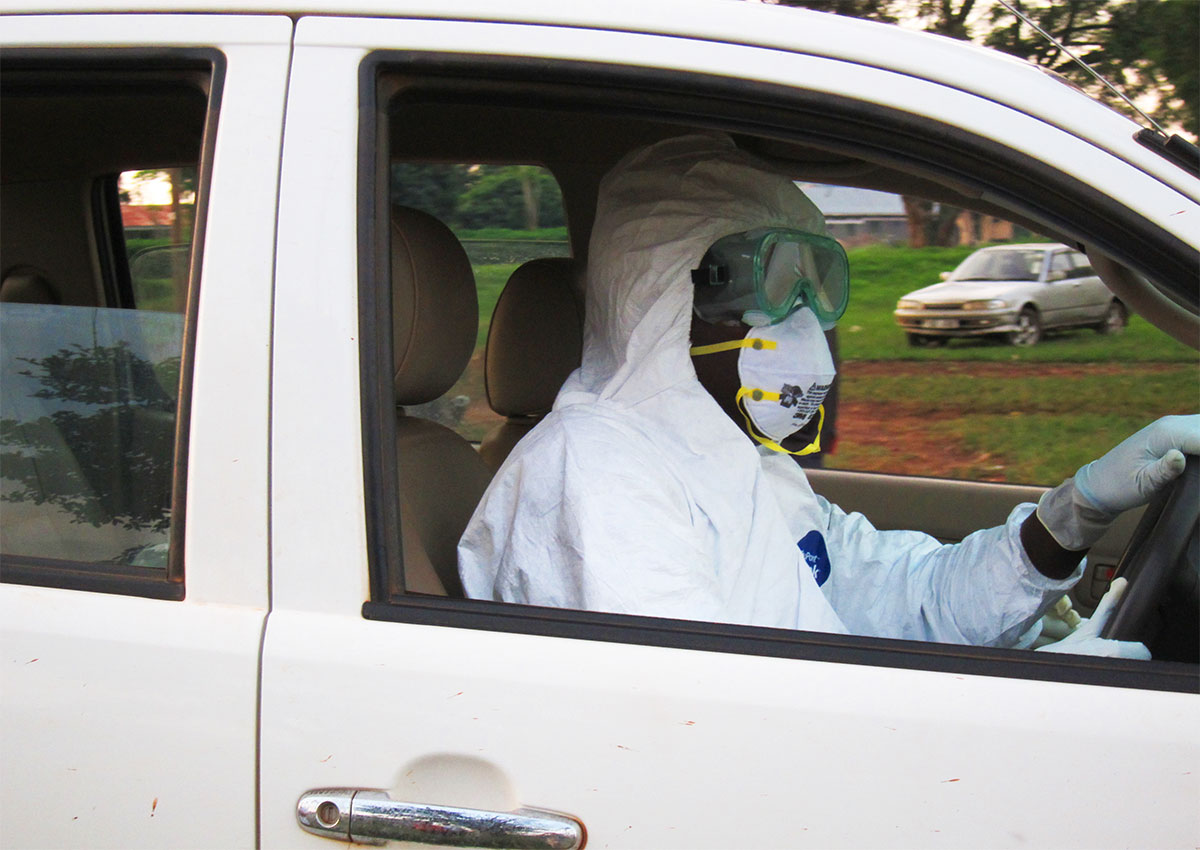
This edition includes the accelerating Bundibugyo virus Ebola outbreak in the Democratic Republic of the Congo, now the fastest-moving filovirus event ever recorded, and BARDA’s new solicitation to keep pandemic influenza vaccine manufacturing on warm standby, targeting production capacity for at least 330 million vaccine regimens before the next flu pandemic arrives.
FEATURED
Congo’s Ebola Outbreak Could Be Three Times Its Confirmed Size as Vaccine Doses Finally Arrive
The DRC’s Bundibugyo virus outbreak has confirmed 5,290 cases and 2,516 deaths as of August 19, with Africa CDC estimating that only 30 to 40 percent of actual infections are being detected. The outbreak reached six provinces faster than any prior Ebola event on record, and WHO now says it is on track to surpass the 2014 West Africa epidemic. The International Coordinating Group released 70,000 doses of the Ervebo vaccine on August 18, split between a Phase 3 trial and frontline worker protection, though the vaccine has never been confirmed effective against this Ebola species.
BARDA Solicits Manufacturers to Keep Pandemic Flu Vaccine Production on Warm Standby
BARDA released a request for proposals on August 17 seeking vaccine manufacturers to maintain warm base production capacity for pandemic influenza, keeping seed stocks, validated production lines, and regulatory groundwork in place so doses can flow quickly once a pandemic strain is identified. The program targets capacity to produce at least 330 million vaccine regimens, or 660 million total doses, reflecting the expectation that an immunologically naive population will require two doses of an adjuvanted vaccine. Proposals are due October 30, 2026, with contracts structured as five-year IDIQ vehicles awarded to as many as four manufacturers to preserve supply chain redundancy.
BIOSECURITY + BIOPREPAREDNESS
Crisis Standards of Care: Lessons from COVID-19 and Emerging Gaps in Health System Preparedness
A National Academies rapid expert consultation finds that while the ethical framework of crisis standards of care held up during COVID-19, hospitals often adopted crisis-level strategies without formally activating their plans, leaving bedside clinicians to make high-stakes allocation decisions with little institutional backing. Regional coordination centers in states including Washington, Minnesota, and Arizona measurably reduced strain by balancing patient loads across facilities, but most were shut down after the acute phase due to funding and governance gaps.
BWC Working Group Advances Draft Report Amid Disagreements Over Verification and Financing
Negotiators at the Ninth Session of the Biological and Toxin Weapons Convention Working Group in Geneva reached agreement on 90.6 percent of draft report text, but disputes over verification frameworks, transfer controls, and donor eligibility for an international cooperation fund remain unresolved ahead of the 2027 Review Conference. Working Group Chair Ambassador Frederico Meyer cited the rapid convergence of artificial intelligence and biology as a core driver of urgency, warning that a governance gap may be opening faster than states can respond.
POLICY + GOVERNMENT
Federal Health Data Takes Biggest Hit as Trump Administration Purges Nearly 400 Government Datasets
A tracker from dataindex.us documents at least 28 deleted federal datasets and 338 altered data collections across more than 60 agencies, with health data accounting for roughly 40 percent of all terminated or modified records. Among the most consequential losses, SAMHSA’s Drug Abuse Warning Network has stopped updating entirely, and the National Outbreak Reporting System underwent undisclosed field changes under executive order guidance.
Science by Decree: How the White House Is Seizing Control of America’s Research Enterprise
A 412-page OMB rule set to take effect October 1 would require senior political appointees to approve federal research grants and allow termination of awards deemed “inconsistent” with agency priorities, explicitly subordinating peer review to political discretion. More than 70,000 public comments were filed in opposition, and an analysis by Stand Up for Science estimates the rule could render nearly half of active clinical trials ineligible for continued funding.
MEDICAL COUNTERMEASURES
Military Health Researchers Report Advances in Biosurveillance and Drug Resistant Infections at 2026 Symposium
At this year’s Military Health System Research Symposium, researchers presented a rapid antibody discovery platform aiming for fieldable countermeasures within 100 days of identifying a new threat, a nanoparticle vaccine platform protecting against three Tier 1 select agents simultaneously, and transchromosomic cattle producing human antibodies against nine biothreat pathogens. Separate data from Ukraine and Pacific military populations showed extensive carbapenem resistance in wound infections and high rates of macrolide-resistant gonorrhea, underscoring antimicrobial resistance as a parallel and growing concern.
Ghrelin Shows Promise as Radiation Countermeasure by Reviving Gut Stem Cells Through the Vagus Nerve
A mouse study found that the hunger hormone ghrelin substantially protected intestinal tissue after high-dose radiation exposure, an untreatable condition relevant to nuclear or radiological mass-casualty scenarios, and that its benefits depended on an intact vagus nerve connecting brain and gut. Because ghrelin has already passed more than 100 human safety trials and is simple to manufacture and inject, the mechanistic clarity strengthens its case for development under the FDA’s Animal Rule.
Coating the Liver’s Doorways Could Make mRNA Vaccines Safer and More Effective
Japanese researchers developed a temporary coating agent that blocks lipid nanoparticles from accumulating in the liver, redirecting mRNA vaccine payloads toward the spleen and cutting unwanted liver protein expression up to 40-fold in mice while strengthening T-cell responses. The coating agent has already passed human clinical trials in a different application, though longer-term safety questions around repeated dosing remain unresolved.
A Yeast-Brewed Flu Shot That Could Outlast the Season
University of Michigan researchers presented preclinical findings at the American Chemical Society’s fall 2026 conference showing that a nanoparticle vaccine built around the conserved influenza M2 surface protein, manufactured using ordinary baker’s yeast, fully protected mice against three different influenza strains. Unlike hemagglutinin-based vaccines, which must be reformulated annually to track circulating strains, M2 has changed little since 1918, and the yeast-based platform can generate a candidate vaccine in roughly a month compared with the six months typical of conventional egg-based manufacturing.
Some People’s Blood Already Knows How Well a Vaccine Will Work
Analyzing more than 8,600 blood samples, researchers found that people with higher pre-existing antibody levels against unrelated microbes like S. aureus and RSV tended to mount stronger responses to COVID-19 vaccination, a pattern a deep learning model could use to flag likely weak responders before vaccination using only a standard blood draw. The approach worked well in healthy and HIV cohorts but poorly in transplant and autoimmune patients, and has not yet been tested against vaccines other than COVID-19.
SELECT AGENTS + PRIORITY PATHOGENS
Ebola Virus Persistence in Survivors: What Tissue Reservoirs and HIV Status May Reveal
A narrative review published in Viruses examines how Ebola virus persists for months or years in immune-privileged sites including the testes, eyes, and central nervous system, and asks whether HIV-associated immune dysfunction may prolong that persistence. The authors flag the current outbreak as an urgent research opportunity, noting that most persistence data derive from Zaire ebolavirus studies and may not apply to Bundibugyo virus.
Scientists Uncover a Cellular Switch That Ebola Virus May Exploit to Cause Deadly Inflammation
Researchers have identified a human enzyme, PTPN13, that appears to help Ebola virus first suppress, then dysregulate, the body’s antiviral defenses by targeting IRF3, the protein that triggers interferon production. Early in infection PTPN13 damps the interferon response in the virus’s favor, but by 48 hours the pattern reverses: cells lacking the enzyme end up with higher viral loads and reduced antiviral signaling, pointing to a balancing role the virus may exploit when disrupted.
Nigeria’s Lassa Fever Outbreak Surpasses 1,000 Confirmed Cases as Healthcare Workers Bear Growing Burden
Nigeria has recorded 1,000 confirmed Lassa fever cases and 237 deaths in 2026, with a case fatality rate of 23.7 percent, up from 18.8 percent at the same point in 2025, a trajectory the NCDC attributes to late patient presentation, treatment costs, and limited community disease awareness. Fifty-three healthcare workers have been infected, prompting the NCDC to develop a 30-day Healthcare Worker Protection Plan with WHO and U.S. CDC support.
Researchers Find a Weak Spot on Crimean-Congo Hemorrhagic Fever Virus That Antibodies Can Exploit
Researchers from USAMRIID, the CDC, and collaborating institutions used X-ray crystallography to identify a structurally conserved binding pocket on the CCHF virus nucleocapsid protein that the antibody 9D5 targets, providing the first detailed structural roadmap for non-neutralizing antibody protection against a pathogen with up to 40 percent case fatality and no approved vaccine or treatment. The binding site proved consistent across the five major strain families circulating across Africa, Asia, and Europe, a characteristic that could underpin broadly effective countermeasures regardless of which strain is encountered.
AVIAN + SWINE INFLUENZA
Avian Flu Variant Spread Months Before Detection, Study Reveals
A phylodynamic analysis of H5N1 genotype D1.1 finds that the variant likely emerged in late June to July 2024 but was not detected until September 2024, a three-month window during which it was actively transmitting and reassorting across wild bird populations in the Pacific Flyway. By early 2025, confirmed human infections had occurred, including a fatal case in Louisiana, and the authors argue that coordinated genomic surveillance across adjacent flyways could compress the detection lag for future variants.
Experimental Study Reveals H5N1 Can Infect Swine Without Obvious Signs
Researchers who experimentally inoculated pigs with H5N1 genotype D1.2 found that infected animals showed no fever or respiratory symptoms yet shed virus in nasal secretions for multiple days and carried infectious virus in muscle tissue, including the diaphragm. Infected animals also developed minimal to no neutralizing antibodies, meaning standard serological testing would not reliably identify exposed animals in the absence of clinical signs to prompt testing.
Swine Flu Case Confirmed in Michigan Youth Fair Exhibitor
Michigan health authorities confirmed a human infection with influenza A(H1N2)v on August 14 in an exhibitor who had direct contact with pigs at the Kent County Youth Fair, where a pig death and febrile illness in other animals on August 7 triggered a multi-agency investigation. Contact tracing identified no evidence of person-to-person transmission, and the case is at least the third confirmed H1N2v infection this season.
COVID-19
Wastewater Data Show Texas and Mississippi Driving a Late Summer COVID-19 Uptick
CDC’s national wastewater surveillance system shows most of the United States at very low to low SARS-CoV-2 activity for the week ending August 15, but Texas recorded the country’s highest reading at 11.21 and Mississippi followed at 9.46, both at the high activity tier. CDC updates the dataset weekly, and the surveillance data serve as an early warning signal ahead of the fall respiratory season, often surfacing community transmission trends before hospitalization data reflect them.
MPOX
Mpox Cases Doubled Last Fall as CDC Data Point to a Virus Settling Into Endemic Circulation
A new CDC MMWR report covering January 2024 through December 2025 finds that mpox clade IIb continues circulating at persistent levels in the United States, with reported cases roughly doubling during September and October 2025 compared with the same months the previous year. Unvaccinated patients faced 9.7 times the odds of hospitalization compared with those who completed the two-dose JYNNEOS series, yet 76 percent of patients with known vaccination status had received no doses.
Mpox Vaccine Protection Fades Faster Than Expected, Two-Year Study Finds
A two-year Taiwanese cohort study of 452 men who have sex with men found that fewer than 20 percent of participants who had not previously received a smallpox vaccine still had detectable antibodies against mpox markers after two years. Prior smallpox vaccination reduced the odds of antibody loss by 76 to 92 percent, indicating that immune priming from older sources confers substantially more durable protection than the current two-dose series alone.
SURVEILLANCE + DETECTION
Wastewater Surveillance Is Ready — But the System Connecting It to Clinicians and Communities Remains Incomplete
A special issue of Emerging Infectious Diseases finds that the CDC’s National Wastewater Surveillance System, now covering roughly 1,500 sites across all 50 states, reliably detects community disease trends and antimicrobial resistance genes before clinical testing reflects them, but a survey of 192 infectious disease physicians found most do not routinely review the data. Clinicians cited delayed reporting, unclear clinical actionability, and an expectation that they proactively monitor external dashboards as practical barriers.
Wastewater Surveillance Detects New Flu Variant a Month Before It Shows Up in Hospitals
Colorado’s expanded wastewater surveillance program detected influenza A(H3N2) subclade K in sewage on September 11, 2025, a full 31 days before the variant appeared in clinical surveillance systems, demonstrating that genetic sequencing of wastewater can provide actionable lead time ahead of seasonal surges. The same subclade K was linked nationally to a damaging season that exceeded 320,000 hospitalizations and 10,000 deaths.
ONE HEALTH
When Farm Animals Get Sick, Human Health Is Often Next
An editorial in Frontiers in Cellular and Infection Microbiology synthesizing ten studies on bacterial and viral pathogens at the veterinary-human interface highlights a range of emerging threats, from a documented human death tied to Macrococcus caseolyticus, a staphylococcal relative previously dismissed as low-risk, to swine influenza findings showing that infection reshapes lower respiratory microbiota in ways that parallel influenza-associated pneumonia in humans.
INFECTIOUS DISEASES
Cyclospora Outbreak Exposes Failures in U.S. Produce Oversight as Case Count Climbs Past 10,000
The CDC has documented 13,895 laboratory-confirmed cyclosporiasis cases since May 1, with the outbreak spanning 17 states and two deaths linked to the parasite, traced to iceberg lettuce from Taylor Farms of Mexico. FDA inspections at the Guanajuato facility did not begin until August 13, a delay that drew pointed criticism given that FDA employment fell 22 percent in 2026 compared with 2024.
Romania’s Measles Epidemic: Vaccine Hesitancy Meets a Health System That Stopped Reaching Families
Romania has recorded more than 35,700 measles cases since 2023 and accounted for roughly 55 percent of all EU measles cases in 2025, but a Lancet field report finds the primary driver is not vaccine refusal but a health system, stripped of school-based vaccination since 2015, that stopped reliably reaching families who were never firmly opposed to the vaccine. First-dose MMR coverage has fallen from 90 to 78 percent nationally since 2018.
ALSO READING
AI executives worry about their technologies aiding bioterrorists. How likely is that? – Bulletin of the Atomic Scientists
Trump Nominates Heidi Overton, a Top Domestic Policy Aide, for F.D.A. Commissioner – The New York Times
The Cyclospora Outbreak Was a Warning: Q&A with Saskia Popescu – RAND
Bacillus anthracis: biological origins and impact on human history – ASM Microbiology and Molecular Biology Reviews
Fighting measles is expensive. See what it cost to contain 10 cases. – Washington Post
Quadripartite collaboration extends the One Health Joint Plan of Action to 2029 – WOAH
This content was compiled from Global Biodefense’s original reporting and drafted with Claude AI assistance for summarizing and editing.